Proverbs 4:1-27

Hear, O sons, a father’s instruction,
    and be attentive, that you may (B)gain[a] insight,
for I give you good (C)precepts;
    do not forsake my teaching.
When I was a son with my father,
    (D)tender, (E)the only one in the sight of my mother,
he (F)taught me and said to me,
(G)“Let your heart hold fast my words;
    (H)keep my commandments, and live.
(I)Get wisdom; get (J)insight;
    do not forget, and do not turn away from the words of my mouth.
Do not forsake her, and she will keep you;
    (K)love her, and she will guard you.
(L)The beginning of wisdom is this: Get wisdom,
    and whatever you get, get (M)insight.
Prize her highly, and she will exalt you;
    she will (N)honor you (O)if you embrace her.
She will place on your head (P)a graceful garland;
    she will bestow on you a beautiful crown.”

10 (Q)Hear, (R)my son, and accept my words,
    that (S)the years of your life may be many.
11 I have (T)taught you the way of wisdom;
    I have led you in the paths of uprightness.
12 When you walk, (U)your step will not be hampered,
    and (V)if you run, you will not stumble.
13 (W)Keep hold of instruction; do not let go;
    guard her, for she is your (X)life.
14 (Y)Do not enter the path of the wicked,
    and do not walk in the way of the evil.
15 Avoid it; do not go on it;
    turn away from it and pass on.
16 For they (Z)cannot sleep unless they have done wrong;
    they are robbed of sleep unless they have made someone stumble.
17 For they eat the bread of wickedness
    (AA)and drink the wine of violence.
18 But (AB)the path of the righteous is like (AC)the light of dawn,
    which shines (AD)brighter and brighter until (AE)full day.
19 (AF)The way of the wicked is like deep (AG)darkness;
    they do not know over what they (AH)stumble.

20 (AI)My son, be attentive to my words;
    incline your ear to my sayings.
21 (AJ)Let them not escape from your sight;
    (AK)keep them within your heart.
22 For they are (AL)life to those who find them,
    and healing to all their[b] flesh.
23 Keep your heart with all vigilance,
    for (AM)from it flow (AN)the springs of life.
24 Put away from you (AO)crooked speech,
    and put (AP)devious talk far from you.
25 (AQ)Let your eyes look directly forward,
    and your gaze be straight before you.
26 (AR)Ponder[c] the path of your feet;
    (AS)then all your ways will be sure.
27 (AT)Do not swerve to the right or to the left;
    turn your foot away from evil.

Tradition and Legacies 

Although the themes are familiar, Proverbs 4 has some distinctive characteristics.  One is how the parent turns to his father so that he can remember wisdom and pass it down.  Things my father passed down to me that stick in my head are:
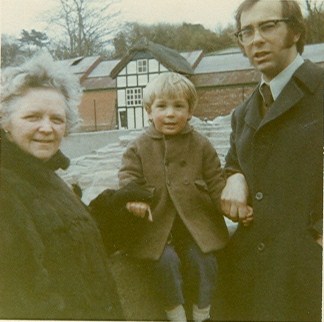
Peter with his teachers (Father and Maternal Grandmother)

  • Remember you are bloody irresponsible
  • No-one remembers second
  • Show me a good loser and I will show you a loser
  • When someone takes a long time let them know your impatience by turning the car around and shining the headlights into the house
  • Surrender all control of the T.V., vehicles and maps
  • Hate the police because they are the ‘gestapo’
  • Destroy the opposition in an argument – then do something nice for them when you come to your senses
  • You are ugly because you look like your mother
  • Do not talk about anything deep or listen to sad music because it is ‘DMC’ (Deep Meaningful C**p)
  • No-one wants to look at you
  • Licking prevents chapped lips
  • In spite of all the proverbial teaching above – he taught me that he loved me

Despite the catharsis of writing out these snippets of wisdom that my father taught me, I still carry some scars from these misplaced jokes or disinformation.  We have responsibility for what we pass on and it should be wise.  I want to be wiser than my father.  I know its importance.  I used to think that the words of my father were equivalent to the words of God.  I didn’t question whether licking cured chapped lips until I was well into my twenties.  In an ideal situation a family is passing on a God-focused heritage.  The grandfather pursues God and becomes wiser as a result.  What he learns through biblical study, prayer, and revelation he passes on to his son.  When his son is a father he passes on a stronger heritage of the pursuit of God and therefore wisdom.  This is the most precious gift that is transfered from one generation to another.  I did not have the advantage of a godly father.  I might want to pass on his determination and fighting spirit, but he lacked the confidence to even pass on to me what he was good at.  I think he saw it as competition.  Now that I am a father I am conscious of what my jokes and what my life and my teaching passes on to my son.  It takes one generation to break a chain of wise teaching.  It takes one generation to seek God and find him and start building a tradition of godly wisdom.  My mother helped prepare me to be that person in spite of my father.  Godly men and women invested in me.  How can you do whatever you can to surround your children with godly wisdom so that they see the world as God defines it and so that they will choose the path of wisdom.

Questions

  1. What did the author learn from his father?
  2. What does the author desire to pass on to his son?
  3. What is the influence of a father in the passing on of wisdom compared to a mother?
  4. Why do modern statistics say that a household is more likely to follow God if the father is a practicing Christian compared to the mother?
  5. What can you do to supplement the schooling of your child so that they become truly wise?  The book of Proverbs assumes that children will be held accountable at some point to memorize large amounts of scripture.  When should this be done?  How?  What would you have to give up to obtain this priceless result?
Posted in Daily Devotions | Leave a comment

Proverbs 3:1-35

1 My son, do not forget my teaching,
   but keep my commands in your heart,
2 for they will prolong your life many years
   and bring you peace and prosperity.

 3 Let love and faithfulness never leave you;
   bind them around your neck,
   write them on the tablet of your heart.
4 Then you will win favor and a good name
   in the sight of God and man.

 5 Trust in the LORD with all your heart
   and lean not on your own understanding;
6 in all your ways submit to him,
   and he will make your paths straight.[a]

 7 Do not be wise in your own eyes;
   fear the LORD and shun evil.
8 This will bring health to your body
   and nourishment to your bones.

 9 Honor the LORD with your wealth,
   with the firstfruits of all your crops;
10 then your barns will be filled to overflowing,
   and your vats will brim over with new wine.

 11 My son, do not despise the LORD’s discipline,
   and do not resent his rebuke,
12 because the LORD disciplines those he loves,
   as a father the son he delights in.[b]

 13 Blessed are those who find wisdom,
   those who gain understanding,
14 for she is more profitable than silver
   and yields better returns than gold.
15 She is more precious than rubies;
   nothing you desire can compare with her.
16 Long life is in her right hand;
   in her left hand are riches and honor.
17 Her ways are pleasant ways,
   and all her paths are peace.
18 She is a tree of life to those who take hold of her;
   those who hold her fast will be blessed.

 19 By wisdom the LORD laid the earth’s foundations,
   by understanding he set the heavens in place;
20 by his knowledge the watery depths were divided,
   and the clouds let drop the dew.

 21 My son, do not let wisdom and understanding out of your sight,
   preserve sound judgment and discretion;
22 they will be life for you,
   an ornament to grace your neck.
23 Then you will go on your way in safety,
   and your foot will not stumble.
24 When you lie down, you will not be afraid;
   when you lie down, your sleep will be sweet.
25 Have no fear of sudden disaster
   or of the ruin that overtakes the wicked,
26 for the LORD will be at your side
   and will keep your foot from being snared.

 27 Do not withhold good from those to whom it is due,
   when it is in your power to act.
28 Do not say to your neighbor,
   “Come back tomorrow and I’ll give it to you”—
   when you already have it with you.
29 Do not plot harm against your neighbor,
   who lives trustfully near you.
30 Do not accuse anyone for no reason—
   when they have done you no harm.

 31 Do not envy the violent
   or choose any of their ways.

 32 For the LORD detests the perverse
   but takes the upright into his confidence.
33 The LORD’s curse is on the house of the wicked,
   but he blesses the home of the righteous.
34 He mocks proud mockers
   but shows favor to the humble and oppressed.
35 The wise inherit honor,
   but fools get only shame.

The Good Life

In Proverbs 3 the author outlines the life of ShalomShalom is more than ‘peace’, it is life the way it was supposed to be.  If mankind was not prone to sin an ideal world would have broken out.  It is the way that God wishes for things to operate.  Within the fabric of Creation are systems and if we go along with them, in general life will go better for us.  However, the goal is not to crack the system and get the reward.  The goal is not to be self-serving.  If we pursue wealth, happiness or prestige for ourselves we are not in shalom.  Shalom comes about when we pursue God, pursue wisdom, and pursue the good of others.  Proverbs 3 emphasizes these three things.  There are three sections which start with, “My son,” and they outline the three main aspects of a life that brings shalom.  In this sinful world there is no gaurantee of positive outcome.  However chances of the good life are increased if we live in harmony with the Created order. 

Questions

  1. In which verses do we read “my son”?
  2. What is the subject of each section?
  3. How are the three subjects different aspects of the same thing?
  4. How do you see people looking for The Good Life before they look for the Good God?
  5. How could you pursue God wisely in the three areas of Proverbs 3 for the sake of children who look up to you?
Posted in Daily Devotions | Leave a comment

Proverbs 2:1-22

We live in an age when virtue is not valued.  We see people searching hard for recognition, cash, and credentials but they do not seek hard after wisdom.  How do you teach a curriculum in ‘wisdom’ and motivate someone to be wise?  There has to be more than cash incentives involved.  There has to be intrinsic motivation on the part of the child.  Too many parents either try and bribe or tell their child to make wise choices.  Of course, once these extrinsic rewards are removed the intrinsic barrenness of the child shows in their poor decision making.  A child needs to see that wisdom brings its own rewards.  This means that parents need to talk about wisdom and also live it.  Let a child see something counter-cultural.  What is the reward that most of us want to attain?  Cash, recognition, love, happiness?  The Bible promises that the beginning of wisdom is related to its end.  The fear of the Lord is the beginning of wisdom.  However, right relationship with God is the goal of all life and comes through wise choices day by day.  If we do not want God, we need not be wise.  If we do not model a life that hungers after God, it is likely that our children will learn to be fools like us.  A recent study from Barna says that children who walk away from God in college already have their doubts by Junior High.  It is the lack of wisdom in the life of parents – the lack of fervent pursuit of God – that often turns them off.  Read today’s passage and be convinced by the rewards of wisdom.  Then convince the children in your life by practically living out a life of wisdom with the goal of living for God.

Proverbs 2:1-22

1 My son, if you accept my words
   and store up my commands within you,
2 turning your ear to wisdom
   and applying your heart to understanding—
3 indeed, if you call out for insight
   and cry aloud for understanding,
4 and if you look for it as for silver
   and search for it as for hidden treasure,
5 then you will understand the fear of the LORD
   and find the knowledge of God.
6 For the LORD gives wisdom;
   from his mouth come knowledge and understanding.
7 He holds success in store for the upright,
   he is a shield to those whose walk is blameless,
8 for he guards the course of the just
   and protects the way of his faithful ones.

 9 Then you will understand what is right and just
   and fair—every good path.
10 For wisdom will enter your heart,
   and knowledge will be pleasant to your soul.
11 Discretion will protect you,
   and understanding will guard you.

 12 Wisdom will save you from the ways of wicked men,
   from men whose words are perverse,
13 who have left the straight paths
   to walk in dark ways,
14 who delight in doing wrong
   and rejoice in the perverseness of evil,
15 whose paths are crooked
   and who are devious in their ways.

 16 Wisdom will save you also from the adulterous woman,
   from the wayward woman with her seductive words,
17 who has left the partner of her youth
   and ignored the covenant she made before God.[a]
18 Surely her house leads down to death
   and her paths to the spirits of the dead.
19 None who go to her return
   or attain the paths of life.

 20 Thus you will walk in the ways of the good
   and keep to the paths of the righteous.
21 For the upright will live in the land,
   and the blameless will remain in it;
22 but the wicked will be cut off from the land,
   and the unfaithful will be torn from it.

Questions

  1. What two paths to destruction will a wise person resist?
  2. How is it shown that God himself is the reward for wisdom?
  3. Why is an affair with an attractive person foolish both in ancient times and today?
  4. How does wisdom protect people for the long haul?
  5. What wise or unwise choices are you making that are teaching your children the value of wisdom in your life?
  6. Do you think of wisdom as being wrapped up in the pursuit of God or is it a self-help tool?  Why does this matter?
Posted in Daily Devotions | 2 Comments

Proverbs 1:20-33

Lady Wisdom is rather bold as she goes about the streets asking the youth to come to her.  She promises rewards but says that the unwise choices that fools make bring their own rewards.  Lady Wisdom is an odd occurrance in the Bible because an extended personification where the personification delivers a speech is rare in Jewish Literature.  The Lady Wisdom should be seen as an ally with parents.  The warning to youth not to get involved with viloent street gangs in the preceding verses should be coupled with the warning of Lady Wisdom.  Both warnings literally come from the parents of children, but the literary technique of personification adds weight to the parents pleas.

It may be thought that this opening is negative.  Yet love and wisdom do warn of the negative consequences of poor choices.  The graphic depiction of folly’s consequences are not hidden from children.  Some Christian parents want to protect their children and preserve their innocense.  Too often, though, innocense is confused with ignorance.  In such cases as soon as a child sees forbidden fruit and tastes it without warning of its consequences they ruin their lives more effectively.  The public-school trained teenage girl who sees the burden of teen pregnancy may be more prepared than the Christian-schooled child who does not give the idea a thought.  The child who sees grandpa wheezing because of his cigarettes may be less likely to smoke than the sheltered child who has never seen anyone smoke until he first stumbles into a bar.  If sin is accurately presented with its terrible, destructive effects, it can be more of a deterrant than never seeing it at all.

Proverbs 1:20-33

 20 Out in the open wisdom calls aloud,
   she raises her voice in the public square;
21 on top of the wall[d] she cries out,
   at the city gate she makes her speech:

 22 “How long will you who are simple love your simple ways?
   How long will mockers delight in mockery
   and fools hate knowledge?
23 Repent at my rebuke!
   Then I will pour out my thoughts to you,
   I will make known to you my teachings.
24 But since you refuse to listen when I call
   and no one pays attention when I stretch out my hand,
25 since you disregard all my advice
   and do not accept my rebuke,
26 I in turn will laugh when disaster strikes you;
   I will mock when calamity overtakes you—
27 when calamity overtakes you like a storm,
   when disaster sweeps over you like a whirlwind,
   when distress and trouble overwhelm you.

 28 “Then they will call to me but I will not answer;
   they will look for me but will not find me,
29 since they hated knowledge
   and did not choose to fear the LORD.
30 Since they would not accept my advice
   and spurned my rebuke,
31 they will eat the fruit of their ways
   and be filled with the fruit of their schemes.
32 For the waywardness of the simple will kill them,
   and the complacency of fools will destroy them;
33 but whoever listens to me will live in safety
   and be at ease, without fear of harm.”

Questions

  1. Who is speaking in this passage?
  2. Why does te writer use this literary technique?
  3. What is the warning?
  4. Who do you know who shelters their children?  Why?  Is it effective in the long run?
  5. Why do some people warn their children of the consequences of different choices?
Posted in Daily Devotions | Leave a comment

Proverbs 1:8-19

Gangs are a threat to the young.  In Chicagoland we heard gunshots regularly when we lived off of Howard Street just outside ‘The Jungle’ in the north.  On the southside and near west, the gang warfare is more virulent.  Why?  Gangs promise security and respect.  Gangs give children who feel undervalued a sense of value.  There is financial reward for being part of a Chicagoland gang like the Gangsta Disciples, The Kripps or The Bloodz (excuse the spelling, I hear the names but don’t know their spelling).  Drug money can fund parties and ‘bling’ that staying in school delays.  Youth frequently wants to take short cuts.  Why stay in school?  Why listen to old folks?

Wisdom starts with parents who talk with their children frequently from birth about what is wise and what is foolish.  It is not nagging correction, Proverbs warns strongly against that.  Parents who are wise create children who are wise when they prayerfully and lovingly form a strong relationship with their children.  Within a strong, loving relationship the parents lay out what is wise by saying it and living it.  What does a good relationship look like?  Look at how Mum and Dad love each other.  What is good financial wisdom?  Look at how Mum and Dad manage their finances and have them teach you to do the same.  How important is God?  Look how he is central to everything that Mum and Dad do.  Parents set up patterns that children walk in.  If parents show that family is not important, their children will create a family from their peers and shut out the wisdom that parents bring to the table too late.  Do not let your children try and create ways to become an adult too soon.  They will create a trap that they themselves will fall into.

Proverbs 1:8-19

8 Listen, my son, to your father’s instruction
   and do not forsake your mother’s teaching.
9 They are a garland to grace your head
   and a chain to adorn your neck.

 10 My son, if sinful men entice you,
   do not give in to them.
11 If they say, “Come along with us;
   let’s lie in wait for innocent blood,
   let’s ambush some harmless soul;
12 let’s swallow them alive, like the grave,
   and whole, like those who go down to the pit;
13 we will get all sorts of valuable things
   and fill our houses with plunder;
14 cast lots with us;
   we will all share the loot”—
15 my son, do not go along with them,
   do not set foot on their paths;
16 for their feet rush into evil,
   they are swift to shed blood.
17 How useless to spread a net
   where every bird can see it!
18 These men lie in wait for their own blood;
   they ambush only themselves!
19 Such are the paths of all who go after ill-gotten gain;
   it takes away the life of those who get it.

Questions

  1. Who teaches children wisdom according to this passage?
  2. What kind of people will entice children if they do not learn wisdom from their parents?
  3. What do you think that violent gangs of teenagers would do in ancient Israel?
  4. What do modern cliques, gangs, or advertisers promise preteens?
  5. How are you investing in your children with a wisdom that is from God?  How are you becoming wise enough to teach others about things that really matter?
Posted in Daily Devotions | Leave a comment

Proverbs 1:1-7

There are two pathways open to a person:  The Way of the Wise and the Way of the Fool.  Obviously the Book of Proverbs wants the reader to take the way of the wise.  Why would anyone take the way of the fool?  A number of reasons would take us down foolish roads today.  Firstly, we chose foolish roads because we do not know how to delay gratification.  We become sad and slow and seperated in the long run because we see happiness in the short-term.  We spend, eat, and date like there is no tomorrow and when tomorrow comes we are left with the consequences of our actions. Secondly, we also are encouraged to travel the way of the fool when we live as though the material world is all that exists.  The greater realities are the ideals and virtues that we pursue.  We do not see character, for example, we see its effects, yet a good character is worth having.  We sometimes sacrifice an unseen entity like character for the financial, sensual or societal rewards that are less important.  Thirdly, we are foolish when we get caught in the unthinking rat-race that keeps telling us to get ahead without any thought as to why.  Related to this are public school campaigns that mindlessly pump our kids with slogans like, “Character Counts in McHenry!”  The rat race and the whole aim of public schooling seem to evaporate with one question, “Why?”

Proverbs take us to a place where great character is built on wisdom.  It takes discipline, like training for a marathon takes discipline.  We need to learn, through hard study, the way the universe is.  Since we believe that God created the universe, it is fear of God that is the starting point for true wisdom.  Wisdom is revealed to people by God as they unfold the secrets of his universe.  There is hope here.  Wisdom is not just an intuitive gift, although some people become wise more rapidly than others; wisdom can be learned.  The Book of Proverbs is a text that, if studied, can take people who are naturally foolish and make them wise.

Proverbs 1:1-7

 1The proverbs of Solomon son of David, king of Israel:

 2 for gaining wisdom and instruction;
   for understanding words of insight;
3 for receiving instruction in prudent behavior,
   doing what is right and just and fair;
4 for giving prudence to those who are simple,[a]
   knowledge and discretion to the young—
5 let the wise listen and add to their learning,
   and let the discerning get guidance—
6 for understanding proverbs and parables,
   the sayings and riddles of the wise.[b]

 7 The fear of the LORD is the beginning of knowledge,
   but fools[c] despise wisdom and instruction.

Questions

  1. Give three reasons why Proverbs was written.
  2. Who is the book dedicated to?
  3. How are the wise and the fool contrasted?
  4. How have you been foolish in recent years?
  5. In what areas of your life do you need to learn more wisdom (e.g. relational, financial, vocational, spiritual, moral, etc)?
Posted in Daily Devotions | Leave a comment

Proverbs Introduction II

There were many proverbs floating around the ancient world.  Mesopotamia, Egypt and Canaan had wisdom literature.  It often instructed a person how to live in a palace or how to carry out business.  The wisdom literature of the Bible is different because it does not talk to a particular community.  Because it is an anthology of Israel’s wisdom, it is addressed to Israel as a whole.  Princes and paupers are both addressed within its pages.  secondly, biblical wisdom is from God.  God created the world in wisdom.  God sustains the world with wisdom.  God communicates the nature of wisdom to those who believe.  If anyone lacks wisdom, they can ask God because his wisdom is the foundation of reality.  Talking to God gives us greater insight into the way things truly are.

Questions

  1. Which reagions had wisdom literature at the time of Proverbs?
  2. How is the Israelite wisdom different?
  3. Why would Solomon be accredited with a large portion of the book?
  4. How wise do other people tell you you are?
  5. How could a book of ancient wisdom help you at home, at work, or in church?
Posted in Daily Devotions | Leave a comment

Proverbs

I am allowing te posts to go to Facebook again.  You can always choose not to read them, but Proverbs is a little less R rated than Song of Songs, which I stopped from going to Facebook.

Proverbs are defined many ways.  In general they are words of wisdom which reflect true observations about reality.  Greek proverbs tend to be written in Syllogisms:  If A then B.  I have A so B.  Hebrew proverbs are often written in contrasting couplets.  This is A.  This is B.  So Greeks might say, “A nagging wife will make life miserable.  You have a nagging wife, so you are miserable.”  A Hebrew proverb might say, “Nagging wives destroy families; Wise women suffer in silence.”  Of course, Proverbs is a Hebrew book.  The central section is a series of couplets, but the opening is quite different.  Proverbs opens with a poetic appeal to the heart.  The author tries to establish how wisdom is a way of life that is better than folly.  Thus the book is not just pithy sayings to throw out at cocktail parties, it is a complete book that observes and understands reality in right relationship with God.

So, in summary, Proverbs is a course of study where the pupil learns to discern wisdom from folly in the nature of the universe.

Questions

  1. What is a proverb?
  2. Why was Proverbs written?
  3. Why would a person need Proverbs today?
  4. Why might a person be disappointed if they think the proverbs will gaurantee results?
  5. What do you expect to gain from a study of Proverbs?
Posted in Daily Devotions | Leave a comment

Song of Songs 8

The value of love is clearly outlined in Song of Songs 8.  It is both as strong as death and beyond price.  Solomon and his ‘keepers’ (ESV) try and pay for access to the ‘wall’ or through ‘ the door’ which is the woman.  However, she will not open herself up to one who jus tries to purchase her with money.  This is astounding in the culture of the Ancient Near East where women were seen as possessions.  However, this beautiful woman sees herself as a free spirit.  Although it would seems that her brothers tried to lock her away and Solomon has purchased her from them she has the freedom of mind to long for escape and her lover will help her escape the desert of Solomon’s harem.  Of course, this could mean death for the woman and her lover, but this love is as strong as death.

Only in the Bible has love really conquered death.  Love is eternal because God is eternal.  The self-serving, angst-ridden desire to be loved that many people pursue is the result of killing God in our society.  Hollywood tries to promote a blind romanticism where love is a strong as death – however, there is no reason for it.  It is a foundationless optimism given the other beliefs that people hold on to.  If people were consistent with the prevailing story of our culture, we are born and have an urge to procreate for the survival of our species.  The urge to procreate is pleasurable and we call it love.  However, with an eternal and benevolent God we can have a love as strong as death and we can have the erotic love of Song of Songs as well as love in all its many other aspects.  Because God is eternal, love is eternal.  Intuitively we know this to be true.  Our longing reflects a God-given sense of reality.  Our war with God is the death of love.

Song of Songs 8

Oh that you were like a brother to me
    who nursed at my mother’s breasts!
If I found you outside, I would kiss you,
    and none would despise me.
I would lead you and (A)bring you
    into the house of my mother—
    she who used to teach me.
I would give you (B)spiced wine to drink,
    the juice of my pomegranate.
(C)His left hand is under my head,
    and his right hand embraces me!
I (D)adjure you, O (E)daughters of Jerusalem,
    (F)that you not stir up or awaken love
    until it pleases.

(G)Who is that coming up from the wilderness,
    leaning on her beloved?

Under the apple tree I awakened you.
There your mother was in labor with you;
    there she who bore you was in labor.

Set me as a seal upon your heart,
    as (H)a seal upon your arm,
for (I)love is strong as death,
    (J)jealousy[a] is fierce as the grave.[b]
Its flashes are flashes of fire,
    the very (K)flame of the Lord.
Many waters cannot quench love,
    neither can floods drown it.
If a man offered for love
    all the wealth of his (L)house,
    he[c] would be utterly despised.

Final Advice

Others

We have a little sister,
    and she (M)has no breasts.
What shall we do for our sister
    on the day when she is spoken for?
If she is a wall,
    we will build on her a battlement of silver,
but if she is a door,
    we will enclose her with (N)boards of cedar.

She

10 (O)I was a wall,
    and my (P)breasts were like towers;
then I was in his eyes
    as one who finds[d] peace.

11 Solomon had (Q)a vineyard at Baal-hamon;
    he (R)let out the vineyard to (S)keepers;
    each one was to bring for its fruit (T)a thousand pieces of silver.
12 My vineyard, my very own, is before me;
    you, O Solomon, may have the thousand,
    and (U)the keepers of the fruit two hundred.

He

13 (V)O you who dwell in the gardens,
    with (W)companions listening for your voice;
    (X)let me hear it.

She

14 (Y)Make haste, my beloved,
    and be (Z)like a gazelle
or a young stag
    on (AA)the mountains of spices.

Questions

  1. Why does the woman long for her lover to be like a brother?
  2. How is the eternal power of love emphasized?
  3. In whom is love’s power best displayed and how?
  4. How do you regularly, selflessly offer up all that you have to your lover sexually and otherwise?
  5. How do you overcome powerful obstacles like time-commitments to work, family demands, and mutual misunderstanding that seek to quench love?
Posted in Daily Devotions | Leave a comment

Song of Songs 7:10-14

The man clearly desires the woman in Song of Songs 7 in an overtly sexual way.  He desires intimacy and he is intimate in his description of the hidden treasures of her body.  In response, though, the woman is equally eager for sexual union.  She describes the potential meeting of body and minds that they might enjoy in exalted tones.

Women’s sexuality was repressed for quite a time, but it is becoming more freely expressed in today’s society.  Female sexuality is seen as more consensual and less aggressive than male sexuality.  It is in some sense more domesticated and less wild.  In recent years vendors have sought to bring the erotic into the everyday rather than leave it in the forbidden ‘sextopia’ of the internet or pornographic shop that is prowled by male predators.  There is a line, and since the sexual revolution more women are crossing it to their despair.  The exclusive eroticism they wish for is being replaced by a serial eroticism and the intimate fascination with the body of a faithful lover is being replaced with curiosity in pornographic literature and images.  However, what women were once made ignorant of or were forced to repress is celebrated in a monogamous relationship.  Sex is to be welcomed and explored in the security of marriage – but we polarize toward repression or hedonism.

Song of Songs 7:9-13

May the wine go straight to my beloved,
   flowing gently over lips and teeth.[b]
10 I belong to my beloved,
   and his desire is for me.
11 Come, my beloved, let us go to the countryside,
   let us spend the night in the villages.[c]
12 Let us go early to the vineyards
   to see if the vines have budded,
if their blossoms have opened,
   and if the pomegranates are in bloom—
   there I will give you my love.
13 The mandrakes send out their fragrance,
   and at our door is every delicacy,
both new and old,
   that I have stored up for you, my beloved.

Questions

  1. What condition does the woman want her lover to be in?
  2. What does the woman want to be the result of her sexually arousing him?
  3. Does a woman want a ‘domesticated’ form of sex while a man wants a ‘wilder’ form?
  4. How should sex be conducted if it is to be exciting and fulfilling for both partners?
  5. How are both partners freed to be ‘intoxicated’ in a modern relationship without being too ‘broad minded’?
Posted in Daily Devotions | Leave a comment