Bold Reminder

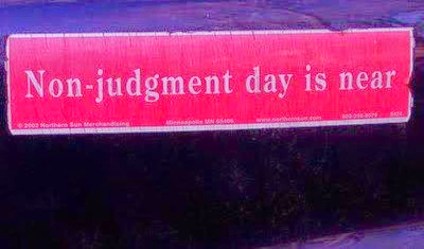
My grandmother would tell you exactly what she thought.  If you didn’t want to hear it, she would tell you where you could go.  Although more tact could have been employed, you knew where you stood.  If we can navigate the negative emotions of dealing with the truth, the truth is usually best out in the open.  Comments about whether  ‘you look fat in that dress’ are best kept to ourselves, but thoughts and feelings about church finances, kitchen renovations, or why young people are leaving the church should be talked about.

Who are you going to be?  What truth are you going to communicate?  If we are busy trying to make people happy, we often lose our sense of self or our calling in the process.  World changers like Paul, Martin Luther King, or William Wilberforce offended people because they had something important to say.  It has been said that in our postmodern culture reformers can’t be permitted.  The reason is that the majority opinion in culture can’t be challenged. It is immoral to tell people that what they are doing is wrong.  However, somehow, environmentalism, sexual-orientation, and economics have slipped under the radar and their is a lot of moralizing in the media on those subjects.  However, minority opinions are not really welcome.  The myth that Christians are in the majority is outdated.  The debate in the marketplace of ideas has become a rant where people often shout slogans, call each-other names, and drag up muck. It’s not really a place where truth is sought and reasonable argument is had.

Paul is bold and loving in his writing.  His tone may seem harsh to those who have been coddled by an over-protective social structure and education system.  However, he speaks truth and if we are secure in Christ, the truth sets us free.

14 I myself am satisfied about you, my brothers, that you yourselves are full of goodness, filled with all knowledge and able to instruct one another. 15 But on some points I have written to you very boldly by way of reminder, because of the grace given me by God 16 to be a minister of Christ Jesus to the Gentiles in the priestly service of the gospel of God, so that the offering of the Gentiles may be acceptable, sanctified by the Holy Spirit. 17 In Christ Jesus, then, I have reason to be proud of my work for God. 18 For I will not venture to speak of anything except what Christ has accomplished through me to bring the Gentiles to obedience—by word and deed, 19 by the power of signs and wonders, by the power of the Spirit of God—so that from Jerusalem and all the way around to Illyricum I have fulfilled the ministry of the gospel of Christ; 20 and thus I make it my ambition to preach the gospel, not where Christ has already been named, lest I build on someone else’s foundation, 21 but as it is written,

“Those who have never been told of him will see,
    and those who have never heard will understand.”

1 Comment

God Solves Conflict

We look for ways to serve others to show God’s goodness, but somehow the way forward does not seem clear.  This has been true in my own home where my wife has wanted to spend more on a new house than I have.  Finances are often a source of conflict between a husband and a wife.  I sincerely wanted guidance on how I should proceed in the selling of our house and the purchase of a new one.  Our house has, in our opinion, become under-priced and we thought no-one would buy it and so we thought God had plans for us when a buyer finally came through.  We, therefore, felt justified making an offer on a house in Chicago.

However, between Kelli and me there has been conflict.  We don’t see have the same opinion on finances.  I have tried to adjust my stance regularly, but I have wondered if I was just becoming more foolish.  The words of God to Adam were ringing in my head, “Because you listened to your wife and ate of the tree of which I told you, ‘do not eat,'”  and also the story of Samson listening to Delilah to his ruin.  This was contrasted with committing my way to God and he would make straight my path.

The last couple of days I have been reading Romans 14 and 15 about how Jesus is the example of emptying himself to reach others.  Jesus came in humility and although I have been confused about the limits of self-sacrifice I have sincerely looked to serve.

It is at that point that the seller in Chicago cancelled our contract because they were offered a better contract by someone other than us.  Within 24 hours the buyer of our house in McHenry cancelled their contract without explanation.  So, in one sense the conflict is resolved.  We have the hope of knowing that it is God who is working his will in these circumstances, so although we are sad, we are not crushed.  In one sense the conflict is resolved.

However, now a new conflict arises.  How do we solve the issue of homeschooling our son because of his special needs?  When the fall semester starts we will both once more have a two-hour commute.  Kelli’s solution is to get up at 3:30 a.m. each morning.  On the horizon is another conflict.  However, for now, we have sought the Lord as to what he would want in this situation and we have found that he has removed the disagreement by allowing both contracts to fall through.  At this moment I can sit in the house that I love and enjoy the summer.  I can let go of tomorrow’s worries because the God who is with us today will be present tomorrow.  Then the God of hope will fill me with all joy and peace in believing, so that by the power of the Holy Spirit I may abound in hope

For I tell you that Christ became a servant to the circumcised to show God’s truthfulness, in order to confirm the promises given to the patriarchs, and in order that the Gentiles might glorify God for his mercy. As it is written,

“Therefore I will praise you among the Gentiles,
    and sing to your name.”

10 And again it is said,

“Rejoice, O Gentiles, with his people.”

11 And again,

“Praise the Lord, all you Gentiles,
    and let all the peoples extol him.”

12 And again Isaiah says,

“The root of Jesse will come,
    even he who arises to rule the Gentiles;
in him will the Gentiles hope.”

13 May the God of hope fill you with all joy and peace in believing, so that by the power of the Holy Spirit you may abound in hope.

Leave a comment

Jesus Did Not Please Himself

To not think first about pleasing ourselves is counter-cultural.  For all those who discern the will of God by ease and comfort it is a slap in the face.

In difficult situations the stronger person can more easily give up their rights.  The weaker person emotionally, spiritually, or physically needs the stronger one to give way on an issue so that they can get along.  The weaker one can not create unity by giving up their strong feelings, whereas the stronger individual can see the bigger picture and does not have to please themselves.  The example in the passage below is Jesus.  Jesus did not choose a way that brought him immediate pleasure.  He chose a path of personal pain and sacrifice that was best for us.  He saw the good that could be achieved for others and he chose their good over his own.

I am in a difficult situation where I see things very differently from others.  I think that investing my money in a project could be ruinous.  Others think that we have the money to invest.  The passage below challenges me, but I don’t know whether to just surrender my position for the sake of unity or whether to hold fast because of integrity.  It’s not a moral issue, it’s purely fiscal.  So, the application of the passage below is quite difficult.  However, we should err toward not just pleasing ourselves.  We should check our motives.

We who are strong have an obligation to bear with the failings of the weak, and not to please ourselves. Let each of us please his neighbour for his good, to build him up. For Christ did not please himself, but as it is written, “The reproaches of those who reproached you fell on me.”For whatever was written in former days was written for our instruction, that through endurance and through the encouragement of the Scriptures we might have hope. May the God of endurance and encouragement grant you to live in such harmony with one another, in accord with Christ Jesus, that together you may with one voice glorify the God and Father of our Lord Jesus Christ. Therefore welcome one another as Christ has welcomed you, for the glory of God.

Leave a comment

Creating a World Without Judgement

Verses like Romans 14:13 remind us that we should not pass judgement on another.  These verses are often ripped out of context so that we all leave each other alone when it comes to issues of personal choice or discernment, but the verses always have a context.  The context in the case of Romans 14 is those within the church who get really anxious or angry about non-essentials.  We can often condemn our brothers or sisters in the church because of how they dress, format their morning service, or use psychology in how they counsel.  In the church, as in all circumstances, our heart should be to love.  This means that we do not condemn.  We do not so easily write people off because of their opinions.

A hot button today is the issue of same-sex marriage.  There are those who write off people who disagree with them on this issue.  Thinking people do indeed need to reach a judgement on the issue but need not judge those who disagree with them.  In other words, each person needs to study scripture and see what they believe God teaches on the issue, however people should not say that being wrong on this issue condemns a person to hell.  The issue of heaven and hell is primarily an issue of relationship with God.  Heaven is God’s dwelling place and those who are headed there are doing so because they want to be with him forever.  Because they live with God they become like God.  Their views on issues change and they become holy like he is Holy.  However, opinions do change when people are on that journey with God.  We need to have patience with those who disagree, not contempt.  We need to have compassion first and not condemnation.

One side of the issue of same-sex marriage is right and the other is wrong.  The sides of the issue are mutually exclusive.  However, Christians are destroying each other over this – we are destroying the work of God, over this issue.  We can, and must, disagree.  It is essential to being authentic.  We must state how our opinions differ.  However, we can not use this issue as a litmus test to decide who is lost and who is saved.  Salvation centers on the person of Jesus and not the issue of same-sex marriage.  Life with Jesus will give us thoughts on the issue, but this issue is not the essence of life.  Jesus is the Way the Truth and the Life.  No-one comes to the Father except through him.  We are not saved or condemned due to our stance on any issue except our response to the person of Jesus.

What if you know that someone has reached a stance that is in error?  Have a loving discussion, but when you realise that the conversation is going in circles just let it go.  I have found in most of my discussions with those who disagree with me on same-sex marriage or transgender issues they don’t really listen to my opinion.  They are only interested in stating and then restating their own.  Maybe we can change this trend.

13 Therefore let us not pass judgement on one another any longer, but rather decide never to put a stumbling block or hindrance in the way of a brother. 14 I know and am persuaded in the Lord Jesus that nothing is unclean in itself, but it is unclean for anyone who thinks it unclean. 15 For if your brother is grieved by what you eat, you are no longer walking in love. By what you eat, do not destroy the one for whom Christ died.16 So do not let what you regard as good be spoken of as evil. 17 For the kingdom of God is not a matter of eating and drinking but of righteousness and peace and joy in the Holy Spirit. 18 Whoever thus serves Christ is acceptable to God and approved by men. 19 So then let us pursue what makes for peace and for mutual upbuilding.

20 Do not, for the sake of food, destroy the work of God. Everything is indeed clean, but it is wrong for anyone to make another stumble by what he eats. 21 It is good not to eat meat or drink wine or do anything that causes your brother to stumble. 22 The faith that you have, keep between yourself and God. Blessed is the one who has no reason to pass judgement on himself for what he approves. 23 But whoever has doubts is condemned if he eats, because the eating is not from faith. For whatever does not proceed from faith is sin.

Leave a comment

Choosing the Right Hill to Die On

Growing up we had many debates about what music a Christian could listen to, what books they should read, and whether they should go to the movie theatre.  The superior Christians made sure that their standards of abstaining from music, movies and all media was well-known.  Over time the pendulum shifted and those who chose to listen to AC/DC, read Harry Potter, and watch Mad Max communicated their ascendancy.  In both cases it seemed like coming down on the right side of the issue was more important than maintaining love and unity.

In Romans 14 Paul refers to those who dictate their moral choices to others in the church ‘weak’.  This seems to sound wrong.  Wouldn’t it be the strong who make a strong stance on moral grounds?  In the essentials of the faith, it is important not to compromise.  However, throughout history there have been those who have wrecked families and split churches over the non-essentials.  In such cases the mature position is to be winsome and to give up the rights I have.  We are not to judge (that is condemn) people who dress, sing, or speak differently from us.  This passage counters racial prejudice, inter-generational conflict, and family feuding.  Maybe we need to be a bit wiser as to which hill we will die on.

As for the one who is weak in faith, welcome him, but not to quarrel over opinions. One person believes he may eat anything, while the weak person eats only vegetables. Let not the one who eats despise the one who abstains, and let not the one who abstains pass judgement on the one who eats, for God has welcomed him. Who are you to pass judgement on the servant of another? It is before his own master[a] that he stands or falls. And he will be upheld, for the Lord is able to make him stand.

One person esteems one day as better than another, while another esteems all days alike. Each one should be fully convinced in his own mind. The one who observes the day, observes it in honour of the Lord. The one who eats, eats in honour of the Lord, since he gives thanks to God, while the one who abstains, abstains in honour of the Lord and gives thanks to God. For none of us lives to himself, and none of us dies to himself. For if we live, we live to the Lord, and if we die, we die to the Lord. So then, whether we live or whether we die, we are the Lord’s. For to this end Christ died and lived again, that he might be Lord both of the dead and of the living.

10 Why do you pass judgement on your brother? Or you, why do you despise your brother? For we will all stand before the judgement seat of God; 11 for it is written,

“As I live, says the Lord, every knee shall bow to me,
    and every tongue shall confess[b] to God.”

12 So then each of us will give an account of himself to God.

Leave a comment

Law-abiding Citizen

The concept of freedom can lead to an idea of lawlessness.  If I have to do what other people tell me, I am in chains.  There is some truth to that, but it is locked into the ‘have to’ element.  For the Christian, the ‘have to’ is gone.  We do not have to do anything to earn our salvation with God.  We are free.  However, if we understand the great price that was paid to purchase our freedom we can only respond with gratitude.  The grateful heart knows that it is powerless to help itself.  It is oriented toward the one who has taken care of things beyond its control.  The right response is to live the life that the creator designed us to live.  It is a life of worship and service.  It is a life that keeps the law by loving our neighbour.

Owe no one anything, except to love each other, for the one who loves another has fulfilled the law. For the commandments, “You shall not commit adultery, You shall not murder, You shall not steal, You shall not covet”, and any other commandment, are summed up in this word: “You shall love your neighbour as yourself.” 10 Love does no wrong to a neighbour; therefore love is the fulfilling of the law.

Leave a comment

Problems with Authority

Not many people like to be bossed around.  I have a mixed relationship with authority.  Having been a pastor of an African-American church I heard plenty of stories of racial profiling in Chicago, of people receiving harsh treatment at the hands of the authorities and of trumped-up charges which were upheld in court.  I tend to have empathy with those who sit in their car talking with a traffic-cop.  This may come from my upbringing where my father jokingly called the police the ‘gestapo’ or ‘the pigs’.   I know that these ideas are inappropriate, especially in America where there is a strong connection with anti-Semitism and Nazis, but even though I wouldn’t use derogatory terms for the average policeman, I have a gut response that they are rule-followers who lack compassion and have a delight in catching others in acts that they do themselves.

Romans 13 challenges my emotions quite strongly.  Let’s look at the first few verses together:

Let every person be subject to the governing authorities. For there is no authority except from God, and those that exist have been instituted by God. Therefore whoever resists the authorities resists what God has appointed, and those who resist will incur judgement.For rulers are not a terror to good conduct, but to bad. Would you have no fear of the one who is in authority? Then do what is good, and you will receive his approval, for he is God’s servant for your good. But if you do wrong, be afraid, for he does not bear the sword in vain. For he is the servant of God, an avenger who carries out God’s wrath on the wrongdoer. Therefore one must be in subjection, not only to avoid God’s wrath but also for the sake of conscience. For because of this you also pay taxes, for the authorities are ministers of God, attending to this very thing. Pay to all what is owed to them: taxes to whom taxes are owed, revenue to whom revenue is owed, respect to whom respect is owed, honour to whom honour is owed.

God is the source of authority. His nature is the defining basis for authority.  When police exercise their authority rightly, they do something which is in the nature of God.  So, if we do not come to a complete stop at a stop sign, or our car stops just over the line, we have transgressed and the police can rightly issue the full punishment of the law.  Although this feels horrible, it is, in fact, good.  It measures up to the absolute standards which have been set.  Laws were not really made to be broken, as many people say, they were made to create an orderly society.  In many cases, there was an evil, like accidents at stop signs where people just blew through them.  This evil was addressed by the good law.  However, what it reveals in me is that I do not measure up to the standard.  It reveals a shortcoming in me when I am pulled over by a policeman.  Rather than feeling gratitude I feel resentment, frustration and embarrassment.  If I am doing 70 mph on the tollway in Chicago, I drive with some level of fear that I will be pulled over because the speed limit is 55.  If I want to drive without fear, I should drive at 55.

Christians should be supportive of an ordered, law-abiding society.  The current ideas of freedom which thumb their noses at law-enforcement and look for loop-holes in the law, are not really biblical.  In one sense Christians are free from the law, because we have died to the requirements of Mosaic law as a means to be right with God.  In another  sense,though, Christians are subject to the law. This is because we choose to be model citizens of the Kingdom of Heaven who live out holy lives for God’s glory.

The final part of the passage above emphasizes order.  It emphasizes a structured and hierarchical society where each person receives the respect and the submission which fits their position.  I have never disrespected a policeman and I have paid fines which I have owed.  The emotional patterns formed in my youth may still be under the surface, but I act in accordance with what I know to be right.  I don’t always like what is right and good, but, in public life, I seek to submit to the authorities that God has put in place.

Leave a comment

Godly Responses to Others

A lot of movies focus on revenge.  In some cases a loved one is killed and so a ‘nice-guy’ turned vigilante hunts them down.  In some high-school movies like Mean Girls, the hero is victimized for being different but the movie shows how the meanest girls (or boys) will

mean-girls

Mean Girls

be exposed for what they have done.  We are rooting for justice.  We want to see a repayment of tooth for tooth or bruise for bruise.  We think of the times when we have been powerless and we live the life of the misunderstood, rejected, or abused.


The Bible deals with a lot of rejection.  Hannah was rejected by her rival in 1 Samuel 1 because she could not have children.  David was rejected by Saul because Saul was jealous of David’s popularity.  And, of course, Jesus was rejected and killed by the establishment of his day.  In Romans 12:9-21 Paul deals with the temptation to be vengeful and mean that rises up in all of us. We establish a right response to each other when we genuinely love each other and  when we repay mean actions with kindness.

Let love be genuine. Abhor what is evil; hold fast to what is good.10 Love one another with brotherly affection. Outdo one another in showing honour. 11 Do not be slothful in zeal, be fervent in spirit, serve the Lord. 12 Rejoice in hope, be patient in tribulation, be constant in prayer. 13 Contribute to the needs of the saints and seek to show hospitality.

14 Bless those who persecute you; bless and do not curse them.15 Rejoice with those who rejoice, weep with those who weep. 16 Live in harmony with one another. Do not be haughty, but associate with the lowly.  Never be wise in your own sight. 17 Repay no one evil for evil, but give thought to do what is honourable in the sight of all. 18 If possible, so far as it depends on you, live peaceably with all. 19 Beloved,never avenge yourselves, but leave it to the wrath of God, for it is written, “Vengeance is mine, I will repay, says the Lord.” 20 To the contrary, “if your enemy is hungry, feed him; if he is thirsty, give him something to drink; for by so doing you will heap burning coals on his head.” 21 Do not be overcome by evil, but overcome evil with good.

Responding to others with genuine love is harder than it sounds.  It is easy to fool ourselves into thinking that our love is genuine.  However, the kind of self-sacrificial and others centered love that the Bible requires is rare.  ‘Evil,’ in the Bible, is that which obstructs the goodness of God.  We are aware that murder, rape, or abuse hinder God’s goodness. Christians often battle these things.  Poverty, lack of education, and civil

goodandevil

‘Evil’ is anything that obstructs God’s good.

injustice bother us, too, but we might not be as motivated to deal with them.  However, a cold look, giving the silent treatment, or gossiping to a friend also withhold God’s goodness.  In doing these seemingly trivial things we are acting in ways that are evil.  The Bible says to abhor or hate it when our character falls short of his design.  The tepid responses that we have to some of our own evil is abhorrent to God and we need to deal with it with the same zeal.


Brotherly affection is a type of love.  There are at least four loves in Greek:  agape, phileo, storge, and eros.  Paul is referring here to more of the phileo emphasis.  Love has a certain level of camaraderie.  Christians should be doing life together with an affection that reflects our shared values.  The fact that this doesn’t happen and that some of the worst rivalries can be found between those within the church is disturbing.  The pure passionate love of God is perhaps reflected in the believer when zeal is emphasized by Paul.  God exhibits his love in the Passion of the Christ.  God came for us and rescued us.  He sacrificed everything for us and our love for our brother and sister in Christ should take similar emotional risks.  It is hard, when love wars with fear, to step out in vulnerability and love in spite of our fears.  Hope, patience and constancy are aspects of love which are reflected in the classic 1 Corinthians 13 chapter.  Paul is consistent in the qualities of love that he describes.  Love is not a chaotic and unpredictable flood of emotion, it is a dependable and committed act of will.  Of course, emotion can be rightly associated with a true love, but it is not its foundation.

In my early twenties I would have claimed to have loved the women that I dated.  I had strong emotions which caused me to think of them often.  However, I was often overcome with fear.  I would fear whether I was making a wrong choice for my future.  I would fear about whether the relationship was really honouring to God.  I would fear that I would be abandoned.  My fears overcame my protestations of love and acted irrationally and inconsistently – even cruelly.  My love really didn’t qualify for the consistent commitment that God gives.x-repay-no-one-evil-for-evil1

We maintain community by the way we love and this is shown particularly in how we respond to conflict.  Jesus told us to turn the other cheek.  Paul tells us to bless the person who wishes to do us harm.  To bless someone means to become an advocate for God’s goodness in their life.  It means to become a conduit for flourishing.  Paul comes at this idea in many ways in the second paragraph above.  Through restatement he emphasizes that we should give up our fervent desire to defend ourselves.  Although we may be misunderstood, we don’t need to try and make another person see us as we want to be perceived.

The focus of Paul is not on revenge but on serving God.

I was discussing about atheists the other day.  Not all atheists are angry at God, but some really do spend a lot of time arguing about a God they believe doesn’t exist.  Some are even really angry with the God they spend so much of their time debunking.  Graham Greene in his book, The End of the Affair, writes about a woman who is convinced of God’s existence because of the emotional response of an atheist.  She listens to his arguments and studies under his passion, but concludes that there must be a God because of the fervour of the atheist’s atheism.  The argument against God would be far stronger if less people cared about His existence.

Our issues and our adversaries have less power over us when we can just let them go.  We are even given a direction in which to release them.  We hand all our worries, our adversaries, and our obsessions over to God. If we hang on to a desire for retribution it harms us as well as the one we want to receive justice.  In the end love will win out and love has much more healing potential than revenge.

dove_release

Leave a comment

Warning Senior Pastors About Blocking Growth

I own a 2005 Land Rover LR3.  At the dealership they tell me that all the problems that I have with it are just because it is old.  Last month we found that the drainage for the sunroof was running into the interior of the car.  We also had to have it towed in from a neighboring town because the system pumping the coolant failed.  This month the Land

GoldLR3

LR3

Rover refuses to open its back door.  If we are to pack it for a trip this coming weekend, it will have to be through the rear passenger doors and not through the back.  The car still functions but I have lost confidence in it.  Not all the parts are operating optimally. I do not have peace when I sit in it and expect to arrive places.

The church is like my car in some ways.  It has many parts – in fact it has many roles that its members play.  Few of the roles are essential for it to continue to function, but with each missing role the church is diminished.  When those who could contribute withdraw their services, leave church, or are prevented by church structure from living out their calling we are like a car running on half its cylinders.  We move, but the experience is slow at best or even disturbing.

After Paul writes about sacrificing ourselves to God in Romans 12:1 and 2, he moves on to the grace needed by the whole church to function as a body.  By design, the gifts that we bring to church make church function.

For by the grace given to me I say to every one among you not to think of himself more highly than he ought to think, but to think with sober judgement, each according to the measure of faith that God has assigned. For as in one body we have many members, and the members do not all have the same function, so we, though many, are one body in Christ, and individually members one of another. Having gifts that differ according to the grace given to us, let us use them: if prophecy, in proportion to our faith; if service, in our serving; the one who teaches, in his teaching; the one who exhorts, in his exhortation; the one who contributes, in generosity; the one who leads, with zeal; the one who does acts of mercy, with cheerfulness.

How does the church function as it should?  Each member acts in humility; Each member identifies his or her function; Each member applies his or her gift.

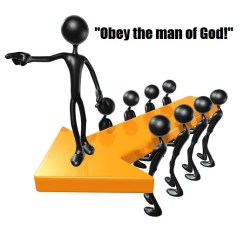
Firstly let’s think why humility is key to a healthy church community.  When Romans tells us to not think of ourselves more highly than we ought, it is addressing a problem.  Some people think that they are essential to the process of doing church.  The obvious culprit in our day would be the senior pastor or elder who takes every task upon himself.  However, in Paul’s day one-man-rule was less common.  People who rose to the top were people who had a particular gifting.  We know from 1 Corinthians that Corinth had a particular esteem for those who spoke in tongues.  They also elevated people based on their ability to teach.  If someone like Apollos was great at delivering speeches he would be much sought after.  People would begin to boast about following Apollos and so there are a couple of

obey

Senior Pastor?

obvious traps that the church can fall into when someone has an obvious gift.  One is that we build into people’s pride and we accelerate their development in the church too rapidly.  In other words we give too much responsibility to those who have skills but who have not developed the maturity to use it.  A second danger is that the gifting of one individual becomes predominant and cancels out the chance to develop others with other gifts. Even if others in the church have similar gifts to the dominant person’s, the reluctance to share or to delegate becomes a hindrance to growth.  In both cases, a gifted teacher, preacher, counselor, servant, or administrator who gains dominance in a church body becomes a stumbling block.  This is the kind of situation Paul is warning against in the first century and it is also something we should view with suspicion.

Humility is rooted in faith and faith believes that only God is essential.  The roles that we fill in church could be filled by any servant of God whom God equips.  None of us should think of ourselves as too high or too low to fill a role.  Humility is essential for a person to step into the role that God has for them, no matter how big or small that role may be.  The focus becomes less on fear, but more on God.  This is where sober judgement is essential.  With our godly friends, family and fellow church goers we need to evaluate both the nature of our gifts and the nature of the faith we have to use them.  Many prominent people in the church are motivated by fear.  What will happen if someone else shares the pulpit?  What will happen if I don’t manage the Sunday School?  What will happen if I am not the one to visit those who are in hospital?  Paul is saying that everyone has a role to play and anyone who monopolizes a particular role needs to stop thinking of themselves too highly.

There once was an elder in a church that I knew who bemoaned how everything in the church fell on him.  He had to open the doors, make the plans, and at one time became the sole elder.  However, the truth was that other people in the church found it very difficult to work with him.  He was unteachable in many ways and unaware that his attitude and his family’s aggression was discouraging others from exercising their gifts alongside him.

The church in general still has a separate professional class of ministers, and this is problematic.  When we pay our 10% to the church and think that pays others to exercise their gifting, we have missed the essential point of what Paul is talking about.  We should financially support the church, but the church should then pool the resources to help all of its members do their ministry.  A senior pastor can be problematic if the senior pastor is the only one ministering.  If the church is small and the senior pastor is the only one with an evident gift of preaching, it is not beyond reason to think that he may be the only one to preach.  However is such a church on the look-out for good speakers in its youth groups or twentysomethings?  What is the plan to develop them?  If the preaching pastor sees such people as competition, or is even just ignorant of their needs, he is seeing himself too highly.

The same thing can be said of someone who is really good at counseling.  Does all the counseling have to go through one person?  Is there a high level of control which is rooted in the fear that other people may counsel unbiblically or in ways that are not sanctioned by higher-ups?  If this is the case the church will be unable to grow its members in numbers or in stature.  When the gate to growth is closed, we shouldn’t be surprised if no-one passes through it.

If the first lesson for a functioning church body is humility, the second is that each member identifies their function.  The sober judgment that identifies whether I am taking on too little or too much of a role must be coupled with identifying what my role should be.  In the passage above, Paul identifies prophecy, service, teaching, exhortation, contribution, and leadership.

Prophecy is misunderstood by some to be purely a speaking about the future.  However, a prophet spoke God’s truth.  This could be home truths about the past. It could be truths about the future.  It could be truths about the future.  the purpose of the prophet is to bring a dose of reality.  When people wander their own way, the prophet states plainly the nature of our foolishness and outlines a path back to God.  Many preachers are prophets by this definition.  Prophecy depends on seeking God and having trust in God.  We trust the truth of his Word.  We rely on the strength of his promises.  We believe what he has said will come to pass.  Then with a boldness that flies in the face of culture, the prophet declares ‘thus says the Lord!’

Many people in the world are in need.  In Paul’s day it was no different.  Without the social services that the governments provide today, the church had to provide much more than it does today.  People from churches have sacrificed everything by serving those with contagious diseases.  People from churches have moved into neighbourhoods where poverty has stripped generations of opportunity.  Paul knows that some people naturally see how people hurt and then they bring healing with their hands.

Teaching and preaching are often thrown together in the way people talk, but they can be the quite different.  Preaching carries a sense of proclamation, but teaching can be much broader.  For example, teachers like Jesus taught by their actions, their questions and by their life choices rather than just by the sermons they delivered.  Someone can be good at leading another person through a series of experiences that change their life, but they may freeze in a pulpit.  Such a person is still a teacher.

The church needs people who move others along.  Sometimes that can mean that someone writes a thoughtful card recounting gifts but it can also be someone who raises their voice and unleashes a loving passion which shakes us out of our passivity.  Exhortation longs for movement and change and it can’t keep quiet when it sees people who just settle.  Those with a gift of exhortation are often unaware of their own gifts because they are so focused on what others are (or aren’t) doing with theirs.  Rather than shut down exhorters when the exhortation is uncomfortable we need to ask whether God is behind these words for action.  The answer is to move.

Donald Trump is strong on the economy and weak in many other areas.  However, at the point of writing, he is about to win the Republican nomination.  Bill Clinton won over George H.W. Bush, why?  The economy, stupid.  Since shells were traded as cash, people have had a love for money and make key decisions with a mind to gaining more of it.  It takes a special strength to look past an economy of gain toward an economy of letting go.  Some people can give more to the church because they are moved by God to do so.  This may be more in total dollars given, or it may just be more of a percentage of total income.  Givers understand that God’s projects need financing and the church administrates that.  The godly giver gives generously and without thought of what they will get in return.

The final gift that Paul mentions is leadership.  There are some people in a church who mastermind operations.  There are people who get the job done.  They might bring all the right people to the table.  They might have a vision which is well articulated and unites a group.  They might start conversations that become a movement.  Such people can organise the people around them according to their gifting.  Through these people God gets results.

I have rarely seen a church where each member knew their gifting.  Gift inventories are helpful (http://www.lifeway.com/lwc/files/lwcF_MYCS_030526_Spiritual_Gifts_Survey.pdf ) but they often become a novelty which leads to little change.  The real outworking of this is seen in the Bible when a spiritual mentor of some kind takes others and leads them through a time of discovery.  This is much more labour intensive than a paper and pencil test.  However, because we are designed for community I can see no shortcut to a solution that connects the fellowship.

Dan Lovaglia (https://www.facebook.com/dmlovaglia) has just written a book which challenges how we do church,especially children’s ministry.  He calls us back to a way of ministering that is truly relational.  Essentially his model is one of intentional mentorship that develops the gifts of others over time.  The quick fix models of ministry hat manufactured mannequins to fill church windows is over over.  In this post-industrial era we need pre-industrial thought.  Organisms relate organically.  The highest organism in creation is man and so we need to depart from ministry manufacturing plants and return to the garden.

Do you know your gifting?  The list in Romans is not the complete list.  1 Corinthians adds others.  The idea is that God gifts his people differently.  What do you do well?  Has God started pulling on your heart to serve in a particular way?  Talk with someone you trust to see if that is God calling you to action.  It needn’t be something that consumes a lot of time or effort to begin with.  Maybe you could be the driver of the bus to and from the youth night.  Maybe you could arrange the flowers once a month.  The truth is that you can do something to use your gifts and talents for Jesus.  Using the gifts and talents you have with God’s people will build his church.

Apart from being humble and recognizing your gifts a final lesson from this passage is actually stepping out in faith.  The final step after recognizing the gift that we have is to exercise it.  This is easier in small churches where the needs are obvious and the pathway to growth is clearer, in larger churches this can be hard.  Which churches have classes for prophets, which develop its own preachers?  Are there venues where trainee preachers can preach to smaller groups of people?  Which churches have teachers teaching teachers how to teach?  How is service developed in churches in ways that are more than general?  How do we identify those who love to give and teach them how to give generously and responsibly over time?

A church might address this shortcoming by first of all identifying people who are doing well in possible areas of gifting.  Set apart some people who preach well.  Set apart others who spurr others on to action well.  Use the Bible as a guide to the categories of people that you are looking for.  Beyond that, think of needs the church has like tech crews, or children’s ministry.  Then help all people identify their spiritual gifts.  Match the mentors with those who need to be plugged in.  Then have those who are learning shadow those Collective Gwho are further along.  This is modeled on what Jesus did when his disciples ‘walked in his dust.’ The church then becomes a team of teams.  A team of teams needs a completely different leadership structure than the usual autocracy, so the role of the senior pastor will change considerably.  That is another story, but I would recommend reading Team of Teams or Collective Genius to learn more.

In summary, to grow a church both numerically and in spiritual health, leaders need to see themselves as less essential.  In the space that traditional leadership vacates, the congregation needs to identify and grow their gifts.


Leave a comment

Shalom Pharaoh

The United Nations News Center Reports that in South Sudan the gap between what the country produces in cereal and what the country needs is 53% greater than in 2015.  The Food and Agriculture Organization (FAO) and the World Food Programme (WFP) have warned that civil war and lack of rain are aggravating the present food shortages.

A Woman Prepares Her Last Supply of Grain in South Sudan

The price of grain has risen to levels which are five times the level that it was last year.  Given that income is already low, being able to purchase food is more and more difficult. Almost half of the country of 11.3 million people are ‘unsure where the next meal will come from’ and severe food insecurity has doubled among the population to 12 percent.

The ability to get produce to market has been damaged.  Ad-hoc taxes and road blocks hamper the goods from arriving and the costs of the extortion are passed on to the consumer.

90% of South Sudan’s land is arable, however, at the time of independence in 2011 only 4.5% of that was cultivated.  Even this low percentage has now decreased with the proliferation of fighting[i].

To put this report in context, if food prices in Chicago rose at the same rates as they are in Sudan, you could expect to pay more than $10 for a loaf of bread which cost $2 last year.  To some people, $10 may not seem much, but once you add that increase to all your weekly groceries, cut-backs in what we consume would be inevitable. We may think that consuming less and losing weight sounds cute, but losing 30% of our bodyweight constitutes starvation.  To lose 40% is often fatal. That is what is happening in countries like South Sudan, Namibia and North Korea.

It is no surprise that great anxiety comes when facing starvation. Anxiety is worry about the future. Food insecurity causes millions of people around the world to endure sleepless nights of worry.  The FAO map of world hunger shows that nations like Namibia and North Korea have high populations who go to bed each night wondering when they will have their next meal. For them, life must be a nightmare.

Talking of nightmares, have you had any nightmares lately?  Anxiety can lead to elevated heartrates and for the body to be set on alert. That might not seem so bad during the day, if we are facing some kind of danger, however anxiety is the enemy of sleep.

Sometimes dreams themselves can be a source of anxiety. My wife often wakes up claiming to have had a weird dream.  Events in dreams are often weird.  Common events in dreams can be that all of our teeth fall out, we fall from a great height, we are wearing less than we would desire, we are being pursued by an animal or mysterious person,  we die, we take an exam, we find our spouse is cheating on us, we fly, and we even become pregnant.  Because of these common symbols people think their dreams have a deeper meaning.  Do these dreams have deep significance?  Scientists disagree with each other.  Some people publish that they know exactly what these common symbols mean. There are even dream dictionaries.  What do you think?

Famine and dreams come together in the story of Joseph and the Pharaoh of Egypt found in Genesis 41. In ancient times, dreams were thought to hold great significance.  Dreams have already played a large part in Joseph’s story, but we must remember that supernatural revelation through dreams and visions plays a large part in the whole story of Genesis so far.  Abraham received visions, Jacob had significant dreams.  The story of Pharaoh’s dreams is just one chapter in the larger story of Genesis.  Genesis is a book in the anthology of books which we call the Bible.  In Genesis 1-11 God laid out the case against mankind.  Humanity ruined a perfectly good creation by choosing to live by its own corrupted standards and ways.  Shame, guilt and death left God’s world polluted.  God rebooted the story through Noah, but even then sin had its way.  In Genesis 12 God promises Abraham that he will bring blessing to all the nations through his family.  Although Abraham’s family makes terrible decisions, God still works through them.  Although Joseph’s brothers have cast him aside, in chapter 41 of Genesis God’s plan will be revealed.  ‘The mystery of Providence is about to be cleared up (Jamieson, Fausset and Brown).’

Most people attending church have heard the story of Pharaoh’s dreams before.  In fact many people outside the church have seen a rock ’n’ roll Pharaoh singing about his

Pharaoh from Joseph and the Amazing Technicolor Dreamcoat

dreams in Joseph and His Amazing Technicolored Dream Coat.  Before we read through the passage let’s recall the story and look at some of the details more closely.

In Genesis 41 we are first told that two years have passed in Egypt since the cupbearer and the baker have had their dreams.  In that short detail we imagine the compounded frustration and isolation that Joseph must have had.  We could reasonably conclude that he thinks his ability to interpret the cupbearer’s dream was of no significance. His faithfulness to God has not brought him the results for which he would have wished.  However, in spite of no change in his circumstances we will see that he has remained faithful to the God of his fathers.

Pharaoh, the god-king, has a dream.  The dream involves multiple symbols and they trouble the king.  Pharaoh doesn’t just have priests that interpret dreams, Pharaoh is the most senior ranking priest in Egypt.  As a god, he would expect to have the gift of interpretation.  However, his dreams leave him troubled.  The first of the two dreams involve cattle of some kind.  Something that is hidden in the English text is the similarity in Hebrew between the words for Pharaoh and cattle.  Some interpreters say that Pharaoh might have been concerned that the cattle represented him in some way.  It is hard to tell whether Hebrew and ancient Egyptian are similar in this regard.  We do know that both cattle and the Nile River have links with the gods Osiris and Isis.  The Nile River was itself considered a god.  Pharaoh would have been aware of connections with deity and would have taken the dream very seriously.

The well-fed cattle are beautiful to behold.  In an agrarian society livestock’s beauty can often be thought of in terms of the meat on them.  Whether the author is referring to water-buffalo or to regular cows cannot be known.  Water-buffalo do wade in the shallows on the edge of the Nile and can appear to rise out of the water as they move slowly up toward the bank.  It was a common sight to see healthy cattle grazing on the reeds and grasses by the Nile.  To see the scrawny, bony cattle come up out of the Nile would have troubled the Pharaoh.  To see them eat up the healthy cattle might possibly have looked quite horrific.  In any case, the sight of the lean cows eating the fat cows startled Pharaoh awake.

Water Buffalo

When the king sleeps again he sees seven ears of cereal crop on one stalk.  This uncommon occurrence is in contrast with the withered ears which would have probably been on individual stalks.  The east wind which has withered them is a wind which comes across the Arabian Peninsula and is very dry.  The combination of heat and lack of moisture destroys crops.  These withered ears of grain now devour the healthy ears.

Pharaoh has a class of priest that he immediately calls to his aid.  They would have been trained in interpretation by the books, like the Book of Dreams, stored in their religious libraries.  Some commentators say that the magicians’ mistake is seeing the dreams as two separate dreams.  The Hebrew has Pharaoh telling them his dream, singular, and has them being unable to interpret his dreams (plural). Most translators harmonize this distinction, but that might hide the original intent of the author.  The Pharaoh is in now in a state of anxiety.  The gods have spoken to him of the source of Egypt’s strength – The Nile.  The gods may have spoken to him about his own future.  The gods have used symbols that represent the mighty gods Osiris and Isis.

The Pharaoh’s consternation about his dreams seems to prick the conscience of the cupbearer.  He references the ill-fated baker and himself and admits his belief that Joseph, a slave to the captain of the guard, has a God-given gift of translation.  Also, the cupbearer says in the Hebrew that he remembers his own sin.  His own shortcomings however, are being used by God in God’s own timings for his own purposes.  Although none of us should choose to sin, God can even use our sin to bring about the best for us.

Joseph is fetched.  The text literally says that Pharaoh’s servants ran.  Then he is shaved and cleaned up. This is an important detail to the original audience because Egyptians and not Israelites would shave off their facial hair.  It is possible that Joseph had his head shaved too.  His change in appearance would be stark and explains why his own brothers wouldn’t recognize the clean-shaven Joseph.

Pharaoh thinks that Joseph is by trade some interpreter of dreams like his own shamans.  However, Joseph from the outset makes sure that he presents himself as a conduit to the power and the revelation of God.

Little needs to be said about Pharaoh’s retelling of the dreams. The only marked difference from the earlier account is that the retelling by Pharaoh has slightly more detail and shows some anxiety.  That Pharaoh was increasing in his anxiety might be indicated by Joseph’s assurance that God would give him a ‘shalom’ answer.  Shalom, in this case, means an answer that prospers or an answer that brings calm.

Joseph receives an interpretation from God that harmonizes the two dream sequences.  The source of Egypt’s agriculture and economy, The Nile, is going to produce bumper crops and healthy livestock for seven years.  After these years have ended, a famine will come and sweep away the plenty.  God has revealed the dream twice because repetition emphasizes the seriousness of God’s intent and that the events will happen soon.

Joseph goes beyond the mere interpretation, though.  He is a natural administrator.  He sees how an overseer will be needed to gather a fifth of people’s grain in the years of plenty so that the years of famine are covered.  This means that the people will pay a hefty tax on their bounty and then the government will sell their own produce back to them.  Sounds like Joseph is not a member of the Tea Party.  Does Joseph’s advice mean that he is suggesting himself as administrator? The text does not make that clear, but Pharaoh’s reward to Joseph goes beyond anything Joseph could have imagined.  He elevates him to the position of Grand Vizier.  He receives the signet ring, a chariot and a group of runners who will clear the way for him.  Joseph is now second only to Pharaoh.  God’s redemptive plan is appearing.

The anxiety of the king is relieved and from a prophecy of peace and prosperity comes praise and position for Joseph.  So we have one of the great reversals of fortune in literature.  Through the provision of the interpretation of a dream peace comes to Egypt, Pharaoh and Joseph.  God shows himself faithful to the promise he made to Abraham that all nations would be blessed through his offspring.

With these insights, now let’s read the first 40 verses of Genesis 41:

After two whole years, Pharaoh dreamed that he was standing by the Nile, and behold, there came up out of the Nile seven cows attractive and plump, and they fed in the reed grass. And behold, seven other cows, ugly and thin, came up out of the Nile after them, and stood by the other cows on the bank of the Nile. And the ugly, thin cows ate up the seven attractive, plump cows. And Pharaoh awoke. And he fell asleep and dreamed a second time. And behold, seven ears of corn, plump and good, were growing on one stalk. And behold, after them sprouted seven ears, thin and blighted by the east wind. And the thin ears swallowed up the seven plump, full ears. And Pharaoh awoke, and behold, it was a dream. So in the morning his spirit was troubled, and he sent and called for all the magicians of Egypt and all its wise men. Pharaoh told them his dreams, but there was none who could interpret them to Pharaoh.

Pharaoh’s Dreams

Then the chief cupbearer said to Pharaoh, “I remember my offences today. When Pharaoh was angry with his servants and put me and the chief baker in custody in the house of the captain of the guard, we dreamed on the same night, he and I, each having a dream with its own interpretation. A young Hebrew was there with us, a servant of the captain of the guard. When we told him, he interpreted our dreams to us, giving an interpretation to each man according to his dream. And as he interpreted to us, so it came about. I was restored to my office, and the baker was hanged.”

Then Pharaoh sent and called Joseph, and they quickly brought him out of the pit. And when he had shaved himself and changed his clothes, he came in before Pharaoh. And Pharaoh said to Joseph, “I have had a dream, and there is no one who can interpret it. I have heard it said of you that when you hear a dream you can interpret it.” Joseph answered Pharaoh, “It is not in me; God will give Pharaoh a favourable answer.” Then Pharaoh said to Joseph, “Behold, in my dream I was standing on the banks of the Nile. Seven cows, plump and attractive, came up out of the Nile and fed in the reed grass.  Seven other cows came up after them, poor and very ugly and thin, such as I had never seen in all the land of Egypt. And the thin, ugly cows ate up the first seven plump cows, but when they had eaten them no one would have known that they had eaten them, for they were still as ugly as at the beginning. Then I awoke. I also saw in my dream seven ears growing on one stalk, full and good. Seven ears, withered, thin, and blighted by the east wind, sprouted after them, and the thin ears swallowed up the seven good ears. And I told it to the magicians, but there was no one who could explain it to me.”

Then Joseph said to Pharaoh, “The dreams of Pharaoh are one; God has revealed to Pharaoh what he is about to do. The seven good cows are seven years, and the seven good ears are seven years; the dreams are one. The seven lean and ugly cows that came up after them are seven years, and the seven empty ears blighted by the east wind are also seven years of famine. It is as I told Pharaoh; God has shown to Pharaoh what he is about to do. There will come seven years of great plenty throughout all the land of Egypt, but after them there will arise seven years of famine, and all the plenty will be forgotten in the land of Egypt. The famine will consume the land, and the plenty will be unknown in the land by reason of the famine that will follow, for it will be very severe. And the doubling of Pharaoh’s dream means that the thing is fixed by God, and God will shortly bring it about. Now therefore let Pharaoh select a discerning and wise man, and set him over the land of Egypt. Let Pharaoh proceed to appoint overseers over the land and take one-fifth of the produce of the land of Egypt during the seven plentiful years. And let them gather all the food of these good years that are coming and store up grain under the authority of Pharaoh for food in the cities, and let them keep it. That food shall be a reserve for the land against the seven years of famine that are to occur in the land of Egypt, so that the land may not perish through the famine.”

This proposal pleased Pharaoh and all his servants. And Pharaoh said to his servants, “Can we find a man like this, in whom is the Spirit of God?” Then Pharaoh said to Joseph, “Since God has shown you all this, there is none so discerning and wise as you are. You shall be over my house, and all my people shall order themselves as you command. Only as regards the throne will I be greater than you.”

God brings shalom through Joseph to the anxious Pharaoh and promises shalom in time of famine.

Having seen how dreams aided Joseph, Pharaoh and Egypt, why do we not give them more credence today? Can you imagine American domestic policy revolving around Barak Obama’s dreams?

In an age when science was primitive and superstition was strong, there was a lot of acceptance of messages from dreams, visions, and direct experiences with deities.  In some areas of the world people still consult a shaman when they feel anxiety or they ask a witch doctor to prescribe a course of action so they can find some peace.

Science gives us seismographs, satellite systems and longitudinal studies that let us know how the environment will behave.  We can see changes in the data and we avert natural disasters.  Even with our scientific know-how volcanoes still erupt, tsunamis destroy

Seismograph Printout

coastlines, and earthquakes level cities.  Does this mean that we still need God to cover the areas that science can not? This implies that for science we should be thankful to the ingenuity of mankind and for other insight we can pray to God.  God is the God of our science and he is the God of the Bible.  Science is part of his general revelation and the Bible is part of his special revelation. All truth, all warnings about potential catastrophe come from God.  We have understood how to use some warnings well, others are still a mystery.

God knows the future and can foretell it.  History does not unfold in random ways which are only chaos and disorder.  Things may seem chaotic at times, but God has a plan.  God has chosen a people to bring his love, goodness, and redemption to his world.  The end of history is already written in the Bible in the book of Revelation.  God wins.  Reading the Bible and seeing the plans that God has brought to fruition throughout history can develop a confidence that stabilizes a fearful disposition.  Having faith that God owns the future can calm our anxieties.

God brings shalom through his people to their own anxious hearts and to those who struggle in times of trial.  God causes people to flourish in the face of adversity and to have a calm spirit which dissipates the stress in a dark world.

There is much going on in our world which causes anxiety and fear.  On a global scale we can look at rogue nations and terror.  I was talking to Larry from the Philippines who said that they look with fear at China and North Korea because of the conflict over rights regarding the seas.  We know that both nations have nuclear capabilities and so do the United States and other powerhouses with influence in the region.  Those who visit the demilitarized zone between North and South Korea have expressed how being there brought home how fragile the peace is that exists around South China Seas.  Donald Kirk of Forbes writes:

Which presents the greatest concern – North Korea’s escalating threats of nuclear destruction or China’s steady build-up in the South China Sea?

United States and Philippine Troops on a US Landing Craft

North Korea appears to have gone beyond the realm of bluster in claiming to be able to mount a nuclear warhead on a mid-range Rodong missile capable of reaching any target in South Korea and Japan. U.S. and South Korean analysts believe North Korea may have attained exactly that level of expertise – and that one reason for recent missile tests off the North’s east coast is to test the missiles for accuracy and reliability.[ii]

If the South China seas and the expansion of China and threats of North Korea seem remote, the terror threat around the world seems more like it could arrive without warning in any city in the USA.  Peter Bergen of CNN was reflecting on the attacks on Brussels when he wrote:

the numbers of Islamic State in Iraq and Syria terrorist investigations in the United States today are quite sobering. According to U.S. Assistant Attorney General John Carlin, who is responsible for all federal terrorist investigations in the country, there were 60 cases prosecuted in the U.S. in 2015. That is more terrorist cases than in any year since September 11, 2001.

Peter Bergen

Peter Bergen

Fears of these potential threats have prompted a number of the presidential candidates to weigh in with their ideas on how to prevent such attacks in the United States.[iii]

Not all our future threats are military.  The 2014 movie Interstellar shows how a series of mysterious blights have made farming planet earth untenable.  We will not be able to provide enough food for everyone.  At the moment, in real life, we sit secure in the West.  We know that the food provided in the world is enough to feed everyone and it is efficiently delivered to overfed people in Europe and North America.  However, food can become scarce when supply lines are interrupted or a catastrophe occurs.   Many people in America do find it hard to get enough food on the table for their whole family.  In a September 2015 report the US Department of Agriculture gave the following report:

An estimated 14.0 percent of American households were food insecure at least some time during the year in 2014, meaning they lacked access to enough food for an active, healthy life for all household members. The change from 14.3 percent in 2013 was not statistically significant. The prevalence of very low food security was unchanged at 5.6 percent.[iv]

We should not presume that our best efforts can protect us from terrorist attacks and wars with other nations.  We should not feel entitled to food and shelter by virtue of the country that we live in or the hard work that we put in to provide for our families.  All that we have been provided in the past has been testimony to the grace of God.  Because we have so little control over weather cycles, the decisions of rogues nations, the malice of terrorists, or the world’s economic engine we should be grateful that God has allowed us to live and often to flourish.

On a national level the future is not guaranteed.  God is not obligated to America any more than he is obligated to Great Britain.  The prayers of the faithful may move him to action, but he acts in his time in accordance with his purposes.  He always acts justly.  He always acts with righteousness.  God is always good.  However, he is not Father Christmas who

Regift

lavishes pointless presents around the foot of a tree which are unnecessary and become discarded or regifted by Spring.

On a personal level, anxieties rise to the fore because we are confused by life.  When we are small we believe the world is predictable and operates in predictable ways.  This soon proves to be untrue.  We play by the rules, for the most part, and we expect results.  We should be able to find a mate at the right time, we reason.  Despite our best efforts things go south.  We marry well and get our dream job, but then we find that we can’t have children.  Sometimes we just watch the lives of people we love and respect unravel.  A man gets divorced and it looks like his wife just lost her mind.  A woman dies of an illness that left a family without a mother.  When we see the arbitrary nature of misfortune, our response is to become filled with fear like Pharaoh.

What if the future were known? What if the future was certain?  This is the gift that God gave to Pharaoh.  However, the news that he received was not good.  The news that we receive in the Bible about our future is not good either.  We are told that the wages of sin is death.    However, the verse that tells us that the wages of sin is death, also tells us that the gift of God is eternal life through Jesus Christ our Lord.  We know that our future arrives at one of two destinations.  Either we are eternally reconciled with God through Jesus or we are eternally alienated from God because of our own sin.  God even tells us how to prepare.  He tells us that all who call on the name of Jesus will be saved.  Stories of salvation in the Old Testament foreshadow the great story of salvation through Jesus.  As Joseph brought bounty and blessing to the people of his age, living as Jesus has called us to live brings blessing to those around us.  This may be a financial blessing, it should be a quality of life blessing, but it will most certainly be blessing in character and personal development.  The greatest blessing, though, is the blessing of reconciliation with God himself.

God brings shalom through his people to their own anxious hearts and to those who struggle in times of trial. 

Do you need God’s peace?  Those around you certainly do.  The anxiety of global terror can be lessened by accepting that to live is Christ and to die is gain.  The global insecurities of unstable economies can be lessened by remembering that we are part of God’s global family who care for each other as we are cared for by him.  Like Joseph, though, we must be envoys of what God will do with this earth. The last days will bring judgment upon all those who persist in rebellion against God.  However, we need to promote reconciliation with God to those we meet, live with, or work with.

Regarding famine in the South Sudan the United Nations organizations are making recommendations:

The report makes a series of recommendations for immediate action to address hunger, strengthen domestic food production and reduce the food gap in 2016 and into next year.

Most urgent is the need for an immediate improvement of security across the country. In addition, agencies like WFP, FAO and partner organizations need sustained access and resources to provide targeted food and livelihood assistance to the very vulnerable households in areas with the highest levels of food insecurity, especially in parts of Greater Upper Nile and Eastern Equatoria.

Where appropriate, provision of livelihoods assistance – such as seeds or tools – that allow communities to produce their own food is required to withstand market disruptions. Improving people’s access to micronutrient- and protein-rich food could be achieved through the distribution of fishing kits and use of nutrition vouchers to be traded for locally sourced vegetables, fish and milk.

Other recommendations include: supporting the 2016 cropping season across all of South Sudan by ensuring access to agricultural and fisheries inputs; strengthening farmer and pastoral field schools; expanding veterinary campaigns aimed at keeping people’s livestock healthy; and, in conflict-affected areas, assisting in re-establishing livelihoods whenever possible by helping in land preparation and access to inputs.[v]

Like Joseph, is there some way that we could participate as a part of the solution to the problem?  Could we see if International Justice Mission is involved?  Through the missionaries that we support and the gospel we preach, can we be part of the process of bringing God’s shalom to Sudan or even to our own back yard?

[i] http://www.un.org/apps/news/story.asp?NewsID=53610#.VwlPa_krIdU

[ii] http://www.forbes.com/sites/donaldkirk/2016/04/08/whats-worse-north-korean-bluster-or-chinas-bases-in-sea-tough-question-for-u-s-forces/#a674204365db

[iii] http://www.cnn.com/2016/03/22/opinions/terrorism-threat-united-states-bergen/

[iv] http://www.ers.usda.gov/topics/food-nutrition-assistance/food-security-in-the-us/key-statistics-graphics.aspx

[v] http://www.un.org/apps/news/story.asp?NewsID=53610#.VwuXl_krIdV

Leave a comment