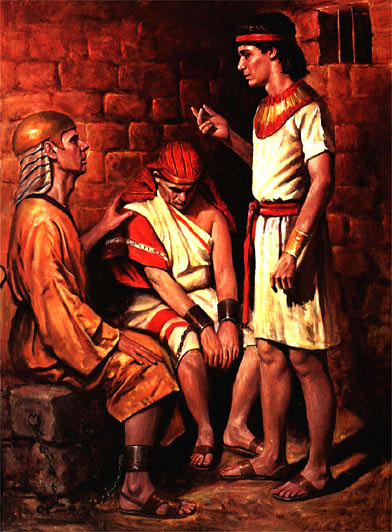
Suffering and Neglect and God’s Timing

Ricky Jackson was a teenager interested in a local robbery.  By the time he got to the corner store that had been robbed, a mild-mannered Harry Franks lay dead on the floor after having battery acid splashed in his face and being shot twice at point-blank range.  The body lay under a sheet, and since there was nothing to see, Ricky Jackson and his friends thought nothing of it.  That was until the following day when armed police raided his home and took him into custody.  Apparently a 12-year-old neighbor, called Eddie Vernon, stepped forward when police asked if anyone had seen the robbery.

The court case shows that Eddie Vernon’s testimony was weak.  It was contradictory and shallow.  However, Vernon’s testimony was one of the key pieces of evidence that led to a death sentence for Ricky Jackson.  He was scheduled for death by the electric chair on May 29th, 1976.  Jackson says that he felt numb.  Appeals kept him from the chair long enough until the courts commuted all death sentences in his state to life imprisonment.

Ricky Jackson

Many people would despair in such circumstances.  Ricky Jackson rose to the challenge.  He created a world in his own mind that he could retreat to.  He gained a degree in horticulture and cared for plants.  He trained dogs.  And he prayed.

When he came up for parole Jackson would seem unrepentant.  It is hard for an innocent man to appear to have real regrets.  The court responded by sending him back to jail.

How would we respond if we were falsely accused by the authorities and jailed for 39 years?  I have only been apprehended twice.  I realise that is probably twice more than most people.

The first time I was apprehended by the police I had come to a narrow alley connecting two streets in the late evening.  It had been raining and a streetlight shone on the puddles.  A man stepped out of the shadows wearing a beige raincoat and a hat pulled down leaving his eyes in shadow.  I didn’t like the look of him.  When he proceeded to tell me he was a policeman and he wanted to question me on a robbery I started to back away.  When he
said that he wanted to take me in for questioning I went to run.  He was too quick for me.  He grabbed my hand and put it in a lock behind my back.  I told him that I did not trust him.  I was not going with him in his little red car.  He could break my arm, but I wouldn’t give in.  He announced that he was arresting me on suspicion of robbery.

We came to a compromise and agreed to go to a person’s house where he could call for backup.  When two or three squad cars arrived I felt rather embarrassed and agreed to go with them.  He asked me where I was coming from and I said that I had been at a Bible study.  They didn’t believe me, but we retraced my steps and the alibi checked out.

The next day I found out that my friend Neil had been robbed in the alley.  Someone had taken all his money that he had collected for delivering newspapers.  He found it hilarious that I had been arrested.  He knew that it had not been me.  I sometimes imagine, though.  What if I had been jailed?  People like Ricky Jackson do find themselves convicted of crimes that they did not commit.

Injustice bothers us.  We know that it happens and that good citizens fight it when they can.  However, we fear being on the receiving end of corruption, capricious cruelty, or persecution.  How would we explain to someone why Christians suffer injustice?  How could God use something as awful as prison to work for good?

In the Bible we see many times when God works his will through famine, warfare, and disease.  Are these good things?  No.  They are evils that have come to the world through the result of the fall.  However, sometimes great evil can be allowed to bring about a greater good.  Ricky Jackson has a greater appreciation of his daily routines because he has known what it is to have them restricted.  I have a greater appreciation for all the west has to offer because I have walked the war-torn streets of Afghanistan.  Sometimes God allows an evil so that a greater good can result.

We have been reading the book of Genesis together and we have just finished chapter 39.  In that chapter Joseph was thrown in jail by Potiphar for a crime that he did not commit.  He was accused of trying to seduce Potiphar’s wife.  It is telling that Joseph is not executed.  In fact, as we shall see today, Potiphar – the Captain of the Guard – did not send Joseph very far.  I believe that Potiphar knew that Joseph was innocent, he knew the character of his wife, but to save face he put him in prison.

I have enjoyed reading chapter 40 repeatedly and looking up the background to the story.  Before we read the story from scripture together, I want to run through the story to orient ourselves and tell you what I found.

In chapter 40 of Genesis Joseph is still in jail.  We are told that the cupbearer to the king and the king’s baker were thrown into jail, too.  These are two officials involved with the food and drink of Pharaoh.  Did the king have an upset stomach?  Was there an attempt on his life?  The cupbearer is sometimes called the butler in some translations.  He is called the wine steward in others.  In any case the ancient role of the cupbearer is obscured.  My friend Ryan George pointed out that Pharaoh’s butler would have been more like Batman’s butler, Alfred.  He would have been more of a secret service agent, responsible for keeping Pharaoh alive.  Often the cupbearer was one of the most trusted people in the court, even a close friend to the king, so for the cupbearer to be in jail would be as scandalous as us hearing that the head of the CIA was in jail.  To be angry with someone in scripture means to turn against them.  The god-king Pharaoh has turned against, is in opposition to, his trusted aide. 

Joseph rises to prominence wherever he is placed.  Joseph and these important men are imprisoned in the round-house prison of the Captain of the Guard.  If we connect this detail with the previous chapter, we can conclude that Joseph is in Potiphar’s own jail.  If this connection between chapters 39 and 40 is legitimate (and I think it is), we can conclude that Potiphar continues to entrust Joseph with responsibility even when he is in captivity.  Joseph is entrusted with the care of the most important prisoners the captain of the guard could be expected to hold.  We can imagine that he cares for them with the same diligence as he cared for Potiphar’s household before he was dismissed from office.  This was a daily routine for Joseph.  He was enslaved and imprisoned, but even then he had opportunities to show the quality of his character.

After some time in captivity both the cupbearer and the baker had dreams.  The Bible states clearly that each dream was distinct.  However, when dreams are mentioned it should prick our interest.  At the beginning of Joseph’s narrative dreams have distinguished him from his brothers.  Dreams are central to Joseph’s story.  Dreams were understood by people of the ancient world to be a connection with the spiritual world.  Gods spoke to mortals through dreams.  However, even though there were standard ways in the ancient world to interpret dreams, the true interpretation of many dreams was beyond the occult practices of the day.

As part of his morning routine Joseph checked in on the cupbearer and the baker.  After their dreams their faces didn’t look so good.  Some translations tell us that their faces looked ‘evil.’  I think that is telling.  What is evil in the Bible?  Evil is anything that stands in the way of God’s goodness.  God’s goodness was yet to be revealed to them.  Without the goodness of God they were in the darkness of perplexed despair.  They would have had a reverence for dreams.  They were probably aware, being confined together, of the fact that their dreams were similar.  They would have been aware there was more to their dreams, and the possibility of what that might mean to two people in jail would have been troubling.  They would have usually had access to the court of Pharaoh and in that court, we know, were those who claimed the ability to translate dreams.  Now they would think that maybe the gods had spoken to them and there was no-one to tell them what the dreams meant.

Joseph, despite his powerless state, points the glory to the one true God.  He asks rhetorically, “Don’t translations belong to God?”  In this way Joseph claims access to the one true God in contrast to the gods of the Egyptians.  He knows he can turn toward the true God and so he will provide a true interpretation of the dreams.  We should not think of Joseph as the dream expert who is translating dreams all the time for everyone who comes to him.  Joseph relies on God in every circumstance.  His reliance on God to interpret dreams is just a reflection of the focus of his life.  He is in prison because he wouldn’t sin against the God who directs his thoughts and actions.  He now turns to God when there is no interpretation of two dreams.  Either because of their friendship and the care they have received, or because they truly believe that Joseph is a seer of some kind, they think they can trust him.  The cupbearer launches into the details of his dream and tells them to Joseph.

When the cupbearer describes the dream it involves the tools of his trade.  He sees a vine grow in ways that we are used to seeing on T.V. but would have been quite difficult to imagine in the ancient world.  He saw a vine with three branches go from bud to blossom in seconds.  Then, in moments, there are grapes for the cupbearer to squeeze.  He squeezes the grape juice into Pharaoh’s cup and places it into his hand.  Relying on God gives Joseph the interpretation.  No occult rites are needed.  No mystic practices are engaged.  Joseph speaks instantly with the simple insight that only God could give.  Joseph tells the cupbearer that the three branches represent three days and that in three days Pharaoh will lift up the cupbearer’s downcast head to honour him and restore him to his former position.

Joseph gives us insight into how he feels about his captivity when he uses his interpretation to ask a favour of the cupbearer.  For services rendered he would like to be released from the house, or ‘pit’ that he is in.  The term ‘pit’ that he uses does not refer to the physical qualities of his circumstances, but it does conjure images of the empty cistern that Joseph was thrown into by his brothers.  It is likely that in his own mind he is connecting the trial of his present circumstances with what has gone before.  Modern psychologists call this ‘triggering.’  Our emotions come to the surface from a place deep in our brain.  Events in the present can connect us with unresolved pain from the past.  Joseph probably has not had resolution to his own hurt at being rejected by his brothers and cast aside by them into a hole in the ground.  He may have heard that they had threatened to kill him.  Can you imagine the anguish and the lasting pain of facing death at the hands of your own family?  In Genesis 40 we see that Joseph himself refers to the events we have read in the previous chapters.  Just like Ricky Jackson in our opening story, Joseph protests the injustice he has received because he is innocent.  His position of favour in the prison and with the ‘captain of the guard’ speaks to his innocence.  As readers of the text, our conscience speaks out with indignation at Joseph’s treatment.  However, many convicts try and claim innocence in the face of extended jail time.  How would those meeting Joseph know him to be anything other than a common criminal?

After Joseph has interpreted the cupbearer’s dream and asked for the cupbearer to remember him upon his release, the baker perks up.  “If the cupbearer’s dream has had a favourable interpretation, my dream must have one too!”  he reasons.  Those of us who know how the story unfolds smile at his optimism.  We know the interpretation of the baker’s dream is not so pleasant.

As many of us know, the baker has three white or wicker baskets on his head.  They are filled with the kind of pastries that the king, Pharaoh, enjoys, but rather than giving the breads to Pharaoh the birds of the air come and take the breads.  The interpretation sounds hopeful to begin with.  The baker will also have his head lifted up.  However, in this case he will have his head lifted up and off of his body.  His body would be impaled on a stick, but metaphorically the text says that he would be hanged on a tree.  When the text talks about hanging in the ancient world, it is not hanging as we think of it.  It is taking a person, or a person’s remains and impaling them.

Pharaoh’s birthday followed three days later and as part of the celebrations the interpretation of the dreams was fulfilled.  We expect, then, for the cupbearer to remember Joseph and for God to immediately secure Joseph’s release.  God gifted Joseph with the chance to connect with the cupbearer.  God gifted Joseph with the interpretation of both of Pharaoh’s servant’s dreams.  However, when the chance comes for Joseph’s obscurity and suffering in prison to end, Joseph remains in captivity.  Why?

God sometimes uses suffering and neglect by others to work his plans in his own timing.  There are times when God allows suffering and neglect because they can serve his purposes.

Please turn to the passage in Genesis 40 with me and we will read it together from verse 1.

Some time after this, the cupbearer of the king of Egypt and his baker committed an offence against their lord the king of Egypt. And Pharaoh was angry with his two officers, the chief cupbearer and the chief baker, and he put them in custody in the house of the captain of the guard, in the prison where Joseph was confined. The captain of the guard appointed Joseph to be with them, and he attended them. They continued for some time in custody.


And one night they both dreamed—the cupbearer and the baker of the king of Egypt, who were confined in the prison—each his own dream, and each dream with its own interpretation. When Joseph came to them in the morning, he saw that they were troubled. So he asked Pharaoh’s officers who were with him in custody in his master’s house, “Why are your faces downcast today?” They said to him, “We have had dreams, and there is no one to interpret them.” And Joseph said to them, “Do not interpretations belong to God? Please tell them to me.”


So the chief cupbearer told his dream to Joseph and said to him, “In my dream there was a vine before me, and on the vine there were three branches. As soon as it budded, its blossoms shot forth, and the clusters ripened into grapes. Pharaoh’s cup was in my hand, and I took the grapes and pressed them into Pharaoh’s cup and placed the cup in Pharaoh’s hand.” Then Joseph said to him, “This is its interpretation: the three branches are three days. In three days Pharaoh will lift up your head and restore you to your office, and you shall place Pharaoh’s cup in his hand as formerly, when you were his cupbearer. Only remember me, when it is well with you, and please do me the kindness to mention me to Pharaoh, and so get me out of this house. For I was indeed stolen out of the land of the Hebrews, and here also I have done nothing that they should put me into the pit.”


When the chief baker saw that the interpretation was favourable, he said to Joseph, “I also had a dream: there were three cake baskets on my head, and in the uppermost basket there were all sorts of baked food for Pharaoh, but the birds were eating it out of the basket on my head.” And Joseph answered and said, “This is its interpretation: the three baskets are three days. In three days Pharaoh will lift up your head—from you!—and hang you on a tree. And the birds will eat the flesh from you.”


On the third day, which was Pharaoh’s birthday, he made a feast for all his servants and lifted up the head of the chief cupbearer and the head of the chief baker among his servants. He restored the chief cupbearer to his position, and he placed the cup in Pharaoh’s hand. But he hanged the chief baker, as Joseph had interpreted to them. Yet the chief cupbearer did not remember Joseph, but forgot him.

In preparation for this sermon I wanted to look, not only at stories of people who had been arrested innocently, but of people who had been arrested for their faith.  I started by looking once more at the story of Richard Wurmbrand and his time in jail, but the book Prisoners of Hope was the book I decided to read.  It tells the story of two workers in Afghanistan, Heather Mercer and Dayna Curry.  The two young women both went to work for Shelter Now International in Afghanistan.  SNI is a humanitarian organization which aids in the development of villages and relief projects in Afghanistan and Pakistan.  SNI is a Christian organization and in the reign of the Taliban this drew attention.

After the pair of women had made contact with a particular Afghan family, their taxi driver began acting suspiciously.  He picked up a young man by the side of the road and the young man directed the taxi driver to bring Heather in for questioning.  Soon Dayna was picked up too and the two were arrested for sharing the gospel with a Muslim family.

In their book, the women tell both how they were treated as guests in the prison sentence that followed and how they were treated poorly.  In their early captivity they were allowed to get supplies from their house and from the bazaar.  They would regularly share their precious commodities with the Afghan women who were also imprisoned by the Taliban.  While in prison they kept their spirits up by singing songs of praise to God and even composed new songs, mostly based on the psalms.

The contrast in the attitude of Heather and Dayna became really apparent when a British journalist called Yvonne was put in the same prison as them.  Yvonne wanted to maintain a hard front.  She wanted to be unbroken.  Heather and Dayna heard Yvonne insulting her interrogators.  She said that you could tell how advanced a country was by the condition of its prisons.  The prisons of Afghanistan were evidence of how backward the country was.  Yvonne screamed and railed whereas Heather and Dayna tried to respond with grace and kindness.  In the account of their imprisonment Heather and Dayna expressed gratitude for the way that some of their captors risked themselves by asking for supplies, making inquiries in the outside world, or protecting them from cruelty.

Heather was the younger of the two and her mental health suffered the most.  After September 11th 2001 she became more afraid what would happen to her. Her fears gripped her and she found it hard to pull herself together.  It looked like the Taliban might execute them as an example to the rest of the world.  She wanted so badly to live that she couldn’t accept that death was God’s destiny for her.  However, later in her captivity she found strength by surrendering to God whether he would be glorified in her life or her death.  She found peace in surrendering to God.  She grew.  She was able to make more clear-headed contributions to the group.

Dayna was slightly older and the changes in her were less marked.  She had come to Afghanistan to serve the people and whether she served them in life or in death she was already surrendered to God more fully from the start.

Both young women constantly cried out to God and God did deliver them.  Suddenly freed by infighting among the warlords in south east Afghanistan a Navy Seal team was able to pick them up on a disused airfield.  A detail I found interesting was that, as they were flying in the helicopter with the Navy Seals, a number of the Navy Seals said that they were believers and they had been praying for Heather and Dayna since they were imprisoned months before.  God often puts his signature on his work.

God’s people are sometimes imprisoned and they suffer unjustly.  We can look at a web site like Voice of the Martyrs to see how Christians are still imprisoned, tortured, and even killed for their faith.  This is nothing new, it happens to people in the Bible.  We need to be careful when sharing the gospel that we communicate something more of the cost.  Jesus did this in Luke 14.  He said that people must put him before their families and that their families might turn against them.  Jesus said that those who were not willing to take up their cross, a symbol of excruciating suffering, were not worthy to be his disciple.  When we flippantly tell those that don’t know Jesus that God has a wonderful plan for their life, they are probably not picturing pain, persecution or separation.

Remember, though, God sometimes uses suffering and neglect by others to work his plans in his own timing.  There are times when God allows suffering and neglect because they can serve his purposes.

Ricky Jackson suffered injustice because of false testimony, but he grew as a horticulturalist.  He maintained his character and grew it in the face of suffering.  Joseph maintained his integrity and his reputation grew, even when he was in the pit of prison.  Heather Mercer and Dayna Curry gave gentle answers and aided their fellow prisoners, communicating the love and care of Jesus, even when they were in fear for their lives in a Taliban prison in Afghanistan.

What about us?  The second time I was apprehended it was by the police in Pakistan.  I was traveling down to Islamabad from Murree Hill Station in a taxi when the police pulled over my small, white, Suzuki cab.  The driver gave them money and was allowed to go, but I was taken into a small concrete, hexagonal hut.  Police stood between me and the exit and they started asking me for money.  I was being held because I didn’t have my passport on me.  Systematically they brought in foreigners from Uzbekistan, Afghanistan and other neighbouring countries and they slapped them around in front of me.  I prayed hard and was confirmed in my conviction not to give money to corrupt policemen.  Then they started searching my bag.  They told me that if I gave them my camera I could go.  It would

An Islamabad Checkpoint

be a present.  When I refused, they told me that they would take me to the local police station and hold me in a cell.  I told them that they could and I would tell the people there all that I had just witnessed.  At that point they came across my Bible in my bag and they fell silent.  They asked me what it was and I told them that was my ‘Injil’.  ‘Injil’ is the word for the New Testament.  At that they grew silent and put everything carefully back in my bag.  They escorted me from the building and put me in a taxi and sent me on my way.  The encounter was brief, only a few hours, but I grew in my faith and my resolve during that short time.

Some of us need to be ready for the unexpected when we travel around the world because the world is an unstable place.  However, many of us just need to apply this passage to our own back yard.

Although we are not now in prison some of us suffer in other ways.  We may feel imprisoned in our marriages.  We married a man in good faith.  We believed that he was a good man.  A trustworthy man.  We believed that we would be a good team.  However, his character has changed in the marriage.  His faith has diminished.  He does not go to church.  If we ask for help with anything we get resistance or cruel words.  Maybe in our marriage both of us are struggling.  We don’t feel like the marriage is doing anyone any good.  The question we might be asking is “What do I get from this marriage?”  Like Joseph we might despair, “How did I end up in this pit?”  It is through suffering and difficulty that God pushes us toward maturity.  It is in the waiting room of life that God does his most profound work.  If we look at the marriage and think, “If my spouse is my enemy, how do I love my enemy?” or “How do I grow through living selflessly in a loveless relationship?” we may find that we receive more of God’s presence when we look to him in desperation than we did when we looked to him in comfort.  Of course, I must say that I do not believe God wants us to enable a physically violent or incurably abusive person, but we may be able to get past ‘irreconcilable differences’ and feelings of isolation and neglect if we look beyond our spouse toward what God is doing.

Some of us may feel like we are looked down upon by others for one reason or another.  We may feel isolated and abandoned because we are not old enough to be included or we are too old.  In our teenage years it feels like we are not allowed to do many of the things that adults get to do.  When we are old we sit watching the television, hoping that a friend or relative will drop by.  We can feel like we are in our own prison.  However, God has uses for people no matter what their age is.  It may not be the dream that we desire, but we can all be useful in the kingdom of God.  If we lay our own agenda to one side and seek fully what God’s agenda is, we may experience joy in the midst of suffering.

At work, do you work hard to carry the load but receive very little recognition and respect?  Appreciation is a fundamental human need.  God accepts and loves us unconditionally, but he equips people with the gift of encouragement to keep his people motivated and moving.  It is well known that companies that recognize and praise their workforce for a job well done are better companies.  However, many of us work in the office and feel invisible.  Sometimes we work hours on a project and present it to our boss just to have them look down their noses at us.  Bosses who feel anxious and insecure cut us down and pull attention toward themselves.  In the worst scenarios we know how bosses will even take credit for others’ ideas without acknowledging the real source of creativity at all.  Without recognition or respect, and living in a poor job market, we can feel imprisoned.  We can become more and more demotivated.  Even depressed.  However, if we look to the opportunities God gives us to serve him in our circumstances we can rise above the mundane and we can experience a level of joy even when we believe we are invisible.  We are never invisible to God and he delights in work that originates out of his love for us.  Our cubicle needn’t be one more shadow in a company filled with darkness, it can be a light which illuminates our whole floor.  Our boss needn’t be seen as an obstacle around which we need to navigate, he or she can be an opportunity to share God’s goodness.  The strength to be countercultural in the workplace forces us further into the arms of our savior.

So, in summary, whatever your prison, however isolated you feel, God can use you to reflect his glory and further his kingdom.

In Ricky Jackson’s case, eventually a pastor asked Eddie Vernon about his testimony and Eddie Vernon broke down.  He admitted that the police had threatened him.  Threatened violence to his family.  They had fed him information about the crime.  He wanted to make amends even if it would land him in jail.  After 39 years the verdict against Jackson was reversed.  He was allowed to go free.  He had missed so much of life on the outside.  The hardest moment being when his mother passed away.  However, he decided not to be bitter of angry.  He decided to be happy and embrace his freedom.

Ricky Jackson:  Not Guilty

How would we have reacted to being released after years in jail?  If we are honest we might see the work that God still needs to do in us.  In our times of suffering, though, we need to remember, God sometimes uses suffering and neglect by others to work his plans in his own timing.

1 Comment

Twentysomething Reforms


Many twentysomethings who love Jesus don’t like His church. Their complaints are varied. Some say the worship is dry. Some say the theology is wish-washy. Still others decry the lack of strong leadership. And so, we know, they are voting with their feet and slipping silently away.

The response of the older generation and the twentysomethings who remain is often discouragement and sometimes even disgust. But what if the church took a different tack? What if the church reimagined itself in ways that worked better—not just for twentysomethings—but for all of us?

Here are 20 radical reforms that we might do well to consider:

  1. Invite the Whole Church to Construct Worship

When one person or a small “worship team” plans the experience, we fall short of God’s design. First Corinthians describes a gathering to which every member contributes—a song, a prayer, or even a teaching.  When everyone participates, everyone takes ownership, and we have fewer passive pew warmers.

  1. Address the Architecture

Space speaks. Historically, congregations have worshiped in majestic cathedrals with stone and stained glass and steeples which pointed to God. When God designed His own tabernacle, it was a thing of beauty and symmetry and color. Now we repurpose factories, worship in darkened boxes, and our choice of space tells a different story. Can we let in the light? Can we choose our colors carefully? Can our space speak more to the majesty and artistry of our God?

  1. Turn Down the Volume

According to the research, 80 decibels is the optimum volume for group singing. When we crank up the volume higher than that, our hearts may pound but our mouths become silent. We can’t hear ourselves, let alone our neighbors. So we lose the urge to join in.

  1. Engage All Five Senses

The senses are the means by which we take in the world, acquire information, and learn. When we engage only one or two of the senses (probably sight and sound), we miss out on the other powerful possibilities. Modern life bombards all of our senses and often entices us to walk down wrong paths. Surely the God who created the senses designed them to reveal to us more of Himself.

  1. Talk Holy Spirit Power

Some of our churches may make a circus out of the Holy Spirit’s power. Other churches often preach a diminished trinity of The Father, The Son, and The Other One. But if the Holy Spirit were welcomed in biblical ways into our churches once more, we just may see a fresh wind and a fresh fire push back the encroaching darkness.

  1. Give with a Purpose

When people see pictures of abused puppies, they open their wallets. When an earthquake shakes another nation back into the Stone Age, we call in our credit card number. When we understand a need, many of us will respond. Most churches, however, simply expect attendees to give because “God loves a cheerful giver.” Perhaps clearer communication about where the money goes would help compel us to contribute.

  1. Create Time for Reflection

Every Sunday sermon communicates a wealth of ideas that a preacher has reflected on for hours, even days. Upon hearing these truths, we often hop into our cars and switch on the football and start discussing what is for lunch. We don’t make it a priority to process the ideas and apply them personally.

  1. Lead the Way in Being Vulnerable

We must end the pretense that the people on the platform or in the pews are perfect. Rather, we should acknowledge our own failings and allow others to admit theirs. Only open hearts can open other hearts, so let us lead the way.

  1. Say It as It Is

When we manipulate and manage our image, when we simplify scripture to make it more palatable, we create two-dimensional portraits of the world. Alternatively, when we authentically express both the darkness and the light, reality in all its many colors, we are more likely to sustain an audience.

  1. Open Lines of Communication

To be heard and understood, to have influence and impact—these are fundamental desires of every human being. When church members are simply receivers of a sermon, they have little voice or vested interest. By opening the lines of communication and encouraging a feedback loop, we bring people into the community.

  1. Connect People Vertically

In many of our communities, the toddlers are in the nursery, and Grandma is in the nursing home. We are segregated and separated according to our age and our stage of life. And we miss out on the richness that comes from connecting the wisdom of years with the wide-eyed wonder of childhood.

  1. Create Sustainable Service Opportunities

Mission trips are magnificent because they open us up to the whole wide world, but annual mission trips are not a part of daily life. We would do well to connect our congregation to the needs of our own community and put into place some sustainable ways we can sacrificially serve.

  1. Build Biblical Literacy

The prophet Amos said that in the last days there would be a famine for the word of God. Sadly, we are already suffering from malnutrition. Being able to name all sixty-six books has become a rare skill. Being familiar with them is even rarer. Our churches must own the task of training people in the truth.

  1. Raise Up Group Leaders

Jesus had twelve key followers with whom he did life. He arranged them, it would seem, into three groups of four. Peter, James, John, and Andrew were in the inner group. After three years of training, these leaders took on their own groups. This kind of multiplication makes for healthy growth.

  1. Train in Apologetics

If Christianity ever was in the majority in America, it is not any more. Start talking about religion in the marketplace and you will be told a thing or two about your backward beliefs. Many Christians walk away when science seems to rule out God. Some Christians resolve the existence of many religions by asserting that they lead to the same God. We must equip Christians so they are unafraid to engage with a changing world.

  1. Tell People They Are Evil

Jesus called his followers “evil” in the Sermon on the Mount. But this isn’t a popular message these days. The loss of this truth has lessened our effectiveness in evangelism. Evil people need a savior.  Good people don’t. People who know they are saved from evil share that good news. They can’t help themselves.

  1. Create Access Points to Leadership

A senior pastor on a screen at multiple campuses, top-down organizational leadership, new church initiatives that appear out of nowhere—these things create power-distance. Twentysomethings today are used to creating their own culture, participating in politics, and collaborating in conversations. The church can use social media, town-hall meetings, and old-fashioned potluck lunches to keep communication with leadership a two-way street.

  1. Remove the Glass Ceiling

Rather than sending only select young people off to Bible college or seminary if they want to become professional pastors, let’s teach the priesthood of all believers. Let’s help every twentysomething uncover his/her giftedness and use those gifts to minister to others.

  1. Work with God, not for God

Those who work for God work really hard. They have something to prove, and somehow their success depends on them. Those who work with God find that God empowers them. He uses their gifts to satisfy specific and strategic needs. The joy and freedom of working with God can dispel the disillusionment that often plagues those who become burned out or burned up by working for God.

  1. Communicate a Gospel for Life, not Death

No one wants to go to hell when they die, so many of us receive Jesus as our pass to heaven, where we will spend eternity made in the shade by the pool. When we have this idea of salvation, we communicate a gospel that centers mainly around death and what happens when we get there. However, the Bible communicates a Savior who also made life on earth significant. Let us be bringers of life and light to the world.

When I shared these reforms with the twentysomethings that I teach, they were initially enthusiastic.  Then some asked, “Could there ever really be a church like this?” Many thought these reforms were too radical.

However, throughout church history, reformers have challenged the status quo and have brought about change. Church planters with a unique vision have planted new ideas where they found fertile soil. These reformers have seen churches grow, churches which were particularly relevant and engaging for their Age.

So I believe that church can be different. But it’s up to us to gather like-minded people and make it so.


1 Comment

Preparing to Preach on Genesis 40 (Hour 5)

I am reading various accounts of what a cupbearer and a baker are. Here are two of the better definitions:


CUPBEARER (מַשְׁקֶה).—An officer of considerable importance at Oriental courts, whose duty it was to serve the wine at the table of the king. The first mention of this officer is in the story of Joseph (Gn 40:1–15), where the term rendered ‘butler’ (wh. see) in EV is the Heb. word above, rendered in other passages cupbearer (Arabic essâḳi). The holder of this office was brought into confidential relations with the king, and must have been thoroughly trustworthy, as part of his duty was to guard against poison in the king’s cup. In some cases he was required to taste the wine before presenting it. The position of Nehemiah as cupbearer to Artaxerxes Longimanus was evidently high. Herodotus (iii. 34) speaks of the office at the court of Cambyses, king of Persia, as ‘an honour of no small account,’ and the narrative of Neh. shows the high esteem of the king for him, who is so solicitous for his welfare that he asks the cause of his sadness (2:2). The cupbearers among the officers of king Solomon’s household (1 K 10:5) impressed the queen of Sheba, and they are mentioned among other indications of the grandeur of his court, which was modelled upon courts of other Oriental kings. The Rabshakeh, who was sent to Hezekiah (2 K 18:17), was formerly supposed to have been cupbearer to Sennacherib, but the word (רַבְשָׁקֵה) means chief of the princes (see Del. on Is 36:2, and Sayce, HCM p. 441). Among the Assyrians, the cupbearers, like other attendants of the king, were commonly eunuchs, as may be seen from the monuments; and such was the case generally at Oriental courts. The Persians, however, did not so uniformly employ eunuchs, and probably never so degraded their own people or the Jews who served them. Certainly, Nehemiah was not a eunuch. Herod the Great had a cupbearer who was a eunuch (Jos. Ant. XVI. viii. 1).

Porter, H. (1911–1912). CUPBEARER. In J. Hastings, J. A. Selbie, A. B. Davidson, S. R. Driver, & H. B. Swete (Eds.), A Dictionary of the Bible: Dealing with Its Language, Literature, and Contents Including the Biblical Theology (Vol. 1, p. 533). New York; Edinburgh: Charles Scribner’s Sons; T. & T. Clark.

The baker operated in the home (Gn 19:3), in the public bakery (Jer 37:21), and in the palaces of kings and nobles (Gn 40:1–22; 41:10, 13; 1 Sm 8:13) preparing bread and cakes from the basic staples of oil and flour. The fleeing Israelites baked unleavened bread for their journey (Ex 12:39). The bread and cakes were baked in some kind of pan or oven (Lv 2:4; 26:26). As Israelite society developed, specialized bakers operated and formed guilds. Jeremiah was given his daily ration when in prison (Jer 37:21). Some have argued that Hosea was a baker because of his knowledge of baking techniques (Hos 7:4, 6–8). In postexilic Jerusalem there was a fortress called the Tower of the Ovens (Neh 3:11; 12:38). Bakers are not referred to in the NT but ovens are mentioned (Mt 6:30; Lk 12:28).

Elwell, W. A., & Beitzel, B. J. (1988). In Baker encyclopedia of the Bible (pp. 2083–2084). Grand Rapids, MI: Baker Book House.

These two entries and others like them provide context for the passage.

Leave a comment

Removing Obstructions to Unity with God and Each Other

Knowing God, for me, has not been a constant experience.  I have not always been close to God.  I have not always felt the presence of God in the same way every day.  When I was very young I remember getting excited every year because summer camp was coming.  At summer camp the singing was vibrant, the preaching was passionate, and the fellowship was twenty-four hours.  We would come back from the Cornish countryside expectant of all that God would do.  We felt like we knew him. However, school, home-life, and even our churches would wear that experience away and we’d be left with the hope that next summer would come around sooner rather than later and we’d revisit the same spiritual highs.

I was a passionate person and wanted to know God in an intimate way.  I thought that it would come through serving God.  In high school I worked hard to get a lot of my friends saved.  I went to work for God as a missionary.  I wrote poetry to God (and girls), too. The poems would be honest and transparent.  They would show an authentic struggle with God and with making sense of who I was. This pattern of passionate flux in my relationship with God continued well into my twenties.  In my mid to late twenties I was a missionary in Murree, Pakistan.  Murree is a hill station in the foothills of the Himalayas.  It is a resort town for many Pakistanis, and I was blessed to teach there, within sight of some of the most breathtaking scenery in the world.  I was also very lonely and isolated.  I wrote a lot of poetry and journaled frequently.  After a particularly hard break up with a girl I really started to pour my heart out on paper, and journaling affected my ability to do my job.  When my principal called me in and expressed her concerns I became really frightened that I would lose my job, so I made a decision.  I would shut off my emotions because they were trouble.  I would deal with the situation moving forward by only allowing my mind inform me.  Negative emotions were trouble, I didn’t know how to process them, so I took a hatchet to them.  What I realise now is that in doing so I also took a hatchet to a key aspect of experiencing God.

In the years that followed, I went to Moody Graduate School, met and married an attractive Moody professor, and obtained a job that I loved.  But our thirties became hard.  My wife and I realized that we were not going to have biological children.  My father died when he was only 56.  My in-laws came to live with us and they also died three years later.  We had a series of failed adoptions.  One pregnant teen seemed to turn us down because we had no pets.  One birthmother took our money and fled to Wisconsin.  Another birthmother changed her mind as we were headed to the hospital.  When we did adopt, neither process was simple.  My wife was angry at God and depressed.  I put up walls.  I remained Stoic.  It was the strong way to be – so I thought.  However, when you stuff your negative emotions they don’t go anywhere.  Denial just turns a blind eye to the reality deep within.  These unresolved feelings affect your relationships with others.  They detach you from reality:  there literally seems to be a film or a screen between you and the outside world.  And what is most important is that although I knew a lot about God, my experience of God – a wholehearted knowledge of God – was fading to nothing.  As Simon and Garfunkel once sang, “I can’t touch what I feel.”

My personal plight was leading to more conflict in my marriage. As my wife would power up in her anger, I would power down.  I would withdraw.  It became a pattern.  She thought she was trying to save the relationship with her actions.  I thought I was saving it through mine.  I also knew I had less patience at work and at church, but each time I came home I would feel my spirits drop.

Everything came to a head one day as the faculty of Moody, of which I was now a part, was lining up for Convocation.  We were all dressed in our academic regalia ready to march in and start the year by sitting in front of the student body on a large stage.  Dark thoughts of self-doubt came into my mind and I had overwhelming feelings seemingly coming up from nowhere.  I felt like an imposter.  I felt like I wanted to run back to my office and curl up in a ball under my desk.  When I shared my experience with the head of the Pre-Counseling major she told me that I ought to go and talk with someone.  Talk to some-one???  She might as well have told me to go and fetch a straightjacket from in the closet and go and find my padded cell!  I didn’t want to do that.  It would be admitting that I was a failure.  ‘Talking to people’ is what people who were really screwed up did.  I wanted to believe that I was fine. That I was adequate.  That I had small needs that were quite manageable by myself.  I see now that God was working.  He wanted to heal me.  He wanted to deal with all the wrong choices that I had made that had shut him out.  He wanted me to deal with conflict.  He wanted me to deal with my negative emotions.  What I know now is that in dealing with these things I would really begin to know our God in a different way.

In these times of dealing with conflict and dealing with my emotions I turned to the Bible in increasing measure. There are many passages that deal with estranged relationships, alienation from self and God. The Bible tells us about the fall of Adam and Eve early in the narrative.  Their shame leads to blame and discord.  They are alienated from God and each other. Israel, as a nation, has times of obedience that lead to joy, but the dark days of exile and the wounds of warfare contrast with God’s blessing.  In the New Testament the Christian experience is not all a bed of roses.  Jesus is deserted at the hour of his death and, in Gethsemane, he writhes on the ground in anguish. However, one familiar passage drew me back more frequently than others.  It was a passage which taught me ways to know God. In this Knowing Our God men’s conference, I want us to look at this passage together.  In so doing I think we will find answers to the question, “How do we attain peace and unity with God and his people?” The passage we will look at together is Philippians 4:2-9.

Before we dive in, though, a little about the context.  The setting of the passage is toward the end of a letter to the church at Philippi where he has been desiring that they would find unity and peace.  He calls the church to focus on Jesus and remember his humility.  He has given the church many reasons to get over themselves and then in chapter 4 verses 2 and 3 he writes:

I entreat Euodia and I entreat Syntyche to agree in the Lord. Yes, I ask you also, true companion, help these women, who have laboured side by side with me in the gospel together with Clement and the rest of my fellow workers, whose names are in the book of life.

The first way that we develop peace and unity with God and his people often involves dealing with unresolved conflict.  Harmony often resides on the other side of conflict.

This short section gives a number of insights into how to address conflict in the church. In dealing with internal, intrapersonal conflict, as well as external, interpersonal conflict I think we can apply the same insights.

First we deal with the conflict by getting specific with conflict.  Although, from the beginning of the letter, Paul has alluded to conflict in the church, in these verses he names Euodia and Syntyche.  Ironically their names might mean ‘pleasant fragrance’ and ‘pleasant acquaintance,’ but now the two of them are anything but pleasant.  We do not know the nature of the conflict they are perpetuating.  However, we do know that conflict often happens when two people believe they are right and both believe there is too much at stake just to let the issue go. This conflict must be disrupting the whole church.  Maybe people are forming Team Euodia and Team Syntyche on both sides of the issue.  However, their personal squabble is public. We know this because Paul calls them out in a general letter to the whole body of believers in Philippi.  Paul does not want to allow the situation to fester.  So, rather than hint at what might be a problem, he names the two main people involved so there can be no ambiguity.

The way Paul uses ‘entreat’ twice tells us something else.  Our second point in dealing with conflict that we learn from Paul, is that he tries to deal with each person fairly.  He repeats his entreaty to each person because he emphasizes both party’s role in the conflict.  Euodia and Syntyche both have something to own here and Paul is fair.

A third point in dealing with conflict is that Paul is passionately involved.  The conflict should not be.  It stands in the way of harmony with God and within the church.  The use of the word ‘entreat’ or ‘plead’, plus the ‘yes’ at the beginning  of his request to his loyal companion, show that Paul comes to this situation with passion.  It is not a passionate anger, but the passion of genuine concern for everyone involved.

Fourthly, Paul deals with the conflict by mobilizing his associates on behalf of those involved in the conflict.  He wishes his trusted friend, the one he refers to as a ‘true companion’ or ‘loyal yokefellow,’ to get involved in the situation.  This loyal yokefellow is someone who has walked by Paul’s side and with whom he has shared the experience of ministry.  There are those who have proved their wisdom in counseling and Paul wants them to gather round and help.  These people will not throw fuel on the fire or delight in discord, they will assist in the reestablishment of peace and unity.  Dealing with conflict, then becomes a team effort where those with ministry skills step up and get their hands dirty.

Fifthly, Paul deals with the conflict by showing his compassion for Euodia and Syntyche.  He remembers their service with him.  In Philippi service is no easy task.  Because of the salvation of a slave girl, Paul had been imprisoned and beaten.  Roman influence was strong in Philippi, and so those who chose the way of Jesus were probably shunned or worse.  Although Euodia and Syntyche can’t agree on a particular issue, these women have a history of virtue that Paul remembers and wants to bring to mind.  Maybe in remembering how once the whole church had rallied to be on the same side, they would find some peace to help them work through conflict.

Finally, and most importantly, in Philippians Paul wants to bring the focus on Jesus.  He says that in dealing with the conflict they should be of one mind ‘in the Lord’.  When conflict arises people frequently act with their own interests in mind.  Faith flies out the window.  Paul alludes to this in earlier chapters.  However, when we take the focus off of ourselves and refocus on Jesus, we see our conflicts in a different light.  We belong to Jesus, so it should be natural for us to think with the mind of Christ.  When people lose themselves in Him, they often lose their need to fight.  He has provided all that we need for today.  Also, Jesus is of one mind, that is he does not have multiple perspectives in conflict with one-another.  If we focus on Jesus, we become united when we see his perspective.  As Euodia and Syntyche look to Jesus they will see more clearly what Jesus’ point of view on the issue is.

How can Paul’s exhortion of Euodia and Syntyche be an exhortation for us?  Bob attended a church for years.  During the week Bob works hard as a laborer.  His job involves a lot of heavy lifting.  For the body to take a heavy pounding day after day, year after year will cause a person to cry out to God.  Bob, like many in his position, wanted God to give him a new job, he wanted God to rescue him.  Was that really too much to ask?  He got angry at God because life was so hard, but he was also an influential member of the church.  His unresolved anger would accompany him to church each week.  So if anyone crossed Bob he got deeply triggered.  His anger would rise to the surface and he would attack.  Friends and elders wanted a conversation to happen and they confronted Bob about his behavior.  Bob perceived the desire for conversation as an attack.  Ultimately Bob chose to leave because he didn’t believe that the church was a safe place for him or his family.  However, after he left, the church found a new peace.  The church had finally stepped in and addressed the effects of Bob’s anger.  They named the problem.  They called in others to assist in resolving it.  They spoke kindly to Bob.  The result was not ideal, but it was a resolution and the church was then much healthier.

At this retreat it is time for us to take stock.  Are we alienated from God or our neighbor because there is unresolved conflict?  Are we avoiding dealing with internal struggles that are not named and brought into the light?  Is there a struggle in our home or in our church that is obvious to everyone but we are trying to ignore?

When we think about the conflict in our life, how deep does it go?  We can assess interpersonal problems by assessing their intensity and their longevity.  If this is a harmful situation that has become intensely painful to someone, it is important to step in and provide help.  Ask for help if the pain is your own.  Offer help, like a loyal yokefellow, if the pain is between others.  However, intense conflict needs to be addressed.  Chronic conflict needs addressing too.  Sometimes we ignore a person’s anger or cynicism because it doesn’t seem too intense, but it drags on and on.  This leads to the person with the issue, or those around them becoming less and less effective.  These chronic issues, like in my own story, are the ones that often block us from knowing our God.  They estrange us from our maker and others by inches.  When we finally wake up we can feel we have drifted miles into isolation.

So, the first part of today’s passage establishes peace and unity with God and his people by dealing with conflict.  Now we will read verses 4-7 of Philippians 4 to find another way the passage helps us establish peace and unity.

Rejoice in the Lord always; again I will say, Rejoice. Let your reasonableness be known to everyone. The Lord is at hand; do not be anxious about anything, but in everything by prayer and supplication with thanksgiving let your requests be made known to God. And the peace of God, which surpasses all understanding, will guard your hearts and your minds in Christ Jesus. 

There are four commands from Paul in this section:  We are to express joy, we are to be reasonable, we are to release anxiety, and we are to pray passionately to God.  In this paragraph there is a lot of emotion present.  Paul links a number of ideas without using conjunctions or any connecting words.  We call that asyndeton.  Paul uses asyndeton to make each of his points pop. So we can say that peace and unity with God and others occurs when we deal with our emotionsHarmony results when we work through our emotions in God-designated ways. 

The first marker of emotional health is a life of rejoicing in the Lord.  The Fruit of the Spirit includes joy.  It should be a distinct trait of Christians under pressure.  My joy has a tendency to rise and fall in relation to whether I have chocolate and leisure time. In fact sometimes when I have come across this passage, Paul sounds like an annoying Pollyanna.   I feel like I want to just tell him to be quiet and go away.  But that is not a good stance to take with the word of God.  It is a bit of a slap across the face to think that Paul wrote this passage when he was in prison awaiting a potential death sentence.  In the light of that he sees that, in the Lord, everything will be alright.  Even if he dies, because he belongs to Jesus, he will be with Jesus which is the best thing he can possibly imagine.  So, even death loses its sting.  Paul can command joy because his life has meaning and purpose which can never be taken away.  He can never be removed from the love of God. So it is a marker of how well we know God if our life is marked with joy in spite of the circumstances.  Many of us now would say, “That is what I want, but how do I get there?”  It is hard for me to deal with the life I have been given.  I am sure that in the face of persecution many Philippians would agree with you.  We should be grateful, then, that Paul does not give us this command in isolation.

The second marker of emotional health in the paragraph is gentleness.  It is another aspect of the fruit of the Spirit, but it is more than a spineless acquiescence to everyone else’s demands or opinions.  Put most simply it is the ability not to freak out under pressure.  The Philippians knew pressure in their day.  A complete meltdown or temper tantrum would not be God’s desire for them.  Rational reasonable response requires a certain disposition.  That disposition is called gentleness.  Perhaps the best example is that of Jesus before his accusers.  Although he is beaten and bloodied he is in complete control of his faculties.  He responds to Pilate with an intelligence that troubles the most powerful man in Palestine.  We can have that grace under pressure too.  How do we live a life of joy and gentleness?

The aid that Paul gives to maintaining the emotional well-being that he has offered in this section so far is to be mindful of the fact that the Lord is near.  This can mean that the Lord will return soon and it can mean that Jesus is close to us as we go through our daily lives.  Although Paul could mean either, we know that the Bible teaches both as being true.  Because Jesus is close at hand, his return is nearer today than it was yesterday, we can live with an expectancy.  Whatever negative things we have to endure now will be wiped away by Jesus’ return.  Whatever struggles we endure in order to overcome sin or hard circumstances, Jesus’ return will eliminate.  ‘The end of the world is nigh,’ was a message people would walk around the streets proclaiming.  We now seem to put the idea out of our minds.  However, it may not be tomorrow that Jesus returns, but it could be.  We can live with the constant excitement of ‘maybe today is the day!’  The other way of thinking about ‘the Lord is near’ provides a sense of comfort.  I am never truly isolated.  For someone like Paul in jail, he does not need to fear that he will be totally deserted. Jesus has always been with him maintaining his joy and giving him reasonable and gentle responses to the cruelty he has received.  When we know that Jesus is always with us we have the strength to develop a more solid emotional base.

A third marker of emotional health is when we address our anxieties.  Negative emotions can feel like a flood which drowns us at times.  Depression, burn-out, and anxiety can sink believers.  The Philippians had many reasons to be anxious.  The church in Philippi would not be loved by the majority.  They would find it hard to get a fair hearing in the marketplace of ideas.  The anxieties that we feel may be hard to identify, but they need to be acknowledged.  You cannot follow Paul’s command to release anxiety if you deny that it is there.  Anxiety is a fear-based emotion that looks to the future.  It is synonymous with worry.  Men often find it hard to name an emotion, but it is there none the less.  It can develop a lot of physical symptoms like muscle pain and tightness.  It can accelerate the body in ways that lead to sleep deprivation and other issues.  Anxiety wrecks lives and causes us to feel fearful of those around us and even of God.  We believe that we will not be okay, that we will not get what we need, that somehow our past will torpedo our future.  How do we follow Paul’s command to be anxious for nothing?

A fourth marker of emotional health that is connected to the third is a constant prayer life.  A man is to acknowledge the way he feels and then take the objects of worry and cast them on God – again and again and again – with passion.  There is a pleading element in the original languages that is somewhat lost in translation.  Rainy has summed up Paul’s sentiment well when he writes, “To be anxious about nothing is to be prayerful about everything.”  This prayer, though, should not be totally consumed by our worries and our fears.  While those emotions throw us into the act of prayer, we need to remember to cultivate gratitude.  Gratitude is key to emotional well-being.  Jim Wilhoit has said that developing a discipline of gratitude has been shown to deal with depression more effectively than drugs and therapy combined.  Gratitude acknowledges that I am not able to take care of everything that I need.  There is some force or power, namely God, who is greater than me.  When I realise that I have received so many things through grace and not through my own striving I become thankful.  I become grateful.  The humble posture of gratitude, of feeling cared for, feels really good.  As we know God as our provider and sustainer we develop an increased awareness of his presence.

A final marker of emotional health is a sense of inner peace.  This peace is rooted, not in the Greek language which Paul uses, it is rooted in the Jewish culture that permeates Paul’s training.  He is thinking of shalom.  Shalom is a wholeness which is translated as peace but means more than the absence of conflict.  It is harmony with God coupled with the knowledge that he is in control.  Everything in the world is the way that it is meant to be.  With that deep assurance that ‘it is well in my soul’ comes an inner strength.  Paul uses language which likens that strength to a garrison in a city.  When the city is attacked the garrison would mobilize, man the walls and repel the attack.  When a godly man is attacked by anxiety, persecution, or dark thoughts the assurance that he is known by God and he knows him brings an inner peace that repels that attack.

Many times in a semester young men will come into my office and start to pour out all of their problems that they are facing.  A student will sit down and tell me that they were unable to hand in a paper.  Another student will tell me that they feel neglected by their roommate.  Another student will say that the brothers on his floor seem judgmental and that they make him feel like he is just not good enough.  Beyond the presenting conflict is often an inner turmoil.  Beyond the anger on the surface is a fear or anxiety.  Many times the young man in my office is actually not facing the fact that they fear the accusations made against them are true.  They go on the attack against their brother floor and against Moody, but really the issue is their own self-loathing and anxieties about who they are and whether they fit in.  These people also feel far from God.  They feel like they don’t know him anymore.  They even feel abandoned.  With these students I will come back to Philippians 4.  At the start of our conversations they find commands to rejoice and be gentle or reasonable beyond them.  But then we come to the part on anxiety and prayer.  We develop skills to recognize how we are feeling and then to bring those feelings in honest prayer to God.  As they release more and more of their negative emotions to God his peace rises like a new dawn in their hearts.  They feel like they know him again and they rejoice and become reasonable.  This process has repeated many times in my office.  I know it well because it is the path I must travel each day.  I am real with God and he fills me with his Spirit in response and I rejoice.  I become reasonable and am thankful.

How about you?  How are you doing?  I don’t mean right now in the middle of a spiritual retreat.  I mean how were you last Wednesday at 3 p.m.?  Were you rejoicing, reasonable, grateful and at peace?  How can you increase those things?  Talk to someone about your tight shoulders, your angry outbursts, and your headaches.  Tell people what you fear will happen in the future.  These are times of scarcity.  People are working longer hours for the same or less pay.  Jobs are outsourced.  Companies are still downsizing.  These are times of conflict.  America is divided politically and both sides don’t know how to talk to each other.  We are still in a war on terror.  These are times of darkness.  People are wandering away from the church.  The Bible is gathering dust on the shelf.  As we see these things we may think it is reasonable to react with despondency, anxiety, and anger.  However, God wants us to know him and talk with him.  He wants to take away those negative feelings and give us a joy that comes from knowing he is near.

The first reading of today’s passage reminded us that peace with God and his people often lies on the other side of conflict.  The second section taught us that peace with God and his people develops when we deal with our emotions.  Our final section will teach us where to focus our minds to find peace with God and our fellow man.  Let’s read verse 8 and 9 together:

Finally, brothers, whatever is true, whatever is honourable, whatever is just, whatever is pure, whatever is lovely, whatever is commendable, if there is any excellence, if there is anything worthy of praise, think about these things. What you have learned and received and heard and seen in me—practise these things, and the God of peace will be with you.

The ‘finally’ in the reading is probably not the best translation.  Paul has already said ‘finally’ in chapter 3.  The word ‘finally’ might better be translated ‘furthermore’.  So what does Paul want to teach us ‘furthermore?’  Peace and unity with God comes when we focus on his grace and live accordingly.  Harmony results from positive living which results when we see how God is still at work in his world.

Paul uses polysyndeton to list similar words with a rhythm that causes them to mass together in a near-overwhelming flood.  All the whatevers are joined together to create a wealth of things that the Philippians can think about.  They would be tempted to wallow in their oppressed circumstances but instead Paul lifts up their head and bids them look at what God is still doing in the world, even in the lives of pagans or in nature.  Underpinning this list is the doctrine of common grace.  God causes his sun to shine on the righteous and the unrighteous alike.  God has created people in his image, and even those estranged from God still reflect his goodness in some ways.  The Bible is the reliable revelation of God’s eternal attributes, but God’s creation, says Paul in Romans, also shows much of the nature of God.

So, with so much to focus on around them, where does Paul suggest the Philippians focus their attention?  He starts with avoiding falsehood and lies by focusing on what is true.  What has been shown to be true over time?  We are not to waste our time on things that misrepresent reality.  We should focus on things that are really valid.

Next Paul uses language that points us in the direction of the majestic.  When he writes that our attentions should be on whatever is honourable, the language is that used to talk about high and lofty things like the temple, the law, and the Sabbath.  These were often the focus of Jewish conversation because they were objects and practices that were given by God in his holy law.

Paul then takes a more legal tack.  He refers to the just.  These are things that are righteous; Things that keep to the right side of the law.  When something is just it has moral authority.  In the Roman era there were things that people knew were the right thing to do.  There were common laws held throughout the empire, and so Roman decree often upheld what Judeo-Christian belief would require of its adherents.

Paul also asks the Philippians to think about what is pure.  Sexual purity would not be far from the recipients’ minds because there was such a proliferation of sexual impurity.  Those things which are free from smut or vulgarity or corruption are worthy of reflection.  A pure stream reflects something of God, an unpolluted sky reflects his nature, too.  However, a person who kept themselves from the sexual temptations of life is the example Paul may have had in mind.

The term ‘lovely’ reflects an uncommon virtue which is not listed among virtues outside of Scripture.  It means pleasing or agreeable, but the more helpful definition is ‘that which inspires love.’  After reflecting on an action or object, is a man more loving toward God and his neighbor?  If the answer is “yes,” then we might say that thing is ‘lovely.’

‘Commendable’ means of good reputation, winsome or appealing.  The Philippians were to think of those things that would win others to Christ.  Things that drew in the attention in a wholesome way.

‘Excellence’ refers to excellence of character.  Does a person excel at some skill? God has given the person that skill.  Does anyone have a particularly excellent mind?  That is worthy of reflection because it is a gift from God.  However, what is most important is that a person is virtuous.  It is all very well having a good mind and good skills, but what is the underlying character of the person?  Do they have virtue?  C.S. Lewis names seven virtues to be going on with.  These are prudence, justice, temperance, fortitude, faith, hope, and charity.  You can read more about them in Mere Christianity.

The last category Paul gives is praiseworthy.  This is a general catchall and transitions us to his general example.  He holds himself up as a practical example because he embodies these things.  This is not a conceited self-made boast.  Paul is boasting about all that God has done in him.  Earlier in the letter he has already run down all of his own attempts at greatness.  He counts them all as manure compared to knowing Jesus.  This list in chapter 4 consists of positive traits that Jesus, through the Holy Spirit grown in Paul.

If you refocus your mind away from those things which cause worry and anxiety and see how God is working in the world, you will be more mindful of God.  To see the world from God’s perspective means that you have no need to worry.  The God of peace will be with you.  Remember, peace is more than the absence of conflict.  It is the world as God defines it.

Where we focus our minds shapes our development.  I have two friends who illustrate the positive and the negatives of this principle.  One is a friend called Nigel who has been dealt a difficult hand.  He was bullied by many people as he went through school.  Because of his troubles he believes that he is isolated and that belief has led him in embracing more isolation.   Alone in his room he would click on a dubious screen to see how others look naked.  Just out of curiosity.  His curiosity led him to darker places and after a while of looking at people having sex he wanted to experience it too.  He paid money for a prostitute a few times but it never lived up to the billing.  In his quest for more satisfaction he has been to some places I never even knew existed until he told me about them.  Places I wouldn’t want to describe because they are so base.  Where Nigel fixed his attention and justified his focus led him down a path.  It was a path that leads to little satisfaction and I would say that Nigel has very little joy.  He believes he is content, but each time we talk I see clearly that he is not.  The focus of his mind means he will never be satisfied.

In contrast to Nigel is Ken.  Ken is often talking about what God is doing.  He wants to understand how God might work in the culture so he reads books like Os Guinness’s Fools Talk. He will read Dallas Willard to challenge his understanding of Spiritual growth.  Ken frequently repeats stories of people doing good things and he often describes how he wants to reach local teens for the gospel.  Ken’s mind is always active, but his thoughts are centered around what is good.  When I am with him I sense a more consistent joy and contentment.  Ken is ‘in the Lord’ and although Nigel once went forward in a church for an altar call, the focus of his mind has led him far, far away from knowing God.

When I was a child I would sing, “Be careful little eyes what you see …” Where do your thoughts take you? We shouldn’t think of this as a mean-spirited God who wants to take away all of our pleasures.  God is a loving God of peace.  He wants to lead us into his presence.  However, many of us lose our focus so easily.  I would suggest talking with friends about where your focus is.  If God is the one you want to know more than any other, is that reflected in the way that your home or your day is set up?

Remember in Deuteronomy 6 people were encouraged to put God’s word on their doorposts.  This reflects the desire to have God’s truth central to the home.  I start my day with worship music.  I want my day to be aligned with God and I know that if I start with music that is not focused on him I very easily forget him.  I have designated my car as a place of prayer and so I use the hour-and-a-half commute to talk with God.  Then, if my day starts this way, it is easier to see all of God’s good gifts throughout the day.  The sunshine or the snow is a gift.  The good decisions that people make in my workplace cause me to praise God.  God’s common grace is still reflected in his world.  How can you switch on your mind to look past the worries of the future, beyond the elections, the warfare and the stresses and to see the God who is peace and to know him?

After I had talked with my colleague who told me to talk to someone, I decided that I would follow her advice.  This took me on a long journey.  I was shocked by how much emotion I had buried deep within me.  Once I uncorked the bottle there were times that I wished I could pull back. There was no going back.  God led me through the darkness into his great light.  I was diagnosed with adjustment disorder with anxiety and depression.  That stung my pride.  However, once I let go of my pride I found freedom from the things that bound me.  When I became more healthy, by the work of God’s Spirit, my relationships became more authentic.  The particular relationship that was healed most deeply was that between my wife and myself.  We became a safer place for each other.

So let us end by reflecting and making resolution.  Take a time to ask yourself these questions and then evaluate whether there is some blockage between you and the God that you want to know.  Is there a barrier between you and other people?

Is there unresolved conflict?

Is there unresolved anxiety, despair or pride?

Is there an unhealthy pattern of thought or an obsession?

Let’s move forward with the God that who calls us to know him and his peace.

Let’s ask him to show us how to resolve the conflict in our life.

Let’s embrace a life of joy and peace.

Let’s focus the mind on the Lord and make plans for it to be our daily practice.

And the God of peace will guard your heart and mind in Christ Jesus.

Leave a comment

Improving My Preaching (4)

Interaction with the NIV Application Commentary (Completing 4 of 25 hours of Prep)

In his entry in the Application Commentary on Genesis 40, John H. Walton writes:

Since two years separate the dreams of this chapter from Joseph’s elevation to high position (41:1)  and he is thirty years old when elevated (41:46), Joseph spends eleven years in Potiphar’s house and in prison, though there is no indication how that time period divides.  The officers whom Joseph encounters in prison are high ranking members of the court.  they are responsible for safeguarding two of the ways that a potential assassin could strike the king.  they not only had to be extremely trustworthy individuals of unquestioned loyalty to the king; they also had to be fine judges of character lest an enemy with intent to poison pharaoh infiltrate their staffs.

Genesis 40 gives no hint what sequence of events has landed these officials in Joseph’s care.  Offenses against Pharaoh certainly could take many forms. Whether these officials are suspected of involvement in a conspiracy or just guilty of displeasing the king in the disposition of their duties is impossible to tell.  Perhaps Pharaoh got sick from a meal and they have come under suspicion.  Perhaps they are under house arrest, awaiting investigation of charges against them.

In the ancient Neat East, dream interpretations were sought from experts who had been trained in the techniques and methods of the day.  Both the Egyptians and the Babylonians compiled what are called “dream books,” which contain sample dreams along with a key to their interpretation.  Though some of the interpretations in the biblical accounts may seem transparent or self-evident, dreams often depended on symbolism, and the symbols might not stand for what was most logical.  the dream books preserved the empirical data concerning past dreams and interpretations and therefore offered the security of scientific documentation.  It was believed that the gods communicated generally through dreams but that they revealed the meanings of dreams by giving wisdom in the expert’s research.

Joseph was not familiar in any of the “scientific” literature and would not have had access to it, so he consulted God.  Regardless, his interpretation follows the way the dream literature interpreted comparable symbols.    A full goblet, for instance, was indicative of having a name and offspring.  carrying fruit on one’s head was indicative of sorrow.  As is common in Mesopotamian literature, Joseph draws a time indication from a number featured in the dream.

The operative difference between the interpretations given for the two men turns on the phrase, “Pharaoh will lift up/off your head” (40:13, 19).  In Hebrew the phrase is exactly the same, but the surrounding context gives each a different meaning. For the cupbearer, the king will lift up his head (i.e. give him favor and forgiveness) and restore him.  For the baker, the king will lift up his head also, but the added prepositional phrase “from upon you” changes the idiom from one of favor to one of execution.  In the ancient world hanging was not typically a form of execution but a way to dishonor the corpse of an executed person.  In this case the baker would have been beheaded and then “hung” – usually by having his body impaled on a stake (see NIV footnote) – in public view for birds and insects to devour.

The third day, Pharaoh’s birthday, brings about exactly the result that Joseph’s interpretation had indicated.  Literature from Egypt only evidences the granting of amnesty on Pharaoh’s birthday in the Greek period, though there is more ample evidence of amnesties being extended on the anniversary of his accession to the throne, which can also be described as his birth as a god.  The cupbearer’s good fortune, however, goes for naught as in his joy at being restored, he forgets (for the time being) his debt to Joseph.

Reading further in John Walton I was really affected by an analogy which he used to describe how God is sovereign over the free will of the actors in the narrative.  He describes how he, John H. Walton, plays chess against the computer.  The computer knows all the permutations and knows how to react to the moves which Walton makes.  In the end the computer’s victory is assured even though Walton is exercising his free will.  He describes that the computer is like a small picture of God.  He allows us to make our choices and he does not make the bad things happen.  He uses our horrible situations to bring about his will and his eventual victory is assured.

Leave a comment

Improving My Preaching (3)

Personal Reflections on Joseph in Jail (Genesis 40)  (Total time spent 3 hrs of 25)

  • The prison is described in the Expanded Bible as a ’round house.’  It is then referred to in many translations as a house.  Was it the domestic dwelling of the Captain of the Guard? What is ‘the prison of the Captain of the Guard’ as opposed to other prisons of the day?
  • The description of the cupbearer varies from version to version – wine steward(GNB); Chief Security Officer (ISV); Butler (JUB).  I think that this reflects the intents of the interpreters.  Wine Steward makes the role relatable to a modern audience.  Chief Security Officer shows that the cupbearer would taste the drink to see if there was poison.  Was the cupbearer also responsible for looking out for potential assassins in the palace?  It seems ironic, then, or particularly serious, that the person who is responsible for the security of the Pharaoh should participate in something (possibly with the baker), that would result in getting jailed.  I wonder if the king got an upset stomach, but later decided that he wasn’t being poisoned but that the food he had eaten must be to blame.  The butler interpretation is the most funny one to me.  It shows how the context of British society was superimposed on an Egyptian context.  English society has had butlers who serve up the wine for centuries, but I doubt if the Egyptian cupbearer resembled what we would think of as a butler except that he perhaps managed the wine cellar.
  • Joseph asks for mercy.  We are very sympathetic to his plight and we long for mercy for him.  Maybe we have been through similar situations where we were done an injustice.  The cupbearer though forgets him.  Maybe the cupbearer just wanted to put the whole situation behind him.
  • The faces of the baker and the cup-bearer are described as bad/evil in the original language, but we translate it as downcast.  Are they sad because they have had troubling dreams or because they can’t find an accurate interpretation?  Evil in Genesis is the obstruction of what is good.  God’s goodness is not flourishing in the lives of those around Joseph.  Joseph’s interpretation restores the cupbearer to a life of flourishing.  However, expecting that he will also receive flourishing because of the cupbearer the baker must have had a face that looked even more evil when he received the news of his own death.
  • What was the ancient court set-up of the Pharaohs of Egypt?  Are there any historical accounts of Pharaoh’s birthday parties?
  • How does a vine grow?  The stages of growth are mentioned quite particularly.  This is then repeated when the ears of corn grow in Pharaoh’s dream.  Maybe this similarity triggered the cupbearer’s memory.
  • JUB Bible says that the baskets were white.  Other translations say that the baskets were wicker or describe their constrauction and not their colour.  Reading an interlinear Bible will help with this.
  • Injustice is added to injustice as Joseph’s kindness to the cupbearer is not repaid.
  • ‘He lifted up the heads …’ is cleverly phrased.  Pharaoh lifts up one head to restore him, he lifts up the other to remove it completely.
  • Hanged is literally ‘impaled.’  Ancient practices of impaling have frequently been misunderstood because of the lack of that practice in the West.  In the West we often imagine a gallows and a rope for a hanging death.  In the East the body was thrown onto a spike (tree) and allowed to become food for wild animals like birds.
  • ISV:   “Despite all of this, the senior security adviser not only didn’t remember Joseph, he deliberately forgot him.”  This translation seems to emphasize the deliberateness of the neglect that was shown to Joseph.
  • God sometimes overlooks injustice so that his greater plan can be completed.  God is the one who is ultimately telling his story in the Bible .  Although Joseph would gladly secure his own release from jail, it does not serve God’s purposes.  Although Joseph does not like jail and wants to be released, he does not show bitterness against God because he is in jail.

For a modern story of an innocent in jail, follow the link: http://www.csmonitor.com/USA/Justice/2015/0412/After-39-years-in-prison-an-epic-tale-of-innocence-found-and-bitterness-lost

Leave a comment

Improving My Preaching (Hour 1.2)

Personal Connection with Genesis 40

It’s hard to say how many hours I have spent in prep for my Genesis 40 sermon at the moment.  I didn’t open the text on the way in to work in the car, but I ran it through my mind a number of times.  As I was thinking about it a number of ideas kept coming to mind.

What is Egypt like?  What is the geographical context?  Should I talk with my Egyptian student to get a context of what he thinks an ancient Egyptian jail would be like?  The jail is described as a pit.  This links it to the previous story but also places the jail in a subterranean location. I was wondering whether it would be an open space with high-ranking prisoners, or whether it would be dank and dark with the dripping of water from the moisture of the Nile River oozing through sandstone.

I have also been feeling my own connection with the story of Genesis 40.  Joseph is stuck.  He is faithful to God in his sojourn in jail, but how long will he have to stay here?  I have felt beaten back a bit in my journey with God.  Having a son who needs homeschooling means that Kelli and I have to do the work of a full-time teacher between us.  I am challenged to do that job as well as I teach my students to do it.  I know that I need to improve my speaking abilities but that will take time.  Do I continue to crawl along on my Ph. D track?  Can Kelli and I sell our house so that we can regain 3 hours each day that are spent in commuting?  These are all unsolved problems and I feel stuck in a bit of a pit.  Maybe preparing a sermon on Genesis 40 and another one on Genesis 41 will show me a way forward.  I have already learned from the example of Joseph, though, that I must remain faithful to God.  Primarily, I am his servant even when life changes and you find yourself in-between.  My only answer is that I must do what God has put into my hands to do with the best of my ability.


Leave a comment

Improving My Preaching

25 Hours of Prep:  End of the First Hour

I have read Genesis 40 for about an hour.  As I have read it repeatedly I have been looking for key phrases and looking for what might be the Big Idea.  The text lays out the progression of Joseph’s experience in prison.  He is joined by the baker and the cup-bearer of Pharaoh.  The text emphasizes Pharaoh’s extreme anger or displeasure with them.  Both the new prisoners experience dreams which trouble them.  The subject of dreams connects Joseph’s previous experience with his brothers with his future experience with Pharaoh.  Joseph’s life is marked with key experiences around dreams.  The other connection with his previous story is his description of jail as a pit and the fact that he had been thrown into a pit by his brothers.

In the middle of the passage Joseph acknowledges that God is the God of dreams.  God can tell us the meaning of dreams if they are need of interpretation.

What struck me the most about the text was that Joseph appeals to the people who he has helped to help him.  We, like Joseph himself, long for his release because we know that he is held unjustly.  However, at the end of the pericope we are left with the sadness of Joseph being overlooked.

The narrative fits well in the total story of Joseph.  It shows how God is using the gifts that he has given Joseph.  Joseph is giving glory to God.  However, Joseph is still neglected by those around him.  He is still overlooked despite his grace in helping the baker and the cup-bearer and the skills to be of use to those outside.  Is Joseph being shaped by his disappointment?  The text doesn’t tell us.  Is he depressed in jail, like the portrayal of Joseph in Joseph and the Technicolored Dreamcoat?  Again, we can guess, but our guesses are not the emphasis of the text.  The text seems to emphasize a pause in God’s timing.  God equips Joseph to do his will, but he does not relieve his circumstances.  The event is linked to what has gone before and what will come after because it is a stepping stone on the way.  The time for the story’s climax has not yet arrived.

In these kind of circumstances we need to be faithful and patient.  Joseph’s story is a complete story of a lifetime, but it is not the whole story.  God is birthing a nation that will bring salvation.  He is going to make the children of Israel his witnesses in the land of Egypt and Joseph is God’s agent.  How would we react if God’s plan involved having us serve faithfully in a prison?  In our impatient age, being restrained in a holding cell could only be seen as a great evil.  However, in the cells of Communist Romania Richard Wurmbrand forged a testimony that gave a voice to the martyrs.  In the cells of Communist China the testimony of a woman who gave her daily ration to those less fortunate is still powerful.  In the waiting places great acts of God transpire.  If we spend our time pining for the past or longing for the future we will miss what God is doing in the present.

Leave a comment

Improving My Preaching

Improving My Preaching:  25 Hours of Prep Part 1

God has used circumstance to challenge my preparation for preaching.  Scott Chapman, our pastor at The Chapel said in a sermon that he usually spent 25 hours or so a week preparing to deliver his sermons.  Within a week or two I had a conversation with Bill Bertsche of Moody Church who said that he and others who preached at that church spent 25 hours in preparation.  I have never spent that long in preparation.  When I have spent 10 hours I have thought I was spending a long time in prep.

In an effort to improve my preaching I am going to see what happens when I use 25 hours.  I have also asked the pastoral department at Moody Bible Institute if I can attend their preaching classes.  I am also (gulp) asking for feedback from those who have heard me preach, so that they can let me know where I need to grow.

I have four messages to deliver in April and May.  Two are prescribed passages which I will preach at Warrenville Bible Chapel on April 3rd and 10th. They are Genesis 40 and 41 respectively.  The second pair of preaching opportunities are in May at Chinese Christian Union Church.  I will use the Colossians 3 and Deuteronomy 6 for each week there.

Today I will spend an hour repeatedly and reflectively reading through Genesis 40.  Here is the text in the ESV, but I will also read it in multiple versions:

Some time after this, the cupbearer of the king of Egypt and his baker committed an offence against their lord the king of Egypt. And Pharaoh was angry with his two officers, the chief cupbearer and the chief baker, and he put them in custody in the house of the captain of the guard, in the prison where Joseph was confined. The captain of the guard appointed Joseph to be with them, and he attended them. They continued for some time in custody.

And one night they both dreamed—the cupbearer and the baker of the king of Egypt, who were confined in the prison—each his own dream, and each dream with its own interpretation. When Joseph came to them in the morning, he saw that they were troubled. So he asked Pharaoh’s officers who were with him in custody in his master’s house,“Why are your faces downcast today?” They said to him, “We have had dreams, and there is no one to interpret them.” And Joseph said to them, “Do not interpretations belong to God? Please tell them to me.”

So the chief cupbearer told his dream to Joseph and said to him, “In my dream there was a vine before me, 10 and on the vine there were three branches. As soon as it budded, its blossoms shot forth, and the clusters ripened into grapes. 11 Pharaoh’s cup was in my hand, and I took the grapes and pressed them into Pharaoh’s cup and placed the cup in Pharaoh’s hand.” 12 Then Joseph said to him, “This is its interpretation: the three branches are three days. 13 In three days Pharaoh will lift up your head and restore you to your office, and you shall place Pharaoh’s cup in his hand as formerly, when you were his cupbearer. 14 Only remember me, when it is well with you, and please do me the kindness to mention me to Pharaoh, and so get me out of this house. 15 For I was indeed stolen out of the land of the Hebrews, andhere also I have done nothing that they should put me into the pit.”

16 When the chief baker saw that the interpretation was favourable, he said to Joseph, “I also had a dream: there were three cake baskets on my head, 17 and in the uppermost basket there were all sorts of baked food for Pharaoh, but the birds were eating it out of the basket on my head.” 18 And Joseph answered and said, “This is its interpretation: the three baskets are three days. 19 In three days Pharaoh will lift up your head—from you!—and hang you on a tree. And the birds will eat the flesh from you.”

20 On the third day, which was Pharaoh’s birthday, he made a feast for all his servants and lifted up the head of the chief cupbearer and the head of the chief baker among his servants. 21 He restored the chief cupbearer to his position, and he placed the cup in Pharaoh’s hand.22 But he hanged the chief baker, as Joseph had interpreted to them.23 Yet the chief cupbearer did not remember Joseph, but forgot him.

The Holy Spirit is working.  As I was reading the passage multiple times I noticed an advertisement at the top of the page which said it was offering a free download of Dale Caregie’s guide to help improve public speaking.  The link is  http://www.dalecarnegie.com/assets/1/7/SpeakingEffectively.pdf .  I feel led to depart from reading the text after the third read through and to read the guide.  The first point is that the speaker must spend multiple years in preparation, if possible.  It seems more than coincidence that Dale Carnegie should be making the same point that I have been receiving from other locations.  The whole of Dale Carnegie’s pamphlet is available by following the link above, but here are the main points:

How to Make Rapid and Easy Progress in Learning to Speak in Public In the last analysis, all art is autobiographical. You can sing only what you are. You can paint only what you are. You can write only what you are. You can speak only what you are. You must be what your experiences, your environment, and your heredity have made you. For better or for worse, you must cultivate your own garden. For better or for worse, you must play your own instrument in life’s orchestra. As Emerson said in his essay, “Self-reliance”:Speak about something that: (a) You have earned the right to talk about through study and experience; (b) You are excited about; and (c) You are eager to tell your listeners about. I. Make brief notes of the interesting things you want to mention. II. Don’t write out your talks. III. Never, never, never memorize a talk word for word. IV. Fill your talk with illustrations and examples. V. Know far more about your subject than you can use. VI. Rehearse your talk by conversing with your friends. VII. Instead of worrying about your delivery, find ways of improving it. VIII. Don’t imitate others; be yourself.

Now I am much more motivated to read the text.


Leave a comment

Romans 12: 1,2 Transformed by the Renewing of the Mind

I appeal to you therefore, brothers, by the mercies of God, to present your bodies as a living sacrifice, holy and acceptable to God, which is your spiritual worship. Do not be conformed to this world, but be transformed by the renewal of your mind, that by testing you may discern what is the will of God, what is good and acceptable and perfect.

Transformed by the Renewing of the Mind

The world conforms us through its systems.  The messages of the world are multifarious and multitude.  We are told what to buy, how to look, what beliefs are acceptable and what moral codes to adopt.  Democratic societies have become less about varied ideas vying for supremacy, but more about socially acceptable ideas silencing the opposition.  Of course, Christianity is accused, probably rightly, of once being the worldview that quashed all rivals.  Now a rampant humanist secularism is in ascendancy and those who are neither humanist or secularist might have to be retrained until they conform.

The Christian believes in indoctrination.  Indoctrination is the training of the mind toward new doctrines or belief.  The mind must assent to right belief so that right action may follow.  This seems like brainwashing to some.  However, we are all indoctrinated into some core system of beliefs.  The trick is not to avoid indoctrination but to make conscious choices about the process.  We allow our minds to be formed after the mind of Christ.  Jesus was able to discern the will of God at every turn and always chose what was good and acceptable and perfect.

This raises the question as to whether the media which you choose develops what is good and right and perfect.  Does the conversation that you have with friends shape you in ways that you are happy about?  How about your schooling?

Prayer

Sometimes it is hard to learn.  It is hard to allow the mind to be shaped by new thoughts and become renewed over all.  We can be discouraged by the ever changing world and our need to filter it.  We can be discouraged by the way that we are always needing to grow and never arrive.  Help us to accept our shortcomings and embrace change.

Questions

  1. How should we present our bodies?
  2. What should we do with our minds?
  3. How does this passage imply that spiritual growth happens?
  4. How have you been transformed recently?
  5. What is the will of God that you have discerned for yourself?
Leave a comment