First Steps in Discipleship

Image result for bilbo and gandalf artwork

Something deep in me stirs when I read tales of Middle Earth.  Middle Earth is the fictional land created by J. R. R. Tolkien that is inhabited by dwarves, elves, men, and hobbits.  The most famous pair of books that Tolkien wrote are Lord of the Rings and The Hobbit.  The latter one is the one I am re-reading with my son and daughter each evening this new year.  Bilbo Baggins is the main character and his family are respectable hobbits because they are prone not to go on adventures.  Settled into a stable life in his early fifties he is called on an adventure by Gandalf the wizard.  He resists, but Tolkien tells us that Gandalf sees something in Bilbo and hand-picks him for an adventure.  Bilbo’s life is never the same.

However, The Hobbit is a metaphor for those of us who settle into a rut.  We are as happy as we know to be and we are unaware of what lies beyond the horizon of our daily responsibilities.  “Ignorance is bliss” runs the old adage.  However, the bliss of our dogged ignorance can limit the significance of our lives.  Bilbo’s life becomes more significant than anyone could have predicted.  He becomes a major player in the affairs of Middle Earth.  This all happens because Gandalf sees him smoking a pipe outside his front door and challenges him to follow a greater destiny.

You will have heard from me before how I have, in my twenties and thirties, sunk a lot of time into playing a computer game called Lord of the Rings on-line.  It allowed me to develop a character and go on adventures.  As I completed adventures my on-line character, a dwarf called Plymgrimalin, got stronger.  I was noticed by a group called Ancient Glory and we ‘ran’ together in community.  We battled orcs, took down dragons, and completed quests together on-line.  Why do young men and women spend so much time playing games on-line in fantasy worlds?  It reflects something of the way that life was meant to be.  We were meant to fight for a cause.  We were meant to improve ourselves.  We were meant to complete tasks of renown.  However, in real life it is harder and slower to gain the qualifications, complete the training, and reach the dizzy heights of heroics that a game can provide more quickly.  Also, there are few mentors who really succeed at real life who take the time and show the patience to mentor someone and teach them the secrets of their success.  In books, movies and on-line we can find Gandalf and Obi-wan to see our potential and instruct us.  In our schools, in our churches, and even in our homes it is rare that people invest the time, effort, and resources to bring budding talents to full blossom.

In the Bible there are many stories of people who were moved by God to teach and train a younger man to reach their potential.  In the Old Testament we see Elijah and Elisha.  In the New Testament we see Paul and Timothy.  Jesus, sees the potential in every one.  He saw people’s hearts.  He took twelve people in particular and invested in them.  We call them the twelve disciples.  Luke 5:1-11 tells the story of how the first three were called.  Let’s read it together:

On one occasion, while the crowd was pressing in on him to hear the word of God, he was standing by the lake of Gennesaret, and he saw two boats by the lake, but the fishermen had gone out of them and were washing their nets. Getting into one of the boats, which was Simon’s, he asked him to put out a little from the land. And he sat down and taught the people from the boat. And when he had finished speaking, he said to Simon, “Put out into the deep and let down your nets for a catch.”  And Simon answered, “Master, we toiled all night and took nothing! But at your word I will let down the nets.” And when they had done this, they enclosed a large number of fish, and their nets were breaking. They signalled to their partners in the other boat to come and help them. And they came and filled both the boats, so that they began to sink. But when Simon Peter saw it, he fell down at Jesus’ knees, saying, “Depart from me, for I am a sinful man, O Lord.” For he and all who were with him were astonished at the catch of fish that they had taken, and so also were James and John, sons of Zebedee, who were partners with Simon. And Jesus said to Simon, “Do not be afraid; from now on you will be catching men.” And when they had brought their boats to land, they left everything and followed him.

In this passage the Sea of Galilee goes by its alternative name, The Sea of Gennesaret.  This was the name of the region to the northeast of the sea which centered on Capernaum.  Jesus was using Capernaum as his base and had taught in the synagogues and befriended some of the locals.  One of the locals in particular is singled out in Luke’s retelling of the incident.  In some of the accounts we get an impression that Jesus arrives out of nowhere, calls complete strangers to follow him and they come.  If we harmonize the gospels, we see that Jesus has been in the region for a little while and Luke 5 tells the events of how Simon Peter, James and John become disciples.  We will think about three ways that Simon Peter’s call to discipleship teaches us to understand our call to discipleship.

The first lesson we learn from looking at Simon Peter’s call is that we submit to the word of God.  God’s authority in Jesus and the word that he communicates calls the disciple to a life of obedience.

The word disciple means student or learner.  Simon Peter has been a disciple of Jesus for a little while already.  He has learned from Jesus’ word of authority in the Capernaum synagogue and he has learned about Jesus’ authority over sickness and death.  The crowds that surrounded Jesus had all been touched by Jesus in some way.  They recognize that he is not a regular member of the community but that he is a Master.  We use the word Master in a similar way when we talk about someone who teaches martial arts or we see in Star Wars that Yoda is a Jedi Master.  Jesus has proved his competency to the masses.  Simon Peter, when asked to act in ways that seem strange to him, obeys because he sees that he is in the presence of a man with uncommon abilities.  Let’s remember, though, Peter is a fisherman who owns a fishing boat.  He is a manager in the fishing industry.  Jesus is a carpenter and preacher.  When Jesus asks Peter to obey him with the use of his boat Peter gives up a day’s fishing and he also gives up his most prized possession.  He hands over his means of livelihood.  This may not be too remarkable when we think that Jesus is using the boat during the day.  The best fishing is done in darkness.  However, Jesus flies in the face of experience when he tells the fisherman to put out into the deep water to catch fish there in the middle of the day.  This is particularly strange to Peter because he didn’t catch any fish the night before.  However, in spite of his own extensive knowledge Simon Peter obeys Jesus because he has submitted to Jesus’ word.

I know I mention my mother a lot, but she has been a good example in many ways.  My mother is genuinely bewildered by some other Christians who do not submit to Jesus.  We both agreed that the way to read the Bible is to see what it says, understand it and obey it.  That is how the Bible works.  The example we talked about was regarding submission of a wife to her husband.  The Bible clearly lays out that husbands love their wives and wives submit to their husbands.  My mother has talked with many women who have said, “but my husband isn’t a Christian …”  or “but my husband doesn’t pay me attention … “ and other such excuses.  My mother said, “But the instruction isn’t conditional on the man.  I may be naïve.  However, if the Bible says it, we must just do it.”  She is able to speak with some credibility into these women’s lives.  She had that obedient attitude to God’s word, even with a husband who was not a believer in Jesus and who was not easy to live with.  My mother learned this principle very early in life from her mentor/teacher Lynn Green.  Lynn had a high view of God’s word and submitted to it.  When she taught others she communicated a high view of God’s word.  Even when my mother blew raspberries at the ideas expressed in the Bible, Lynn Green asked my mother for submission to it and modeled that kind of submission herself. Now my mother has passed on the same attitude to me.  If I know that the Bible requires something of me, I am not at peace if I do not submit to that command or way of thinking.

We all have teachers, rabbis or masters that we follow.  We have all, in some way, been educated.  There are three ways to look at how we are taught.  There are formal, semi-formal and informal ways of being taught.  The formal places where we set up people as teachers are in our schools and colleges.  Semi-formal locations like churches or book-clubs have leaders who help us gain knowledge.  However, we often forget that we are being educated in informal environments.  The home educates us through the words and attitudes of our parents.  Our friends educate us when they share information on Facebook.  Directors and producers educate us through movies.  Song-writers inform us of the way they see the world in our songs.  So who are we and our families setting up as our teachers, rabbis and masters?  Who are the authorities in our lives?

Jesus says in Luke 6:40, “The student is not above the teacher, but everyone who is fully trained will be like their teacher.”  If that is so, it is true of church, school, and the culture.  Who is teaching in the church?  Do we really want to be like them?  If I have responsibility to teach, do I see that I have authority and it shapes people?  Where were we schooled?  What happened when we became like our teachers?  Which traits did we take on?  Which did we consciously reject?  If the advertizers and movie-makers, if the singers and performers, teach us to be like them, who will we become?

Simon Peter was spending more and more time with Jesus and Jesus called him to be like him.  We see how his life was affected in where he spent his time and his resources.  If we open our checkbook and show our weekly schedule, what would it show has been the authority in our lives?  In my estimation, the majority of Americans believe that they must keep very busy so that they can earn the most money possible.  This money needs to be spent on leisure time and having fun.  Somehow most Americans have learned that their sexuality is central to their identity.  They have learned that sexual expression is the core of their being.  Most Americans believe that if there is a God he is remote and uninvolved.  Somehow he will take care of eternity, but for now it is a time to experience the most pleasures as often as possible.  Which authority taught them this?  To whom are they submitted?

Have we spent enough time with Jesus for his teaching to show up in how we live?  He is the author of life and he has the authority over life.  He shows us how life must be lived.  Somehow the time we spend studying and learning about him should be at least as much as the time we spend learning our trade, studying for our hobbies, or studying in college.  There is a way to integrate these things, to see Jesus as the authority in all our studies, but for today suffice to say that the example of Simon Peter shows us that a true disciple submits to the authority of Jesus and his word.

The second lesson we can learn from Simon Peter in Luke 5 is by seeing that Peter elevates Jesus to his rightful position.  Acknowledging Jesus as Lord is key to discipleship.  Seeing someone as a truth speaker causes us to submit to their words.  Seeing someone as a ruler causes us to submit to their person.  Simon Peter calls Jesus Master before the miracle with the fish.  Simon Peter calls Jesus Lord, a term often used for God, after he sees the miracle.  To fall at Jesus’ knees like Peter does, is not just to acknowledge that Jesus knows best about fishing.  To fall at Jesus’ knees and call oneself a sinner shows that Peter knows there is a huge chasm between himself and Jesus as people.  Jesus is in essence transcendent and Peter elevates him by lowering himself.  This is an act of worship.  Peter expresses insight into the relative worth between Jesus and himself.

Diamonds are of value because diamonds are forever.  The value of an object is sometimes judged by its resilience and durability.  The Bible talks of humans as grass.  It grows, fades, and passes away.  People are mist.  They evaporate in the warmth of the day.  Jesus is beyond all other people.  Simon Peter grasps something of the magnitude of the one whose presence he is in.  Although, Simon Peter is a business owner, he has property – he is somewhat successful – all this pales into insignificance before Jesus.  Somehow Jesus is everything and Peter is nothing.  The pain of his own insignificance and Jesus’ worth is overwhelming to Simon.  He cries out for Jesus to depart.  Maybe it is shame on the part of Simon.  Maybe it is just an inability for a flawed person to endure in the presence of a perfect one.  However, Peter can not endure in the presence of this holy man.

Luke 5 reminded me of a scene in The Crown where Elizabeth the Queen Mother visits the Castle of Mey near John ‘o Groats.  The Castle is run down and in need of much repair.  The owner has lived in relative isolation for some years and he looks with bewilderment at the former queen of England.  He feels that he must have seen her somewhere before.  He wonders if she is a movie star and she smiles at the idea.  Then, after she has purchased the castle for a hundred pounds, they walk back along the windswept beach together.  It is at that point that they are met by someone who calls the Queen Mother “Her Majesty” and realization dawns on the face of the seller.  In awe he asks, “Why didn’t you tell me?”  She jokes that he would have charged double the price.  But his sudden awe at realizing he was before royalty is a pale picture of the sudden awe Simon would have felt as he realized something more of Jesus’ identity.

Just as Jesus was present with Simon Peter on the shores of Galilee, so he walks with us today.  Jesus is working in the world and many of us fail to notice.  He touches the lives of those who seek him and he works miracles in unexpected places at unexpected times around the world.  The news is out there for those of us who will read it with faith.  It doesn’t make the mainstream when missionaries see Jesus bring people to himself.  It doesn’t get reported when Jesus comforts a parent who has had a child die.  We have to seek out news of the way Jesus touches the earth.  However, if we are silent and reflect just for a little while we become more conscious of his personal touch to us.

In our book, Kelli and I wrote a chapter “Prepare to be Amazed.”  It recounts in detail some of the things that God does in each of our lives every day.  Of course a miraculous catch of fish would gain our attention, and God has done large miracles in our lives.  He has brought us children to complete our family in a way that had his fingerprints on it.  However, as well as the big things, a knowledge of the holiness and wonder of God is communicated through the sunlight, the storms, the snow and the wind.  With eyes of faith we see not only the natural phenomena around us but the spiritual purposes and the hand of God orchestrating everything.

Some people are able, like Simon Peter, to see their place in the world and be humbled.  When we see how great the distance is between Jesus and common people, we find that we are personally put in our place.  Our unimportance in the scheme of the universe and the magnitude of the grace that we have received should cause us to love God and be loving to our fellow man.  However, many of us have learned that it is weak to bow the knee to anyone.  Many of us find it hard to serve unless we ourselves are served.  We can have a heart of contrition or a heart of contempt.  The heart of contrition sees that God is God and we are not and seeks to serve.  The heart of contempt sees that we are better than our peers in some way and focuses on the adoration (or at least respect) that we do not receive.  In the emptiness of our own feelings of injustice a bitter heart is formed.  It will not bow the knee.  It will not submit.  Which one are we?  We fluctuate.  Like Simon Peter, though, we don’t need to focus on people and their weaknesses.  Instead we focus on Jesus and see our identity in light of his greatness.  This leads more to a life of humility.

If we are a disciple like Simon Peter we submit to the authority of Jesus as teacher, we elevate his status in our life to Lord, and finally we realise that we are called to fish for people.  Jesus transformed Peter into a fisher of men.  The analogy needn’t be pressed to hard.  We do not catch, clean and sell people for dinner if we are disciples.  We do find that people are caught.  Simon Peter knew how to mind his own business, but he didn’t meddle enough in the business of others.  It would seem that nothing had grabbed Simon Peter like Jesus and his teaching had.  He had probably drawn people into his business through the promise of payment or a regular supply of food.  However, Simon Peter did not see himself as a fisher of men in the way that Jesus did.  The fact that Simon Peter sees himself as unworthy makes for a good start.  Jesus can use him because Peter will always fall back on the realization that his own ways are not the best.  We notice that Peter does not now need to make himself a fisher of men for Jesus but that becoming a fisher of men is the promise of Jesus to Simon Peter.  The role of a committed disciple to Jesus is to be self-replicating.  Jesus has modeled how discipleship works.  He has taught Simon Peter truth in the synagogue.  He has healed his mother-in-law.  He has enriched his profession.  Now Simon Peter will learn to teach Jesus’ truths to people.  He will care for their needs.  He will enrich their lives.  The truth of Jesus will be so compelling that other people will come. Simon Peter is loved by Jesus not targeted as a trophy.  There is an interpersonal essence that foreshadows the values of knowing and being known that Jesus will teach through his words and actions.  Simon Peter commits everything to the task and leaves behind anything he doesn’t need.  He is sure of his calling because he has become sure of the one who has called him.  His change in vocation is rooted in the relationship with his new friend.  We will see in the gospels how when he thinks he has lost his friend, he also loses his sense of calling.  It is not a new career that compels Simon Peter to follow, it is a new relationship which results in a new career.  So the person and principles behind the calling lead to a passion for the calling itself.

Perhaps one of the greatest challenges to my sense of calling that I have experienced is reading the life of Che Guevara.  I profoundly disagree with what he stood for and what he did, but that is what makes his life more of a challenge.  If he could be so committed to a lie, why am I sometimes so lackluster in my calling?  Che Guevara was a poster-boy for Marxism in the mid to late 20th century.  He supported Castro’s rise to power in Cuba, and did so at great personal cost.  He and his Suicide Squad fought battles where they were outnumbered 10:1 and they prevailed.  He sometimes would go days without food so that he reached his military objectives.  What motivated him to complete these deeds and to ultimately give his life for the cause of world-wide revolution?  In his twenties he traveled through South America and was overcome with grief when he saw the deprivation and the squalor that many South Americans were reduced to.  At this sensitive time a Marxist complained to him bitterly of their persecution and Che Guevara was deeply affected by their plight.  It was that experience that led him to become a revolutionary Marxist.  Like Isis and their commitment to an evil cause is a challenge to us today, Che Guevara is a challenge from recent history.  In each case, though, when people are committed to a cause so completely that they will deprive themselves for it, suffer for it, and even die for it, that cause is furthered – followers or disciples are replicated.  In many cases in recent history the passion of godless causes fills the vacuum where the cause of Christ should be.  If Che could become a fisher of men for Marxism, how much more value will it be if we dedicate our lives to Jesus and so become fishers of men for good?

Some of us are nervous that we don’t have what it takes.  We should take heart from Simon Peter’s call.  He knew that he didn’t have what it took.  The security of his call was not from what he took but from what he left behind and the one who took hold of him.  Hebrews 13:21 promises us that Jesus will equip us to do the work he has called for us to do.  Fishing for men is a natural outworking of living for Jesus in a godless world.  It takes right insight and right doctrine.  Simon Peter followed Jesus and saw how Jesus spoke God’s word into all of life.  Peter would not have started with the godless perspective on life that is promoted in our countries.  However, his view of God was nothing near complete.  As Jesus taught him truth it became a message that he would one day preach.

If we had to assess the level of our encounter with Christ, is it growing?  It can never be complete as Jesus and our experience of him has infinite potential.  Like all of our relationships, our relationship with Jesus and our grasping of his truth must grow each day.

For those of us who are not motivated to share with others about Jesus, did we become Christians at some time as if that was all the relationship was about?  It could be compared to turning up on the wedding day and then living apart from our spouse as if the wedding day was all the marriage is about.  As the life of another consumes us, so we can not help but talk about them to others.

When have we felt most motivated in following Jesus in our lives?  It should be a time of great fellowship.  Discipleship is a call to fellowship.  Peter, James and John are called together.  However, the fellowship seeks to share its joy with others not contain it within.  There are practices that a fellowship of disciples might participate in which will lead to more enthusiasm for fishing for men.  One is talking frequently and openly about Jesus.  The other is following what Jesus says and communicating the positive changes and challenges that God brings into our lives.  Our lives go from pointless routines lived on an insignificant planet to meaningful stories told by the God of Creation for his own glory.

So we have seen that Simon Peter’s encounter with Jesus is a model for us because it shows how Simon Peter submitted to Jesus’ authority because he was his master.  Simon Peter then increased his reverence for Jesus as he grasped more of Jesus’ identity.  Finally, Jesus promised that he would equip him to be self-replicating and have significance in his life.

As I worked on preparing a sermon on Luke 5, I discussed my ideas with Jonathan Panek, a former student.  I was talking about disciples and how we do church.  Jonathan said that he had been reading a Francis Chan book called Multiply which is all about discipleship.  I read the first section of that book twice in preparation.  What struck me, though, was how Jesus has touched my life and made it significant.  Jonathan was my former fifth grade student and I have talked with him more and more openly about my walk with Jesus.  As I do so a stronger connection between us grows.  I have had the honour of discipling him and his wife.  When I look at those who I have had the privilege of reaching out to, I haven’t really thought about it as fishing.  I haven’t really thought about it all.  In the passion of following Jesus I enjoy talking about the one I follow.  They then become followers of Jesus.  What was wonderful about preparing the sermon for today was that one of my students was discipling me and letting me know what I could read to grow closer to Jesus and fulfil my calling.

So, Simon Peter’s call to discipleship shows us how to begin and grow in our own discipleship.  We must submit ourselves to Jesus and his commands.  We must raise Jesus up to his rightful position whilst, at the same time, humbling ourselves.  And lastly we must follow him at his calling and he will make us fishers of men.

Leave a comment

Establish Jesus’ Authority in 2017

The following two articles appeared in the media in 2016.  They show how the public arena is becoming progressively free from Jesus and his influence:

Image result for menominee mi nativity

MENOMINEE, Mich. (WWJ/AP) – A nativity scene that’s been displayed in Michigan’s Upper Peninsula as part of a longtime Christmas tradition has been taken down following years of complaints.

Menominee City Manager Tony Graff tells WLUK-TV that the display was taken down shortly after being put up this year. He says the city attorney determined that the display was “a violation of our own policy” governing what can be put up on public property.

The Madison, Wisconsin-based Freedom from Religion Foundation had sent several complaints to the city. Ryan Jayne, an attorney with the foundation, says the group first reached out to the city in 2007 after a complaint from a Menominee resident.

Following the decision, Graff says he hopes a local church will put up the display.

“The nativity scene is something of Christmas and we all personally understand that, but when it’s the government we have to take a little separation,” Graff told the station.

II.

A nativity scene in St. Bernard has drawn opposition from a national watchdog group that says the display violates the U.S. Constitution’s guarantee of separation of church and state and wants it removed.

The Madison, Wisconsin-based Freedom From Religion Foundation says the Hamilton County village could face legal action if the display isn’t removed.

Foundation officials say in a statement that they recently sent a letter to St. Bernard saying it cannot continue to display a nativity scene on village property and asking for a written response after it is removed.

Michael Peck, the village’s law director, said the village administration understands concerns by groups like the foundation, but has “no intention of removing our nativity scene.”

It is merely part of a larger display including other secular symbols of Christmas, and the village is confident it doesn’t violate the Constitution, Peck said.

The nativity scene in front of City Hall depicts the figure of an infant Jesus lying in a manger and surrounded by other figures, including Mary and Joseph, according to the foundation.

The letter from foundation’s attorney Sam Grover to St. Bernard’s law director says the nativity scene “conveys a preference for religion over non-religion and for Christianity above all other faiths.”

“The City Hall building should accommodate everyone within St. Bernard, not just those in the Christian majority,” the foundation’s co-president, Annie Laurie Gaylor, said in the group’s statement.

A middle school in southern Ohio removed a portrait of Jesus from school grounds in 2013 in a settlement of a lawsuit filed against the school by the foundation and the American Civil Liberties Union of Ohio. The groups charged that the portrait illegally promoted religion in a public school.

In 2016 Jesus’ authority and influence was further marginalized in our own lives and in the larger community.  The movies and T.V. shows we watched mentioned him little, if at all.  The Facebook posts used Jesus as a weapon to ram home our partisan politics.  We sought to show how Jesus was on our side to beat the opposition into submission rather than submit ourselves to the realization that we had lost Jesus’ spirit in our angry tirades.  Jesus was allowed to take his place alongside Mohammad, Gandhi and JFK in lists of influential figures, but when it came to the practical day-to-day we moved further away from the freedom of religion to the Freedom from Religion.  All faiths are equally ignored because authentic discussion brings conflict.  Authentic exclusion of faithful ideas leads to a more faithless system.  Children wander through and become money-making machines to keep the economy reproducing itself without meaning.  This is how a nation slides into anarchy.  Anarchy is not purely chaos and disorder, it is self-governance.  It is where the individual makes isolated decisions believing that power and authority rests in the self.  We have distrusted institutions for so long, like the church and the government, that we are now skeptical of organized faith, leadership or companies.  The individual is God and we do what is right in our own eyes.  We select into groups which accept us as we are with no uncomfortable push to change our ways and make ourselves better.  I am born without sin, I am raised without flaws, I am celebrated in my job, and I am far short of all that I was created to be.  Rather than submit to words of truth that can make us better, we demand the world exclude those who are more left-wing or more right-wing than we are.  We breed ignorance in the name of intelligence.  We create on-line masks to hide our isolation and we mask our isolation through binge watching, binge eating, or binge drinking.  The world is dark because we have rejected an authority outside of ourselves.  The world is at odds because it does not listen in order to self-examine.  We listen in order to affirm and in affirming all things we are complicit in the results.  Proclaiming an ancient truth is arrogant.  Not supporting the insanity is perceived as intolerance.  Because of Christian intolerance we are not tolerated.  There are cracks in the foundations of our community because there are cracks in the foundations of the individuals.  We can be better.  Jesus shows us how.

We can begin 2017 by looking to Jesus and challenging ourselves to live a different life.  When we read about Jesus in the gospels, who is he revealed to be?  When we see Jesus speak who does his words show he is?  Let’s look together at Luke 4: 31-44:

And he went down to Capernaum, a city of Galilee. And he was teaching them on the Sabbath, and they were astonished at his teaching, for his word possessed authority. And in the synagogue there was a man who had the spirit of an unclean demon, and he cried out with a loud voice, “Ha! What have you to do with us, Jesus of Nazareth? Have you come to destroy us? I know who you are—the Holy One of God.” But Jesus rebuked him, saying, “Be silent and come out of him!” And when the demon had thrown him down in their midst, he came out of him, having done him no harm. And they were all amazed and said to one another, “What is this word? For with authority and power he commands the unclean spirits, and they come out!” And reports about him went out into every place in the surrounding region.

And he arose and left the synagogue and entered Simon’s house. Now Simon’s mother-in-law was ill with a high fever, and they appealed to him on her behalf. And he stood over her and rebuked the fever, and it left her, and immediately she rose and began to serve them.

Now when the sun was setting, all those who had any who were sick with various diseases brought them to him, and he laid his hands on every one of them and healed them. And demons also came out of many, crying, “You are the Son of God!” But he rebuked them and would not allow them to speak, because they knew that he was the Christ.

And when it was day, he departed and went into a desolate place. And the people sought him and came to him, and would have kept him from leaving them, but he said to them, “I must preach the good news of the kingdom of God to the other towns as well; for I was sent for this purpose.” And he was preaching in the synagogues of Judea.

From this brief story about Jesus in Capernaum I want to communicate six points about Jesus’ word and what it reveals about who Jesus is.  Then I want to communicate what our response to this person and his word should be as we enter 2017.

The context is Capernaum on the north east corner of the Sea of Galilee.  It was a commercial hub in the Galilee region and a good place to start a ministry that would influence the whole Galilee region.  Jesus had been rejected in his home town of Nazareth, but he did not leave his home region.  He left the hill country and went down to a town that is 684 feet below sea level.  He called a band of followers to him.  He established himself as a rabbi and he began to teach.  He didn’t just teach through what he said, but his words and actions were harmonious teaching tools working in symphony with each other.  As he said, he acted.  As he acted, he said.  There was an authenticity which the best of us can not replicate.  There was a strength of character that set Jesus apart.  The passage we have read reveals this.

Jesus’ word is emphasized in Luke 4.  In Greek it is the familiar word logos.  In John 1 we read how Jesus himself is the embodiment of the creative, all-powerful word (or logos) of God.  The incarnation is the Word Become Flesh.  It is appropriate at the Christmas Season to remember the fusion of the cosmic reality of Jesus preincarnate and his emptying of himself to be contained in a baby’s body in a manger.  In Luke 4, though, Jesus is grown up and he acts.  Words are central to The Word Made Flesh.

The most important fact that is established at the beginning of Jesus’ ministry in each of the gospels is that Jesus has authority.  His word has authority.

The first evidence of Jesus’ authority is in how he taught.  The rabbis in Jesus’ day communicated truth by rooting what they said in scripture or in tradition.  This is wise.  The Bible is the revealed word of God and the tradition of God’s people showed God’s character by revealing how he has worked through the centuries.  However, Jesus uses the word of God sparingly and he communicates from his own insights.  The people are amazed that he departs from the script.  You can imagine the effect as being as jarring as someone playing thrash metal versions of traditional worship songs.  Unlike most thrash metal, though, this is from God.  This is right.  This is good.  Of course, there are those who will think Jesus is arrogant for basing his own teaching in his own authority.  It would be right to challenge a person who persuades the masses to submit to his will.  Unless, of course, that person is God.

In this passage Jesus’ authority is also evidenced in two rebukes.  The first rebuke is made to a demon.  There is a power-struggle in Palestine.  The authorities wrestle for dominion over the people and the land.  However, rather than the focus we have today on material settlements in ‘occupied’ West Bank or East Jerusalem lands, the deeper reality of spiritual conflict is brought to the fore.  The struggle we have on this earth manifests itself in very physical ways, but the spiritual reality underpins and permeates the one that we perceive with our five senses.  Paul reminds us in Ephesians 6:12 that “… we do not wrestle against flesh and blood, but against the rulers, against the authorities, against the cosmic powers over this present darkness, against the spiritual forces of evil in the heavenly places.”  Jesus cannot help but challenge the forces that are in opposition to him.  They see him coming and they bring the hidden spiritual conflict to the surface.  What follows is a power struggle – demon against deity.  The result, of course, is never in doubt.  The demon tries to gain the upper hand by naming Jesus for who he is.  It was understood in spiritual warfare that if you named a person you could control them.  “I have your number!”  says the demon, in effect.  However, the people roundabout don’t know who Jesus is.  Jesus doesn’t want the demon declaring who he is.  He doesn’t want his authority to rest on demonic testimony.  So he simply silences the demon and orders him to leave.  We all know how humiliating it is to be silenced by a parent or teacher.  We know what it is to be subject to such authority.  The demon cannot rebel.  He has no comparative power.  He becomes mute and leaves.

We have trivialized demons and made them part of fantasy or fiction.  We watch demons wreak havoc in horror pictures, but they are stopped by a smart human who closes a portal to hell.  Demons are not to be trifled with in reality.  A human against a demon would always lose.  However, demons are nothing when faced with their creator.  In this case, the school bully has been sent to the principal’s office.

The second rebuke is spoken over physical illness.  To speak authority over a demon is comprehensible.  To speak a word over an illness and have it be gone seems laughable in our overmedicated world.  We would not really pray over a headache, so praying over a serious fever seems even more futile in modern situations.  However, Jesus is not us.  That is the point.  Jesus’ word has power in ways that we cannot comprehend.

To rebuke someone biblically means to stand in opposition to them.  To state your opposition.  In the New Testament Jesus rebukes humans, demons, and nature itself.  The idea is that humans, demons, and nature can work in opposition to the peace that God wants to bring.  They perpetuate chaos and disorder.  They prolong evil.  The whole of creation is in rebellion against God.  Jesus is the authority, the last word, on any issue.  He stands opposed to illness, decay, grief, and worry.  He calms the chaos.  He cools the brow.  He brings peace.  Because of Jesus’ authority and the word of power he speaks, by the end of the passage, the demons and the illness are gone.

I have not seen many people whose words carry great authority.  However, my mother tells me that my grandfather Jack had a voice like thunder.  He was kind in his actions and thoughtful in nature.  However, he was strong and imposing.  He only had to say, “Oi” and his children would jump and stop whatever they were doing.  This is a weak illustration of what happens when Jesus says, “Oi.”  However, when Jesus speaks with authority demons and illness stop what they are doing.  They have no choice.

The second effect of the word of Jesus is that it upsets traditions.  The miracles performed in this passage are the first of a series of 5 miracles in Luke which Jesus performs on the Sabbath.  The Sabbath was a day of rest, but it had become a day of oppressive rule-keeping.  People policed each other vigorously in ancient Israel as to what rules broke the Sabbath and which obeyed its spirit.  The spirit of the Sabbath was heavy and restrictive.  It had even got to the point where truly good things could not be done on a Sabbath because they would break a law.  The people obey the laws.  We see this in the detail that the people came to him in droves as the sun began setting.  This was officially the end of the Sabbath.  When the sun was up they believed that they had to keep suffering in isolation in their particular corner in and around Capernaum.  This seemingly God-centered religion was standing in opposition to the good that God wanted to do in healing his people.  But Jesus can’t help but heal.  It is what he does.  He breaks the rule-keeping traditions of the Jewish people to release them into a life of freedom and joy with their God.

In the T.V. series This is Us, the Pearson family is enslaved to family tradition.  They all go to Grandma’s house for Thanksgiving and everyone hates it.  Mama Pearson feels judged regarding the quality of her cooking.  The kids feel judged by Grandma and restricted in their movements.  The parents are tense and when a tire explodes on the way to Grandma’s so do the family.  They end up spending Thanksgiving in a run-down cabin where the heat is stuck on high.  They have no turkey and no trimmings.  However, out of the necessity of the moment they break with the stale traditions of the past which have enslaved them and they create new invigorating traditions which have stayed with them into the present.

The third effect of Jesus’ word that I think we should note is that it astounded the surrounding people.  The people’s reaction shows how remarkable all that happened was.  These words were for the people reading Luke and the inference is that the desired reaction was amazement.  Some, like Rowan Atkinson (Mr. Bean) have trivialized the miracles as showmanship.  Being amazed is made parallel to being entertained today by a common magician who pulls a rabbit out of a hat.  However, the word translated ‘amazed’ can also be translated astonished and astounded.  Jesus’ actions do not just cause a reaction based on the actions themselves but also point to their significance.  It is more than the astonishment people feel when a football player refuses to stand for their national anthem.  It is amazement that goes beyond the act itself to its possible meaning.

A fourth effect of Jesus’ word to consider is that it cleanses and heals.  ‘Unclean’ and ‘evil’ are used to describe spirits and illnesses in the New Testament.  God’s goodness is pure and unblemished.  God creates the world to work in accordance with his design.  Making God’s creation impure is an abomination to God.  We can trivialize these things and even accept them as normal.   God works against sickness and death.  He works against all evil.  The Son of God heals the evils of sickness and the impurities in the system are eradicated.

The Heavenly Man was recommended to me by students from Moody and I find the book challenging.  In The Heavenly Man, Chinese towns are reached by Jesus doing wonderful acts of healing.  I do not doubt that God, in his sovereignty, worked such acts to usher in a revival in the region.  The author’s life is changed by a miraculous healing in his own household.  Those who witnessed it were amazed.

I am not convinced that people today have the same gifts or abilities as Jesus.  There are those who say that Jesus promised that we would do more and so that means that we will do more powerful acts or reach more people.  I am not sure that is possible.  Jesus raised people from the dead.  What is more powerful than that?  The Holy Spirit acts in ways that are not easily predictable.  However, when I read of God using great healings to reach people as he does in The Heavenly Man, I am challenged.  Although I don’t want to make demands of God, I also don’t want to hinder God when he does want to heal and restore.

The fifth effect of Jesus’ powerful word is that it spreads.  The logos resounds in the community and cannot be contained in one place.  The religious life in the synagogue is challenged by new teaching.  The domestic life of Peter is challenged by healing.  However, as Mark’s account makes clear, the people of Capernaum were scared of losing God’s blessing.  God had reached out to them through Jesus and they wanted to make sure that Capernaum kept the miracles and the blessing coming.  Jesus was sought after.  They wanted to hold him.  Jesus would not be held to one place by obligation to one group of people.  His word was not a word of scarcity but a word of abundance.  The priority was not to please those who wanted to keep what they had found.  The calling of Jesus was to release a new way of life into ever increasing circles.  We call the new way of life Kingdom Living because it refers to the Kingdom of God.  Jesus was sent to communicate that the Kingdom has come.  He is the king of the kingdom.  It is not a worldly kingdom of typical wealth and power.  It is a kingdom where people become right with God.  Jesus knew that he couldn’t limit the kingdom and be enthroned in Capernaum.  So he didn’t do the will of his friends, his students, or his family – he did the will of his Father, God.

I think of the message starting at a point in Galilee.  Cana was affected.  Capernaum.  Corazzin.  Then Judea becomes set ablaze by the word of Jesus.  Then Samaria.  Tyre.  Sidon.  By the end of The New Testament the Roman Empire is aware of God’s word communicated in simplicity and power in Palestine.

In Rogue One the Death Star is tested.  It is a symbol of power, all be it evil imperial power.  It tests its weapon on a small scale on a religious city on the moon Jedha.  As the death star pinpoints the religious city, the ground erupts in waves that spread concentrically from the epicenter.  The physical power of the Death Star is adequately displayed.  The evil onlookers from the Death Star even comment that the display of such powerful destruction is beautiful.  In a spiritual way Jesus’ word emanated waves of change just as powerful on the earth 2000 years ago.  The beginnings were strategically focused and limited, but the reverberations have now encircled the whole planet.  The good news, though, doesn’t bring destruction from a star of death.  The gospel brings light and life.

The final aspect of the word of God is its point in the narrative.  Although the passage doesn’t explicitly state that the words were written that we may see who Jesus is, that is the direction the passage points.  The identity of Jesus is so powerful that it shines through his actions.  To the uninitiated it verges on the unbelievable.  Demons keep shouting his identity in the text, but who would believe what a demon tells you?  From all the healing and restoration in his wake, his identity must be clear.  This is the Messiah.  This is the Anointed One of God.  As he walks into the wide world his disciples will follow him.  However, those who want to rule themselves will sneer.  They will find reasons to disbelieve.  They will find reasons not to bow the knee.  If these stories from Capernaum are to be believed they change the foundation of everything.

Only God performs these kind of miracles.  If these stories are to be believed, there is a God.  There is a God who is not distant and uninterested, but he has come to earth and he is willing to restore all that has been lost through the centuries of mankind going their own way.

Mankind is represented as weak and lost.  Mankind is plagued by evil and in need of restoration.  Sickness and decay ravage the body.  We need a saviour.

The ultimate value of Jesus is the ultimate value of everyone and everything.  All things were created by God and for God.  Jesus points the way to his father by submitting to his will before family, friends or his own, personal, agenda.

The passage points us beyond the physical world to a spiritual reality.  A true perspective sees beyond the physical and focuses the mind there.  In seeing the spiritual reality beyond the physical world, we handle the physical world better.

Jesus’ word has an authority we can trust.  If we know what he knows, we know things as they are.  Jesus is the first teacher we should learn from.  He is not an afterthought to be turned to when all other options are exhausted.

In The Princess Bride, Wesley does acts of service for his beloved Buttercup.  Each time she sends him on an errand he says, “As you wish.”  The narrator informs us that each time he says that word, Wesley is really declaring his love for Buttercup.  Later in the movie Wesley appears thinly disguised wearing a mask and a pencil moustache.  When Buttercup pushes the man she supposes to be The Dread Pirate Roberts down a ravine, he reveals his true identity with the words, “As you wish!”  Jesus’ word reveals who he is in a much more powerful way than Wesley.  However, the listeners to Jesus are overcome with amazement.  They are puzzled as to what kind of human-being can speak in such ways.

So how do we apply the passage to our life today?

In the passage we see that Jesus speaks his word in topical and contextual ways.  However, the context of the passage and the reaction of the people ought to point us away from taking this approach too often ourselves.  Jesus’ topical preaching is meant to show us that he has the insight of God and the knowhow that goes beyond human wisdom accumulated over the years.  He adds to the rabbinical tradition by being the exceptional rabbi.  The Holy Spirit does empower and inform us.  However, the Holy Spirit’s work of illumination works to help us understand the scriptures.  We have to appeal to the authority of scripture to tell us how to live.  We can not appeal to our own minds and promote our own insights in the way that Jesus did.  The point is that his word is the word of God and attempts by well-meaning preachers today to come up with their own helpful advice on relationships, careers and finances fall short of the mark when they do not start with profound study of the authoritative word of God.

Too many pastors and elders prepare sermons or teaching series around a felt need or a great idea.  They generate ideas which they think they might have seen once in the biblical text.  Having confirmed in their own minds what they want to say before appealing to any authority beyond themselves, their communication is shallow at best and profoundly misguided by their own hobby-horses and prejudice at worst.  We have Jesus’ word in the biblical text and allowing it to penetrate our own hearts deeply is a great starting point for communication.  We have the inspired words penned by the prophets and apostles.  It is fear, arrogance, or ignorance that tempts us to go beyond the words of scripture for our inspiration when preaching.  The people who listen to sermons in North America are often only basically literate in the content of God’s word.  We must still speak to cultural issues, but the authority in the conversation must be the word.  We sound like one more voice in the masses if we sound out our own opinions and hope the world will find Jesus.  We, like Jesus, will have enough to say if we speak from the authority of God’s word.  Jesus embodied the cannon authority, he did not replace it with a license for his followers to start just speaking whatever comes into their heads as if every word is inspired.

A second application from the passage is that Jesus never had to prove himself.  He knew his boundaries.  He also didn’t let others define his life for him.  Of course, the Bible advocates that we listen to the counsel of others.  We should seek wisdom from godly people.  However, when you know in your heart that God is calling you in one direction and you cave to the nagging, whining, or helplessness of those pulling in another direction, you sin.  Paul makes this clear in Romans 14 and James makes this clear in James 4.  Our responsibility is to God.  We go where he calls and we speak where he calls us to speak.  Jesus left needy people in Capernaum and helped equally needy people in the rest of Galilee.  However, the Kingdom of God expanded as people saw that Jesus’ message was truth.  He would have been limited if he caved to pressure and so would we.

Some will say, “You don’t know what responsibilities I have.  I just can’t …”  I have heard students say they couldn’t disobey their parents because it would be unbearable at home.  As if years of grief and subjection to guilt are cause to submit to years more.  In such circumstances the true word is not that I can’t, it is ultimately that I won’t.  We may feel helpless, but God has made humans people with a will.  Our will can be beaten to the point where it takes great courage or change of heart to get up.  However, in the end, if God is calling you to walk in a direction that your family can not endorse, you choose God.

There are many who suffer in a world that is not as it should be.  Jesus’ word changed the physical and the spiritual realities around him.  This is why Christians have started hospitals, schools, and other social institutions.  Whether we believe that healing comes through direct Holy Spirit gifting, or whether we believe that healing comes through doctors and hospitals, we need to invest in creating a world where all physical, emotional, and spiritual evils are addressed.  Jesus has authority over his people and he sends us out into the world with good news.  The good news includes reconciliation for lost people with their heavenly father.  However, the good news includes food for the starving and hope for those in war-torn regions.  We are agents to turn God’s world right side up.  There was a fear at one time that the fundamentals of the faith would be lost if we engaged in what was seen as a liberal social gospel.  A false dichotomy was formed between those who cared for the body and those who cared for the soul.  However, in this passage we see our master leading the way in caring for people body and soul.  Our gospel brings both temporal and eternal welfare.  The Kingdom of God changes everything.  Is there an organization in your community doing good in 2017 that you can partner with?  Is there a way that people can be reconciled with God and the plentiful resources to live a better life that he offers?  Who cares for the orphans?  Who houses the aged in your community?  It would be good to pray for those less fortunate than yourself.  Then follow God’s calling to help those who need assistance.

Finally, the New Year is a time of making resolutions.  We often engage in a new beginning.  Each person needs to build on a sure foundation.  The Bible tells a story of all time.  It ends with Jesus coming again to establish the eternal Kingdom, but our story today shows a taste of what that is like.  Romans 12:2 teaches that being a follower of Jesus means having a transformed mind.  There is a different conception of the world that we call ‘worldview.’  It is how we think.  It is how we organize our day.  To build on a shaky foundation would be an error.  We see the strength of our views when adversity comes.  Where did the cracks show in 2016?  In a world of darkness Jesus came and showed a different perspective.  He showed that God is real and really involved in the day-to-day lives of everyday people.  He is present all the time.  This permeates everything we do.  Is 2017 going to be a year where the cracks in your thinking become chasms?  Will we commit to knowing the Word of God and living by his principles?  Will we turn the pages of scripture and live by its truth?  I could do better in 2017, not through shame, but desire.  I don’t have to do better to deserve acceptance from Jesus.  I can choose to do better because I am healed by the power of Jesus word because he has already reached into my life and accepted me.

Leave a comment

Christ the Saviour is Born

picture1

Many wars are being fought right now and many of them do not seem to be cooling down.  For example, the war in Afghanistan has been raging since 1978.  With the collapse of internal order different governments and different rebel warlords have fought for control in the country.  In recent years The Taliban, Al Qaeda and the United States and its allies have fought for control and thousands of people have died.  While that war still lingers, fresh hotspots have ignited like Syria and Iraq.  In Syria, the casualties are bad enough, but also millions of people are displaced.  Refugees flood across borders into Turkey and Europe.  They are not looked after properly and the conditions that they live in are harsh.

Closer to the United States, Mexico has been fighting to suppress crime and disorder within its own borders.  My friend James is afraid to go home to Mexico with his wife and children and visit because he believes there is too much lawlessness in his wife’s region.  Well over 150, 000 people have been killed this year in armed conflicts around the world.  There are over forty significant conflicts going on right now and over 12 million people have been displaced.

The last 100 years have been hard, but death from warfare and its effects have been a constant threat through the centuries.  There are peaks and troughs as times of relative peace come and go, but the percentages of people who experience hardship remain fairly high.  The number of conflicts of which we are aware, however, seem to be on the increase.  Our world is a world that needs peace.

The conflicts that we experience are not just external.  The darkness in the world around us can cause a darkness within.  The World Health Organisation (WHO) states on its website that depression is a common mental disorder.  Globally, it states that an estimated 350 million people of all ages suffer from depression.  We don’t always think of depression as linked with disability, but it is cited as the leading cause of disability.  There is also a link between depression and disease.

For many different environmental and personal reasons, statistics show that women struggle with depression more than men.  My mother has been one of those women.  She struggled with postpartum depression when I was born.  When I hear of the electric shock treatment she endured and the visits to the doctor each week, I know that this is not the way the world was created to be.

Depression, if it goes unaddressed, can lead to suicide or accidental death.  There are people from all walks of life who feel the pressures of each day so acutely that they might see death as a release.  Robin Williams drew public attention when he succumbed to his depression.  Whitney Houston accidently killed herself in all her efforts to bring herself happiness.  Battles are fought miles across the oceans but they are also fought in the depths of our souls.

We may not have encountered depression, but we have probably felt anxiety at some point.  There are forms of anxiety that can become chronic, intense and debilitating.  General Anxiety manifests itself in a restlessness and a constant feeling of being wound up, or on edge.  The National Institute of Mental Health describes symptoms of becoming tired easily, but then when it finally gets to be time to rest, the mind starts racing and the tasks for the coming days and weeks start running through the mind.  Anxiety feels like life is spinning out of control, our bodies tense at the merest provocation and we are irritable.

The United Nations Office of Drugs and Crime reports show the effects of sinful practices all over the world.  People are using opiates like heroine, and using drugs like cocaine, despite the public campaigns to show the destructive nature of these drugs.  People traffic other people.  People are fraudulent. People even kill each other.  NBC reports that Chicago and its collar counties have experienced 1,500 deaths due to heroin overdose from 2013 to 2015.  More than 3000 shootings have occurred in 2016 in Chicagoland and 500 people have been killed in homicides – it’s only the beginning of October.  I found it strange that these statistics did not make the global conflict reports I found.  However, it is difficult to tell who exactly is at war in Chicago.  It doesn’t take much scratching at the surface to see that sin and darkness are still a problem in this world.

The world needs peace.  It does not need a superficial peace which is just the absence of conflict.  Hearts need to be made right with God.  The violent, self-serving and destructive actions that we see reflect hearts that are by nature violent, self-serving and destructive.  The peace we desire is shalom in Hebrew.  The Hebrew word describes a creation that is in harmony with its creator.  Genesis 1 and 2 give us a blueprint of close relationship with God: 100% employment for mankind in the service of God, plentiful supplies of food and water, mutually supportive relationships between men and women.

God’s glory was always meant to be revealed in his world.  When we see who he is, we broadcast his reputation, his renown and his radiance.  God’s work in creation and throughout history are magnificent.  His followers tell true tales of how God chose Abraham, provided leaders in times of crisis, loved and disciplined his people.  These stories were meant to spread God’s renown, his glory, near and far.  Unfortunately, Israel’s disobedience diminished this kind of glory and a restart was in order.  The exceptional individuals who saw God, though, saw his radiance.  This was beyond the figurative, communicating God’s purity, but it was also literal Shekinah glory.  When Moses saw God the afterglow of God’s presence made it hard for his friends and family to look him in the face.

In recent weeks the Sunday School at Warrenville Chapel distinguished between prayer, worship and praise. Worship, according to A. P. Gibbs is ‘the occupation of the heart, not with its needs, or even with its blessings, but with God Himself.’  Praise is different from worship because it focuses on God’s actions.  Because we have been so secularized we are often unaware of what God is doing in the day to day.  Praise diminishes in secularized societies.  Praise increases when the world is aware of God’s work in history and his work in the world today.

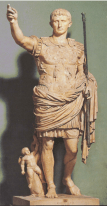
picture7If we look at the world of our reading for today, in Luke 2, we have to rewind to Roman times.  At the time of Jesus’ birth Octavian had just been declared Augustus Caesar.  Augustus means ‘great’ or ‘venerable.’ He was a newly minted son of the gods.  His dictatorship as the first Roman Emperor brought peace to Rome and he used the time of peace to reorganize collection of taxes.  This was awfully good for the common Roman citizen who had watched political infighting, civil war, and corruption ravage the Roman republic.  The new empire seemed well-organised and orderly in comparison.

However, not everyone was excited about the new imperial son of the gods and his dictatorial peace.  The Jewish people were not all in favour of Roman rule and saw their loss of self-rule as a sign that God had deserted them.  The Jewish Essenes went into the wilderness and tried to purify themselves in order that God’s favour might return.  The Zealots rose up in force and tried to throw off Roman reign by cloak and dagger subterfuge or sometimes outright rebellion.  The Roman province of Syria and the neighbouring kingdom of Judea were unstable and tumultuous.  They needed a firm hand and so a Legates, a military governor, called Quirinius was put in power to govern Syria and keep an eye on the wily puppet-king next door, Herod the Great.  Quirinius took a census so that accurate records were available for imperial taxes.  The biblical text allows that Jesus’ birth might have come slightly before that.  Also Quirinius may have had to govern the region twice in his career.  The biblical text can be interpreted that way.  However, the important thing to know is that times were hard in the Middle East and Luke sets Jesus’ birth in dark times for the people of Israel.

The story in Luke 2:1-20 reads like this:

In those days a decree went out from Caesar Augustus that all the world should be registered. 2 This was the first registration when Quirinius was governor of Syria. 3 And all went to be registered, each to his own town. 4 And Joseph also went up from Galilee, from the town of Nazareth, to Judea, to the city of David, which is called Bethlehem, because he was of the house and lineage of David, 5 to be registered with Mary, his betrothed, who was with child. 6 And while they were there, the time came for her to give birth. 7 And she gave birth to her firstborn son and wrapped him in swaddling cloths and laid him in a manger, because there was no place for them in the inn.

8 And in the same region there were shepherds out in the field, keeping watch over their flock by night. 9 And an angel of the Lord appeared to them, and the glory of the Lord shone around them, and they were filled with fear. 10 And the angel said to them, “Fear not, for behold, I bring you good news of great joy that will be for all the people. 11 For unto you is born this day in the city of David a Saviour, who is Christ the Lord. 12 And this will be a sign for you: you will find a baby wrapped in swaddling cloths and lying in a manger.” 13 And suddenly there was with the angel a multitude of the heavenly host praising God and saying,

14 “Glory to God in the highest,

    and on earth peace among those with whom he is pleased!”

15 When the angels went away from them into heaven, the shepherds said to one another, “Let us go over to Bethlehem and see this thing that has happened, which the Lord has made known to us.” 16 And they went with haste and found Mary and Joseph, and the baby lying in a manger. 17 And when they saw it, they made known the saying that had been told them concerning this child. 18 And all who heard it wondered at what the shepherds told them. 19 But Mary treasured up all these things, pondering them in her heart. 20 And the shepherds returned, glorifying and praising God for all they had heard and seen, as it had been told them.

If the reading from Luke 2 sounds similar to the reading from the end of Luke 1, there are parallels.  John’s birth account is written as a foreshadowing of Jesus’ account.  Just like their ministries will be presented in canon with each other, so their births show that pattern.  It reminds me of Carmina Burana by Carl Orff.  After the glorious beginning of O Fortuna the chorus quietly sings, “semper crescis, aut decrescis; vita detestabilis,” to the famous melody (https://www.youtube.com/watch?v=GXFSK0ogeg4)  .  Having run through the tune a couple of times though, the hair on the back of your neck stands on end as the choir sings through again with full volume.  In the same way the story of John’s birth is showing God’s glory but it fades into the background when compared to the birth of Jesus.

Our anticipation each year around November is that the holidays are coming.  After Thanksgiving the countdown is on in earnest for Christmas Day.  As the Advent Calendar counts down our expectations rise.  Finally, the children leap out of bed and the day arrives.  We have recreated the emotion that should be experienced with the Christmas story.  We have positioned the celebration of Jesus’ birth in the darkest days of winter.  The lights on our trees talk of the light breaking in on our world.  However, what should be glorious news, shared with gladness on December 25th, has somehow faded into the background.  What was once a remembrance of God’s greatest gift to mankind has become an excuse to take a rest from work, watch more television, and overeat.  Let’s take time to reflect now on the key verse of the passage.

For unto you is born this day in the city of David a savior who is Christ the Lord (Luke 2:11)

picture10

For the people at the time of his birth the glorious news of a savior would have been clear.  God had sent heroes in the past and a new hero was now provided to miraculously release Israel from the rule of the Romans.  Many times the confusion is repeated in the gospels.  Jesus will reveal that his kingdom is not of this world, but his disciples and the crowds will misunderstand.  Jesus will free the people from Roman oppression, but he will do it without one Roman needing to leave Israel.  The freedom of Jewish people will emanate from their spirits.  Then even if they become sport for Roman citizens, the spectacle will challenge the spectators’ attachment to this world and all the power and possessions it can offer.

The salvation that the baby of Luke 2 brings will not only deal with the symptoms of sin in a lost world, a solution is provided for the root of sin which.  The people of Jesus’ days were much more conscious of their sin.  They offered sacrifices in the temple to make amends for their sin each day.  Rituals restored relationship between the God of heaven and his estranged people on earth.  We call this atonement.  Jesus would save the people from having to fulfill all of their ritual obligations.  Jesus would take care of sin.

If Jesus saves from sin, we need to have an adequate definition of sin.  The Holman Bible Dictionary writes, “One of the central affirmations throughout the Bible is humanity’s estrangement from God. The cause for this estrangement is sin, the root cause of all the problems of humanity. The Bible, however, gives no formal definition for sin. It describes sin as an attitude that personifies sin as rebellion against God. Rebellion was at the root of the problem for Adam and Eve (Gen. 3) and has been at the root of humanity’s plight ever since.”  The dictionary goes on to say that sin can be described as missing the target.  God has a standard for each person and in our hearts we know that we have missed that standard.  Also, especially in the New Testament, sin is usually equated with ‘transgression.’  Transgression means to travel across.  God has drawn a line in the sand and sometimes unwittingly and sometimes with intent, we have overstepped our bounds.  We have crossed over into situations in which no creation of God should find themselves. As a result, we are estranged.  God and man are strangers to each other.  We need to be saved by Jesus.

picture11Those who are saved by Jesus, though tend to look at God’s salvation as a one-time historical event.  When describing our salvation to a student recently, I compared it to being saved from a raging battle.  While in the fray we are battered and bloodied and the evil enemy, sin, has its way with us.  Then our king saves us.  He plucks us from the battle and removes us to the safety of a mighty fortress.  The battle still rages outside but we are secure within.  If we were to leave the fortress the enemy would devour us in an instant, but we are eternally secure within its walls.  In this illustration I understand better not only how my savior has saved me from sin, but how he saves me daily from the fate of those lost in the world.  My gratitude for a savior expands from just being thankful for a past event when I was eight years old, to an understanding of his safekeeping of my soul for forty years.


God saves us from sin through our saviour Jesus, but more broadly God addresses evil.  As Plantinga writes in Engaging God’s World, “All sin is evil, but not all evil is sin.”  What he means by this is that nasty, wicked, terrible things happen even when people do not make choices which directly lead to them.  An example would be a tsunami.  In Japan in March 2011 a magnitude 9 megathrust earthquake off of Tohoku Japan caused a Tsunami.  Did someone choose to shake the sea that day?  Was the tsunami good?  The acts of nature that kill people are evil.  All of creation malfunctions now because evil pervades not only humanity but all of our environment.  The Bible teaches that Jesus did not only come to set right the sinful hearts of man, but to undo the evil that subjects God’s creation.  To Jewish minds Peace on Earth is a much broader concept than a quiet night in with the family watching a movie on a reclining couch.  Through the actions of this baby God will become accessible and he will work with humanity to bring the whole earth back to the ideal conditions in the garden of Eden.  Mankind will know God and once more tend for God’s creation in accordance with its design.  The Jewish people knew that a saviour heals the nations, but he also heals their land.

This magnanimous act of God needs to be declared.  The angels declare God’s goodwill in glorious light.  They speak in mighty unison.  The radiance of God shines.  He is glorified.  The shepherds verify with their own eyes that the unfathomable acts of God are true and they tell anyone who will listen.  The fame of God spreads abroad.  God is glorified.  We, too, seeing the humility of God-become-man saving his errant creation need to wake up as the light dawns upon us.  This is glorious.  Such an act needs to be declared.  The saviour has come.  The game has changed.  We no longer are condemned by our heritage to die a death estranged from God.  Our trespasses, our mistakes, our evil hearts are all going to be dealt with by this baby.  Somehow this baby provides a complete salvation.

God has acted.  His actions declare his nature.  While worldly wise politicians try and dress up as kings or queens and spend all their time creating an image without cracks, God puts his majesty and his glory to one side and empties himself.  In the person of Jesus, God descends to occupy a woman who rides 90 miles on a donkey carrying him inside her womb.  The God on whom we are all dependent for every breath, becomes dependent on a woman to wrap him in strips of cloth.  He has no gold-plaited crib or ivory cot.  Jesus is laid in an animal feeding trough.  Somehow God is more majestic for his condescension.  It speaks of grace and humility with a power which is only conspicuous because of the events that surround him.  We read about no spectacular actions by the baby.  However, the series of events in the skies and around the manger lead to deep contemplation on the part of the child’s mother.  In this, she is a model for us.  When we understand more of what God is doing in Luke 2, we speak praise in hushed, awed tones.  The fear of God causes us to bow down and worship.  This child is worthy.  Our gratitude causes us to praise.  Finally, God is once more with us.

Are we foolish enough to wander into the darkness outside the walls of our salvation?  Have we entrusted ourselves to Jesus, the saviour, to deal with the terrible consequences of our sin?  Sin will pay us a wage.  The wages of sin is death.  In contrast, the gift of God is eternal life through Jesus Christ our Lord.  Are we tired of missing the mark?  Do we know that we were created for more than the life we are living?  We need to come to God by putting our trust in his saviour to save us.  Are we in the habit of crossing the lines that God has marked in the sand of our hearts?  Who will save us from this vacillation?   Thank God for Jesus.

The name Christ is from the Greek for the Jewish Anointed One or Messiah.  Some people mistake it for Jesus’ surname.  It is his role.  As Messiah he is sent by His Father to rectify all wrongs.  As his disciples we work with him to bring salvation to the world.  We call people into right relationship with him.  Then as caretakers of his creation we uphold justice in our law courts, we value dignity and order in politics, we promote peace in our foreign policies, we are responsible with God’s resources, and we consume our daily bread with gratitude to the one who provides it.  God does not work the same way to combat the evils in everyone’s life.  However, he brought my mother peace from her postpartum depression when she found him.  God saved her soul and he saved her mind at the same time.  Jesus saves.

It is my wish that today we see the work of our saviour afresh.  Our stale obeisance can show there is something wrong in our heart or in our perception.  God’s work brings peace, it is glorious, it is worthy of praise.  We have a saviour.  Our response should surely have some passion.

The words of O Little Town of Bethlehem sum up a lot of what I wish to communicate:

O little town of Bethlehem

How still we see thee lie

Above thy deep and dreamless sleep

The silent stars go by

Yet in thy dark streets shineth

The everlasting Light

The hopes and fears of all the years

Are met in thee tonight


For Christ is born of Mary

And gathered all above

While mortals sleep, the angels keep

Their watch of wondering love

O morning stars together

Proclaim the holy birth

And praises sing to God the King

And Peace to men on earth


How silently, how silently

The wondrous gift is given!

So God imparts to human hearts

The blessings of His heaven.

No ear may hear His coming,

But in this world of sin,

Where meek souls will receive him still,

The dear Christ enters in.


O holy Child of Bethlehem

Descend to us, we pray

Cast out our sin and enter in

Be born to us today

We hear the Christmas angels

The great glad tidings tell

O come to us, abide with us

Our Lord Emmanuel

picture16

1 Comment

God as Lion

picture1

picture2I remember the feel of my first toy lion.  His name was Parsley, but I don’t remember who gave him to me.  In the 70s in England, another lion, Drooper, featured on the Banana Splits show which was aired regularly on Saturday mornings.  Both lions smiled continuously.  They were gentle lions.  Playful.  Affectionate lions.  Although they had a mane and a tail, they lacked teeth.  They were lions that would snuggle in a bed with you through the night.  They were not lions who would drag you away into the African bush to eat you.

picture4I changed my attitude to lions in school.  I wasn’t interested in the books they assigned us to read.  They were repetitious readers with little plot and no imagination.  Because of my lack of interest as a reader, I was soon designated as ‘remedial’ and my mother was informed.  My mother called on Aslan.  She got herself a copy of The Lion the Witch and the Wardrobe and then read me half of it.  She gave me permission to keep my light on if I wanted to read further.  Cruel but clever.  The stunt cured my reading, but it also gave me goose bumps.  Aslan the Lion is king of all Narnia.  He is presented masterfully by Lewis as an allegory of Jesus Christ.  He is wise and powerful.  He is wild and unpredictable.  I loved him and longed for him.  I soon devoured the whole Narnia series as a result.

picture5The lions in books and movies are figments of someone’s imagination.  What are real lions like?  I looked on-line for statistics and found the most comprehensive list given by San Diego Zoo.  Lions are the second largest cat in the world, second only to tigers.  They are massive.  The male lions mature to a weight of 330-573 pounds, whereas the females weigh in at 265-397 pounds. This means that The Fridge, who played as a NFL defensive lineman for the Chicago Bears weighed the same as a small male or a large female lion.  The head and body length of a lion can measure up to eight feet for a male and six feet for a female.  They stand three to four feet off the ground.

Other interesting facts are that the lion is the only cat with a tuft on the end of their tail.  The tuft covers a bony spur at the tail tip.  The lion is the only male cat with a mane (tigers have a ruff).  The lion’s eyes are set laterally on its head to provide a good angle of vision.  It can see you.  Its inner ear has a long mobile pinna able to localize a sound source.  It can hear you.  Its nostrils are large and it has complex nasal passages.  It can smell you.  Its massive limbs are built more for attack rather than running.  It will kill and eat you if it wishes.  It can run at 50 mph and leap 35 ft.  No point making a move.

When we think of lions we often think of them living in Africa.  In particular, we think of sub-Saharan and southern Africa.  That is an accurate account of where lions live today, but it wasn’t always so.  The Asiatic Lion is slightly smaller than African lions.  Although Asiatic Lions are limited to a small reserve in India today, they once roamed from India all the way to Greece.  It is the Asiatic Lion that lived in Palestine until the last ones were killed in the Middle Ages.  Lions have been prized by hunters and their preferred habitat has often been destroyed.  In North Africa Barbary Lions became extinct in the last century.  It looked like the Asiatic Lion would suffer the same fate.  One British officer during his short stay in India at the time of the Indian Rebellion killed 300 all by himself.  Gir Forest National Park in India is doing its best to keep Asiatic Lions alive, and they are having some success (Incidentally they may be having a little too much success as in recent years some particularly hungry lions have dragged off members of the local populous and eaten them.  One unfortunate 50-year-old was sleeping peacefully on his verandah when he became a meal for an Asiatic Lion).

Because lions roamed the lands which are the setting of biblical writing, they were used by biblical writers to symbolize traits exhibited by people and nations.  Without going too deeply into who is being described, let’s look through the Bible and think about what images the lion conjures up.  In Proverbs 30:30 a lion is described as a symbol of strength and power.  There are no surprises there.  The verse reads, “a lion, mighty among beasts, who retreats before nothing;” In context, the description is of a king who is secure against revolt.

picture6

A second characteristic of a lion that is used as a simile in scripture is its stealth.  Psalm 10:9 describes a wicked man who is in cover and lies in wait.  This lion-like man drags the helpless off and crushes them with his strength.  So lions are not just used to describe people positively.  In fact, Satan is described as a prowling lion looking for someone to devour in 1 Peter 5:8.

Historically lions are often associated with courage.  Richard the Lionheart, king of England, would be an example of this.  In 2 Samuel 17:10 we read, “Then even the bravest soldier, whose heart is like the heart of a lion, will melt with fear, for all Israel knows that your father is a fighter and that those with him are brave.”  So, in biblical times too, soldiers with courage were compared to lions even if the speaker is predicting that they will fall away with fear before David and his warriors.

In Job 10:16, Job complains that God is like a lion. God is fierce. If he lifts his head up high God will visit him with even more tragedy.  Job is likening his previous troubles to a fierce lion attack and he really doesn’t want to go through all of that again.  However, is this an accurate description of how God treated Job or just a heartfelt expression of Job’s anxiety and grief?

picture9A lion may eat 66 pounds of meat in one sitting.  They need an average of 11-15 pounds of meat a day.  They are not a cheap pet.  They are voracious eaters and Psalm 17:12 describes a hungry lion who is waiting for its next meal.  Again, though, this describes wicked men.  Does the Lord have a ravenous appetite?

A final characteristic of a lion to consider is its majesty.  The same verses in Proverbs that described the first point indicate majesty as well as power.  Majesty is a stately quality.  It is awe inspiring.  Lions are definitely that.  So one perspective of lions that would connect well with God in general would be their majesty.

We could use the descriptions of lions above to creatively talk about God in various ways.  However, when did biblical authors directly compare God to a lion?  What do we learn when the Bible compares the King of Kings with the King of the Jungle?

In his 31st chapter Isaiah warns God’s people not to turn to the Egyptians for help.  There is something better available to them.  The terror of the Assyrians in warfare is put in right perspective and the right perspective comes when God is thought of like a lion.  Isaiah 31 reads:

Woe to those who go down to Egypt for help

and rely on horses,

who trust in chariots because they are many

and in horsemen because they are very strong,

but do not look to the Holy One of Israel

or consult the Lord!

2 And yet he is wise and brings disaster;

he does not call back his words,

but will arise against the house of the evildoers

and against the helpers of those who work iniquity.

3 The Egyptians are man, and not God,

and their horses are flesh, and not spirit.

When the Lord stretches out his hand,

the helper will stumble, and he who is helped will fall,

and they will all perish together.

4 For thus the Lord said to me,

“As a lion or a young lion growls over his prey,

and when a band of shepherds is called out against him

he is not terrified by their shouting

or daunted at their noise,

so the Lord of hosts will come down

to fight on Mount Zion and on its hill.

5 Like birds hovering, so the Lord of hosts

will protect Jerusalem;

he will protect and deliver it;

he will spare and rescue it.”


6 Turn to him from whom people have deeply revolted, O children of Israel. 7 For in that day everyone shall cast away his idols of silver and his idols of gold, which your hands have sinfully made for you.


8 “And the Assyrian shall fall by a sword, not of man;

and a sword, not of man, shall devour him;

and he shall flee from the sword,

and his young men shall be put to forced labour.

9 His rock shall pass away in terror,

and his officers desert the standard in panic,”

declares the Lord, whose fire is in Zion,

and whose furnace is in Jerusalem. 

Another passage that refers to God as a lion is found in Lamentations where Jeremiah describes what it is like to suffer the righteous judgment of God:

Like a bear lying in wait,

like a lion in hiding,

he dragged me from the path and mangled me

and left me without help.

In this second passage Jerusalem is in ruins and Jeremiah is suffering bitterly.  He has seen the horrors of warfare up close and personal and to him they look like the ravages of a lion.

If God is the lion of Isaiah 31, there is no real competition between the horses of Egypt and the powerful God/Lion.  We see how near-sighted it is to solve our problems by solely looking at material solutions.  The spiritual reality of God transcends the realities of the latest military technology.  Chariots and horses seemed cutting edge when Isaiah wrote, but in our age the prophets of God might warn us about relying too heavily on drones, allies with stealth bombers, or well-connected spy networks.  No political or technological solution is a substitute for God.

If we should not lean too heavily on our allies because their strength is nothing compared to God, we should also not look at our enemies with hearts filled with fear.  The Assyrians were the enemies of Isaiah 31 and they were masters of terror.  They impaled, skinned, crucified or beheaded many of their enemies.  It is in the face of such brutality that God encourages the Israelites to look to him.  To describe himself in ways that seem encouraging in dire circumstances, God describes himself through the prophet as a lion.  No-one messes with God.

There are a number of attributes that ‘God as Lion’ communicates.  We will look at five.

Firstly, God is fierce.  Considering that the context of Isaiah 31 is warfare, a fierce God is highly appropriate.  A small pussy-cat who mews at the enemy would not be a helpful ally at all.  Israel can be confident that their God will fight fiercely.  A fierce God strikes fear into the heart of the enemy.  He causes them to shrink away in reverent fear.  To be on the wrong side of God is not only foolish, it is fatal.


In conflicts through the ages many people have evoked God’s support of their cause.  In ancient times national deities were routinely conjured into action by the nation’s priests.  In the last century, young men could be motivated by persuading them to fight for ‘God and country.’  As the west became more Christian it became more frequent for both sides to claim that God was on their side.  However, Abraham Lincoln showed his wisdom when he declared that it’s impossible to force God to be on our side, but to discern whether we were on his side.  Rather than the self-assured arrogance of imperial thinking, or the conviction that human might is right, we should humbly seek out the agenda of God the Lion.  Which battles does God want to fight?  What wars does God want to win?  Engaging in conflict that is obviously immoral by biblical standards would be opposed to God.

The age of monarchs, sadly for the British, is over.  America sent King George packing and most monarchs now have symbolic rather than actual power.  In a democratic republic the people are more responsible for the armed conflicts between nations.  Of course, politicians declare war and make peace, but the people elect them.  Looking at the politicians we can elect, especially if they are to be commander-in-chief (as the president is), we must try and discern if the officials we would vote for are more likely to mobilize our armed forces for what is right and godly or what is corrupt and solely self-serving.  Although western nations, particularly America, might be the most advanced and well-armed powers in the world, God will fight for whomever he will.  It is ultimately foolish to march into a conflict with an arsenal of nuclear weapons if the spiritual reality of the fierce God of Israel is in opposition to you.

picture12

In my opinion, we have seen some evidence God influencing battles in the modern era.  God has his hand on Israel.  I believe that is why, against overwhelming odds, the surrounding nations were not able to crush them in the armed conflicts that followed their independence.  For the west, in a renewed age of terror, a godless secular approach to warfare is not appropriate.  We need to seek God to see what he is doing.  Then we must align ourselves with him.

We must remember that God as lion is fierce.  We should also remember that God as lion is destructive.  A fierce lion might be effective without actually having a fight.  A destructive lion is devastating.  In Isaiah and Lamentations God as lion destroys.  He destroys the enemies of Judah, but ultimately he destroys Judah itself.  How can God do such a thing?  Holiness and righteousness are a serious business.  We have trivialized our theology in the west.  We easily see God as our friend, but we do not so easily welcome God’s holiness.  There is no-one like God.  Rather than an interesting point of trivia, this fact is central to godly living.  His righteousness is like the noon-day sun and it burns up any impurity that dares enter his presence.  Writers in the Bible who encounter God fall down as dead or cry out, “Woe to me because I am a man of unclean lips.”  Our impurity is a big deal.  As the creator of the world, who has watched his possession go astray, he is justified in washing the slate clean as he did in the days of Noah.  A holy God, who is completely righteous is fearsome to behold.  The image of a lion who executes righteous judgment is entirely appropriate.

In the Narnian series it is asked whether the God-figure Aslan is a safe lion.  The idea is laughable that Aslan would be safe.  However, the wise reply is that he is good.  Thank God that he is good, we may think.  This is because we so soon believe that we are good.  It is a basic error in our worldview to think that mankind is intrinsically good and therefore there is no threat to us from the lion who is entirely good.  Our lack of goodness that demands justice.  Something or someone needs to be destroyed.  If we understand the nature of the human soul, we should brace for the claws of the lion to rip into our flesh and for our destruction to be complete.  However, God does rip into flesh and pierce humanity because of our unrighteous rebellion.  But the flesh that God allows to be torn and the side that he pierces is that of the Son.  He destroys sin by taking it on himself.  However, if we do not respond to the sacrifice that he made in Jesus, he must destroy unrighteousness and that means that people remain subject to his wrath.

picture13Eustace, in the Narnian series is a self-interested little snot of a young man.  His unrighteousness and particularly his greed gets him into a lot of trouble.  However, when he is transformed into a dragon because of his greed Aslan rescues him … by destroying him.  He tears off layer after layer of skin to destroy the dragon that Eustace has become.  Finally, after a painful transformative process, Eustace becomes the young man he was always created to be.  Destruction is not often a pleasant process, but it can be one that is good.

Although God as lion is fierce and destructive, he is also protective.  We are told in the Bible that God is a jealous God.  This means that he claims what is his by right.  He is jealous for his people because they are his by a covenant made with Abraham and then renewed and developed in the time of Moses.  Just like a bride and a groom belong to each other, so God and his covenant people belong with each other.    Then God protects those who are his.  He shelters them he covers them.

The strange imagery in the passage is of God as lion growling over his prey.  The analogy, though, is not to focus on the status of that which is protected or shielded.  It is a carcass and Israel is not a carcass.  The focus is on the stance of the lion.  To get between an animal and its food is a foolish thing to do.  Fooling with a hungry lion who is protecting his food is like fooling with a loving God who is protecting his people.  It is best to leave well enough alone.

In our world today people are martyred.  In years gone by people have been martyred.  Does the reality of the suffering of God’s people show that God is not really protective?  Does church history show that God does not really protect?  If our understanding is that this present world is all there is to reality, we might be justified in thinking that God is arbitrary or non-existent.  However, an eternal perspective allows us to see that through death God welcomes his weary people into an eternal rest where they are protected and secure forever.  Even without this perspective, though, we must remember that the value of humans is in serving God himself.  God protects people in ways that serve his purposes and as God’s people mature they are grateful when he protects them from harm, but they are also grateful to be a testimony to his power through suffering and martyrdom.  In the security of the west we understand protection from suffering.  We do not understand as fully the experience of protection of the soul through suffering.  However, the Bible shows evidence of God protecting his people in both ways.

picture15A fourth way to understand God as lion is as one who is active.  In the Field Museum I have seen the man-eating lions of Tsavo.  They were active in 1898 in Kenya-Uganda.  Their story is frightening.  They dragged railway workers out of their tents and killed and ate them.  The Indian workers refused to work because so many were killed.  Low estimates say 35 people may have been killed by the lions and higher estimates place the death toll around 135.  However, although I can stand within two or three feet of them, they do not strike any fear into my heart.  They are no longer active – they are stuffed lions.  God is active and his word is active.  God is not an invention of deluded people in primitive ages of history.  God’s not dead.  Nietzsche was wrong.  We did not kill God.  We lacked the power.  Communist regimes did not extinguish God.  He is infinitely resilient.  Whatever clever arguments people throw at believers; whatever evidence there might be that God has left the world, God is active in his own ways.  The Bible compares his activity not just to any old lion, but he compares it to a young lion.

Deists believe that God set the world in motion and then took a back seat.  He wound up the world and then walked away, letting it work according to its design.  We can call God close when we need him for a math exam, or a family tragedy, but generally he floats somewhere just above the clouds in a disinterested way.  However, Paul contradicts this when he tells the Athenians of a God in whom we live and move and have our being.  In Colossians he talks about Jesus as being all and being in all.  God fills his world and is active.  This is why the Psalmist cries out that he cannot escape God.  Each of our lives shows the fingerprints of an active God.  Are we aware of what he has been doing in and around us lately?  It might be good to post some reminder that God is active in this world, like a young lion, it is worth remembering.

Finally, God as lion is courageous.  His courage is displayed in Isaiah 31 by the undaunted way he approaches shepherds who do their best to scare him and make him go away.  He moves on towards his goal relentlessly.

When we think of courageousness in the Bible, we often think of Joshua.  After the death of his mentor, Moses, he was thrust into leadership and given the task of taking the people of Israel into a land where they were grasshoppers in the eyes of their enemies.  Joshua had to fight walled cities like Jericho and battle against enemies who outnumbered him or had some superior technologies.  It was natural to be fearful, but Joshua was told to be courageous.  God tells him in Joshua 1 to be strong and courageous because He is with Joshua.  The courage of a Christian comes from the courageous resources of God.  The lion heart of a believer comes from the lion heart of God.

picture16

In the children’s story, The Gruffalo, a scared mouse bluffs his way out of being eaten by pretending he is going to meet a Gruffalo.  As he leaves the fox, he says, “Silly old fox, doesn’t he know?  There is no such thing as a Gruffalo!”  He says similar things to an owl and a snake.  Imagine his surprise when he meets a real Gruffalo.  The mouse survives the encounter and then uses it for his own benefit.  He walks with the Gruffalo back to the predatory, snake, owl and fox.  This time he has more confidence and courage and his fears are diminished.  It is not because of any great transformation in the mouse.  He has not become mighty and fearsome.  It is because the snake, owl and fox see the immense Gruffalo standing behind the tiny mouse.  I think this illustrates that although there is nothing invincible in ourselves, we walk with a God who is a courageous lion.  The analogy fails a little if we think of courage as facing and overcoming fears.  I don’t really think of God as having fears.  The analogy works when we think of the disposition of one who is fearless and then gives us the courage to face our own trials.

A general application comes from the analogy of God as lion.  God is majestic and worthy of worship.  This is true of all the persons in the trinity.  We have focused on Old Testament writing to this point, but we should not neglect Revelation 5:5.  Although there is some dispute about how this verse is translated, it is generally accepted that The Son is portrayed in Revelation as both The Lion and The Lamb.  This contrast of majesty and meekness is true of Jesus and is reflected in his life on earth.  These seemingly contradicting images come from a deep understanding of what took place on the cross.  The New Testament looks on the cross as a moment of glory and triumph, but it is also a moment of sacrifice.  The lion defeating its prey would be a great picture of Jesus defeating sin.  However, the lion is not fully illustrative of all that Jesus is.  He is also the lamb.

The tension between these two images is expressed in a song by Big Daddy Weave called The Lion and the Lamb.  When I was a child and I read The Voyage of the Dawn Treader, I was deeply moved by the great Lion Aslan revealing himself as a lamb.  The knowledge that he is a mighty lion but he chooses such gentleness is an awe inspiring concept.  In a lesser way it is the wonder we feel when the President plays with their children.  The same fingers that could press a button destroying the world, plays ring-a-ring-a-roses with a child.  So God is master of the universe but also the one who touches our face with moonlight as we sleep securely in our beds.  As the song The Lion and the Lamb states:

Our God is the Lion, the Lion of Judah

He’s roaring with power and fighting our battles

And every knee will bow before You

Our God is the Lamb, the Lamb that was slain

For the sin of the world, His blood breaks the chains

And every knee will bow before the Lion and the Lamb

Oh every knee will bow before the Lion and the Lamb


1 Comment

Merciful Redemption

As I was reading through Luke 1:57-80 in preparation to speak at Warrenville Bible Chapel, a single word jumped out at me, that word was ‘mercy.’  In my life I have often struggled to understand mercy because it gets confused with grace.  Mercy and grace do go hand in hand, and because Christians are saved by grace, according to Paul’s letter to the Ephesians, I have tended to jump to thinking of grace without contemplating mercy. Recently, though, the TV show Vikings, which was made for the History Channel, has made me look longer and harder at mercy and how essential it is to the Christian faith.

The History Channel’s Vikings is an accurate portrayal of the brutality and savagery that was part of everyday Viking life.  Revenge is portrayed as being a core value in the heart of the average Viking.  The main character, Ragnar Lothbrok, is often betrayed and plotted against in the series.  What makes the plots all the more gut wrenching is that the betrayer is often a close friend or family member.  For example, there is an ongoing tension between Ragnar and his brother Rollo in the series.  At the beginning of season 2 the brothers find themselves on opposite sides because of Rollo’s ambitions and his grief at living in Ragnar’s shadow.

picture1

Rollo and Ragnar from Vikings

They fight in a bloody battle and Rollo, the great warrior, strikes down many of his opponents.  After killing his old friend One-eye, and wounding his friend Floki, Rollo comes face to face with Ragnar, but he can’t fight him.  After a tense moment of bitter internal strife, he lays down his axe and surrenders.  What will be done to Rollo?  We are used to seeing Vikings kill each other in this series for the smallest reason.  However, Ragnar shows his brother mercy.  He frees him and tries to hold no bitterness against him.  Others in the clan are aghast, many are bitter, but it does not stand in the way of Ragnar’s pronouncement that Rollo is forgiven and free.  Ragnar, however, does not really extend grace to his brother.  Rollo unravels when the just penalty of death is lifted, but the vacuum it causes is not filled with a new life of grace.  Mercy then is experienced when just punishment that we should receive is withheld.

The topic of redemption has been examined in movies like The Shawshank Redemption and Atonement.  However, the image that has stayed with me most powerfully from books and movies is the image of Edmund with Aslan.  In The Lion, the Witch and the Wardrobe Edmund betrays his brothers and sisters by trying to lead them to The White Witch.  Because of his betrayal, Edmund’s life is forfeit and he is destined to be a slave to the evil queen.  How can he be bought back?

picture2

Aslan and Edmund

How can he be restored?  Aslan makes a pact with the White Witch to buy Edmund’s freedom.  The price will be Aslan’s life.  Before Aslan goes to his death he talks for a long while with Edmund and Edmund realizes the magnitude of his debt.  It is a beautiful picture of the debt that we all owe.  Aslan, of course, is representative of Jesus and Edmund is in the predicament a sinful world finds itself in when ‘the wages of sin is death.’  Redemption is defined as gaining or regaining something by paying a debt.

In many passages in Scripture we know that God shows his people mercy.  He stays his hand when punishment would be just.  We also see God redeeming his people.  He pays their debt to him and allows them to pay for their own lives with the life of a bull or a lamb.

Reading Luke 1:57-80 we see mercy and we see redemption.  Our response whenever we see evidence of God’s mercy and redemption should be to praise.  I pray that our study of the passage will focus us heavenward and will result in us blessing God like Zechariah does in his Benedictus hymn:

Now the time came for Elizabeth to give birth, and she bore a son.58 And her neighbours and relatives heard that the Lord had shown great mercy to her, and they rejoiced with her. 59 And on the eighth day they came to circumcise the child. And they would have called him Zechariah after his father, 60 but his mother answered, “No; he shall be called John.” 61 And they said to her, “None of your relatives is called by this name.” 62 And they made signs to his father, enquiring what he wanted him to be called. 63 And he asked for a writing tablet and wrote, “His name is John.” And they all wondered. 64 And immediately his mouth was opened and his tongue loosed, and he spoke, blessing God. 65 And fear came on all their neighbours. And all these things were talked about through all the hill country of Judea, 66 and all who heard them laid them up in their hearts, saying, “What then will this child be?” For the hand of the Lord was with him.

67 And his father Zechariah was filled with the Holy Spirit and prophesied, saying,

68 “Blessed be the Lord God of Israel,
for he has visited and redeemed his people
69 and has raised up a horn of salvation for us
in the house of his servant David,
70 as he spoke by the mouth of his holy prophets from of old,
71 that we should be saved from our enemies
and from the hand of all who hate us;
72 to show the mercy promised to our fathers
and to remember his holy covenant,
73 the oath that he swore to our father Abraham, to grant us
74     that we, being delivered from the hand of our enemies,
might serve him without fear,
75     in holiness and righteousness before him all our days.
76 And you, child, will be called the prophet of the Most High;
for you will go before the Lord to prepare his ways,
77 to give knowledge of salvation to his people
in the forgiveness of their sins,
78 because of the tender mercy of our God,
whereby the sunrise shall visit us from on high
79 to give light to those who sit in darkness and in the shadow of death,
to guide our feet into the way of peace.”

80 And the child grew and became strong in spirit, and he was in the wilderness until the day of his public appearance to Israel.

picture4

A Cinematic Interpretation of Elizabeth and Zechariah

Early in the passage we see that God shows mercy to Elizabeth by redeeming the barren.  This is a theme that has been retold many times in the history of Israel.  The birth of Isaac to Abraham and Rebecca in Genesis was a nation’s foundation.  Barrenness is a factor in the war between Rachel and Leah, the wives of Jacob.  The judge Samson’s parents struggled with infertility, but a mighty warrior was born to them.  Samuel was born to Hannah who was so desperate about her condition of barrenness that she was mistaken for a drunkard.  Childlessness was seen to work against the fabric of Creation.  God had created the Earth for bounty and fruitfulness.  Before modern science showed how both men and women could be responsible for infertility, ancient people often believed that a man planted his seed in the woman.  It seemed like a curse if a womb became a barren land that caused a man’s seed to wither and die.    It was therefore her fault if the seed did not grow and flourish.  The barrenness in Zechariah and Elizabeth’s life would have caused them more unhappiness than we would commonly experience in our culture.  There would have been questions about whether the couple could be really good because God had withheld his blessing from them.

That raises a question, though.  What did Elizabeth and Zechariah deserve?  The text tells us by telling us that the birth was the Lord showing great mercy on her.  This implies that Elizabeth’s barrenness was deserved.  Remember, mercy is the removing of punishment for sin.  The truth is that Elizabeth and Zechariah seem to be ‘good people’ in the way that we would define good.  They are devout servants in the temple.  They are focused on God and his ways.  How is it just to allow them to be barren?  If we take Romans 6:23 seriously, ‘the wages of sin is death.’  Dead people don’t have children.  If each person received the just punishment from God for their sin, there would be … no children.  God is merciful to all people, when he allows each birth.  Many a birth is taken for granted because God allows his goodness to flow to people who are not good.  God is still good when people are barren.  Elizabeth knows this.  Although she would be grieved, although she would be ashamed, her theology does not allow her to blame God for an injustice.  When a child does come she and the community around her see that as a mercy.  God shows mercy by redeeming the barren.

Flourishing is part of God’s design.  Images of God’s blessing in the Old Testament are coupled with words of fruitful lands flowing with milk and honey.  Our aversion to the ‘health and wealth’ gospel might have closed our eyes to the fact that fruitfulness is God’s goal.  The Garden of Eden is lush and well-watered.  It is full of food and people are commanded to multiply.  At the time of Luke 1, God’s people had fallen a long way from the glory of Solomon’s kingdom.  They were occupied by Rome.  Their production was taxed, their children were slaves and the people struggled.  In Zechariah’s Benedictus hymn, his song of praise blessing God, he looks to a time when the barren condition of his nation will cease.  It was believed that when the Messiah came he would defeat Israel’s enemies and restore the throne of David and make Israel fruitful again.  The Messiah will do that for God’s people.  However, their definition is too focused on material fruit.  The people of Israel’s desires are too worldly.  The coming Messiah that John the Baptist prepares the way for, will produce fruit in people’s hearts first.  In their core people will produce love, joy, peace, patience, kindness, goodness, faithfulness, gentleness and self-control.  Israel will give birth to a fertile movement that will reproduce and multiply.  They will water the ground with the blood of the martyrs.  They will change the world with the truth that they speak.  Many Jewish people may have been disappointed by the lack of material wealth or the abundance of production that followed the appearance of John and Jesus.  However, some Jewish people took the message of God’s mercy to the whole world and it has never been the same.

You may ask my credentials to speak about barrenness and infertility.  When you look at me sharing these words, you may assume that I speak out of ignorance and I couldn’t understand any of Elizabeth and Zechariah’s pain.  Kelli and I have been down the hard path of infertility.  You could say, in a sense that we are still there.  We have never had biological children together.  For Kelli in particular it has been hard.  Mother’s Day services could be a mockery and women’s meetings at times that only housewives could attend seemed insulting.  In Christian circles it is the norm to get married and have children.  There is even a promotion of a woman’s rightful place being in the home raising children.  Anything else is failure.  If Christians often do not know what to do with singleness, they definitely do not often handle infertility well.  My wife had to find peace with God.  She had to accept mercy.  My wife wrote a piece when her anger finally died.  I will read some of it here, but the whole piece, and much more, can be found on http://thisoddhouse.org (Check infertility as a topic on the right of the page).

The night after an ultrasound confirmed—no heartbeat—I lay in bed. Shaking and sobbing. With grief and fury. Peter lay next to me. Dazed and silent.

“How could He?” I kept saying. “It’s too much! What a cruel joke. How could He kick me so hard when I am already down?”

“Stop fighting Him,” Peter finally said. “He wants to be enough. When will you surrender? What is it going to take?”

But I couldn’t let go of the anger. It was the only thing I felt I had left.

Just a few days later I woke at 4 a.m. My first conscious thought was the same as it had been for the past two years—apart from that three-week pregnancy reprieve. “What’s the point of waking? This is not a life that I want to live.”

I stumbled out of bed. Trudged down the long hallway to the bathroom. Turned on the light. And looked in the mirror at my sad, tired face.

Then. Epiphany.

There’s no other way to explain.

In an instant. The scales fell from my eyes.

And I saw myself for who I truly was.

The first image: Myself. A stubborn, grimy toddler. Waging a two-year, grown-up, full-fledged tantrum. Legs flailing and kicking. Fists beating the ground. Angry protests screamed at the top of my lungs. All for the benefit of my Almighty Father.

The second image: Orual [from C.S. Lewis’ ‘Til We Have Faces]. Composing a foolish complaint against the gods. Ranting and raving. About justice and cruelty. But then. Ultimately. Seeing the mercy she had been given. Seeing herself finally in the mirror. Standing finally unveiled.

The third image: Mrs. May [from Flannery O’Connor’s Greenleaf]. Fiercely trying to control her life. Trying to keep God at bay. And that Bull—Patient. Persistent. Penetrating. Who pursued Mrs. May to the very end of herself. Who stabbed her through the heart since that is what it took for her to see. Whose other horn wrapped her right around and pulled her close.

Like Mrs. May and Orual—I finally saw truth.

I saw. That this life isn’t mine. It never has been. When had I taken such obstinate control? When had I forgotten that He is God? When had I forgotten that He can do whatever in the world He likes?

I stood there in the bathroom. And cried. But—miracle of miracles—this time not in anger at God’s cruelty. Rather, in humility at His grace.

Peter found me there. He shuffled into the bathroom, eyes barely cracked.

“I’ve had an epiphany,” I told him. “I get it now.”

His brow furrowed with sleepy skepticism.

“Okay,” he said. “Can we talk about it in the morning?” And he headed back to bed.

I would be lying if I said that everything was downhill from there. Certainly not. In fact, life kept kicking us in the gut. For the next several years. No, the pain didn’t go away. But in that marvelous moment in front of the mirror. Thank God. My anger finally did. Finally.

Of course, the infertility did not go away.  However, God showed us great mercy in healing us enough to adopt.  God gave us two children to love dearly.  God could have killed us for our ingratitude for what we had.  Instead he lovingly brought us forward.

picture6

Daryl and Amelia, our adopted children.  God shows his mercy and grace in spite of infertility.

We must all be mindful that God has shown us great mercy.  Some of us cry out for the good things we want as if it was a cry for justice.  However, ultimate justice is not what any of us wants.  God is just in destroying this world through a flood.  God is just in turning Lot’s wife to a pillar of salt just because she looked back.  God is just when he destroys Canaan for their sin.  God is just when he sends Israel into exile.  God is just when he kills Ananias and Sapphira for lying to him.  We should all be killed horribly for our wayward lives.  We take our own desperate condition too lightly and we misunderstand God’s holiness when we shake a fist at God. God has shown us all great mercy.

However, God wants to show us mercy even in the areas where we may feel a lifelessness or barrenness has set in.  A barren season in our lives can lead to apathy and depression.  Apathy is that feeling when we lose interest in our activities, our friends, or even our own lives.  We can obscure it by creating a false mask of happiness which we present to others, but doing that is the definition of hypocrisy.  We need to process our cognitive, affective, and behavioral reactions to the barren periods in our lives.  Then we need to discolse our true condition to God, friends, and family.  We were designed to struggle through life together – not in isolation.  The faithful, barren women in the Bible cried out to God in their despair.  They cried out to their husbands and wept with their friends.  Then, if God showed them mercy the whole community rejoiced with them.

I personally find movies like Facing the Giants unhelpful because in that movie they imply that infertility will always be reversed by prayer.  Some faithful people still look askance at those who are not blessed by God with biological children.  Somehow they attribute infertility to a lack of faithful prayer.  Singleness or infertility do not identify a cursed member of the community.  We live in a sinful world where God’s ideals of sexual union and fertility are not always realized.  In fact, according to 1 Corinthians, singleness can even be a preferred position to advance the gospel.  We need more courageous conversation and understanding in the church when it comes to difficult areas like infertility.  We need courage to initiate conversation when we want to hide because we are grieving or ashamed because God has not given us children.  We need courage to talk with people who are hurting, even when their responses to us might by affected by deep pain.  It is good to listen in such circumstances and not offer too much advice or say things that are unwise or untrue.  An example we often heard when we were adopting was the examples of people who adopted and then God gave them children of their ‘own’.  This implies the adopted children are not ‘our own’ and it also implies they are solely compensation for not having biological children.  Also, I have heard that statistically the pregnancy rate of adopting families that struggle with infertility is just 7%.  So the words of comfort in that case are generally unhelpful and untrue (https://adoption.com/truth-about-getting-pregnant-after-adoption) .  Talking to a person in pain doesn’t generally mean that we have to find something clever to say.  It means that we draw alongside them and encourage them to talk so that they release the emotional storm that is raging inside.

picture7

Not all barrenness is bilogical

Not all barrenness is biological.  We can often find that our labours are unfruitful at work or at home.  This too can lead to apathy or depression.  We can have tried for years to reach our own children with the gospel, but they can persist in a godless attitude.  We can try hard to devise plans for commercial success only to see mediocre sales.  The way forward with this is also to connect with God and community and share our burden.  Look to see some area of life where God is still extending mercy.   Amidst the devastation of Jerusalem, Jeremiah could write, “The faithful love of the LORD never ends!  His mercies never cease. Great is his faithfulness; his mercies begin afresh each morning (Lamentations 3:22,23 (NLT)).’

We have looked at how God shows mercy by relieving the barren.  We also see in Luke 1:57-80 how God shows mercy by breaking the silence.  He breaks the silence of Zechariah and he also breaks his own silence.

Zechariah was struck dumb by the angel of God because of his lack of faith when God told him he would have a child.  A lack of faith in God has its consequences.  However, once Zechariah shows his obedience in spite of his affliction, God loosens his tongue.  In this passage we see that Zechariah was living in a silent world.  The townspeople had to make gestures to him when they wanted to know the child’s name.  He not only could not speak – he could not hear!  So his world was silenced.  This was a holy man.  This was a man dedicated to God and God silenced him.  All his faithful service did not make him immune from God’s punishment. Then God showed mercy.  After months of silent living and eight days of wondering if it would last forever, God suspends his sentence on Zechariah and rather than bitterness, Zechariah responds with blessing.  His song is called the Benedictus because benedictus is the Latin for blessed, which is the first word of the song.  His song speaks of God’s mercy, but Zechariah is not thinking only of himself but of Israel.

picture8

Zechariah sings praise.  His song is often called the Benedictus because of the first word ‘blessed’ which is ‘benedictus’ in Latin.

Israel has received word from the prophets that a Messiah will come, but then God himself seemed to become mute for 400 years.  The people of Israel lived in silence.  They did not hear God and subsequently they could not speak new words from God into the lives of the people.  Now Zechariah sees that the time of waiting is over.  He bursts into song for his people.  He knows that his son will prepare the way for a new freedom.  His words imply that he thinks the Messiah will establish an earthly kingdom.  Regardless of his understanding of what God is doing, he knows that God is speaking to his people again.  God is no longer silent.  In fact, as John tells us in his gospel, the Word of God will become flesh.  God is not only speaking to Zechariah – he will be speaking in the flesh.

picture10Those who have watched closely the common experience of Christians have developed ‘stage theory.’  In books like Critical Journey by Hagberg and Guelich stages of faith are recorded.  In Critical Journey the fourth stage is called The Wall, in other writing it is called the Long Dark Night of the Soul.  It is that time when the heavens seem as brass.  Our prayers seem to go nowhere.  We feel isolated.  We do not hear God’s word.  Bible reading leaves us feeling as empty when we finished as when we began.  Answers that once thrilled us now leave us flat.  This time of silent isolation is common for those who push deep into the faith.  We have a resistance to growth.  Our resistance, possibly like Zechariah’s, might be due to an overly strong ego; it can come from a history of guilt and shame; it can come through frustrated efforts to make sense of the world; it can come through our desire to please others.  However, like Zechariah, we need to endure discomfort, we have to heal.  Risking all and following God into the darkness, despite his seeming silence, requires a courage that only he can give.  He is near, even when he does not feel near.  He is speaking, even when we do not hear him.  The common experience of those who go through The Wall is that God’s mercy and grace are experienced in deeper ways than ever before.  People become broken before God, but in breaking to pieces they are made whole.

picture11

The Wall from Stage Theory can seem like God is silent.

God speaks to us whether we hear him or not.  However, sometimes our experience tells us he is silent.  These times of silence serve a purpose in taking us deeper.  They show us our own limitations.  Sometimes God’s holiness and our own fallen nature lead to a lack of understanding.  God calls us deeper than our doubts and fears (See Chapter 3 of 20 Things We’d Tell our Twentysomething Selves).  picture12God calls us to walk through the dark storms of our emotions and trust him when trust seems foolish or irrational in our limited thinking.  Then in the stillness after the storm he whispers his name as he did to Elijah after the whirlwind.  Then, as he did through the Psalmist, he says ‘Be still and know that I am God (Psalm 46:10).”  We will sit in surrender at the feet of the master at some future date and we will hear all that he wants us to know.  Until that day, as committed disciples and apostles, we follow wherever he leads and we go wherever he sends us.

God shows mercy by redeeming the barren, and he also shows mercy by breaking the silence.  Ultimately, though, the glory of the Luke 1:57-80 passage, and the thrill of Zechariah’s heart, is that God shows mercy by sending a saviour.  God has done this many times for Israel:  In famine he sent them Joseph; In slavery he sent them Moses; In warfare he sent them Joshua; In oppression he sent the judges; picture13In their confusion he sent them a king; In exile he sent them Nehemiah.  However, in this passage comes the advent of the Saviour.  All the past deliverers pointed toward Jesus.  The coming saviour will redeem God’s people in ways that will be everlasting.  All things will be restored to the way of ‘shalom’ or peace.  John is a great gift to his father, Zechariah, because he marks the coming of one greater than him.  This person will redeem God’s people.  Zechariah’s limited mind explodes into inspired words of blessing – each couplet in the hymn could be unpacked in its own sermon, but even though Zechariah’s understanding is expansive, it is limited.  The Apostle John will later expand on the light and darkness theme in his writings in the New Testament.  Jesus as the coming king is expanded by Matthew’s gospel.  The role of the Jewish people in God’s plan of salvation is more fully explained by Paul.  Zechariah is excited and his words are beautiful, but like his son John, but his words are spoken just before the dawn of a new era.  In this book we are reading a foretaste of some of the truths Luke will unpack in the books of Luke and Acts.  Israel will be blessed as the vessel which will bring the Messiah, and the promises to bless the nations which God made to Abraham will soon be fulfilled.  Zechariah, like his son John, is bidding us to get ready for the saviour.

picture16We have traditional holidays that focus on getting ready for the saviour.  Christmas is the traditional time when we read through the beginning of the gospel accounts, especially Luke.  Somehow though Christmas doesn’t point to the saviour anymore.  Christiaan Snedeker was out shopping in 90 degree weather at the beginning of September and ran into a display of Christmas trees.  He posted his confused selfie on Facebook with these words, “90 degrees outside and Christmas trees inside. Happy September!!”

picture17Christmas and Easter are good times to bring family together and sing praise to our saviour.  We go to church and share the stories of his birth, death, and resurrection.  However, with church attendance becoming more sporadic in the modern age, is our saviour worthy of us just becoming Chreasters – those who visit church on just Christmas and Easter?  I think we have commercialized and cheapened our understanding of who Jesus is.

One practice that has been foundational to my walk with Jesus over the years has been the Breaking of Bread service that I experienced in Brethren churches.  The focus on the bread and the wine and the quiet contemplation leads to a deeper appreciation of all that Jesus has done and all that he is doing.  Rather than most church services where one comes as an empty consumer expecting to be filled, the Breaking of Bread has participants coming with hymns to share, passages to read, and hearts ready to pray.  This means that each believer brings their experience of the saviour to the service and mutually builds up each member whilst pouring out their praise and worship to God.  I would say that all churches could use a time where its congregants come together in quiet reflection and mutual support.  These times should be focused on Jesus our Saviour and should examine the limitless wonders of who he is.  The Brethren have such a time.  I wonder if a busy, secular, consumer lifestyle can still give rise to spontaneous praise to God like we read in Luke.  I would advocate that we disengage from the rat race and make more space for what matters most.

picture18

The Breaking of Bread is a reflective time used to remember the qualities of our great Saviour, Jesus.

As we remember how God has shown mercy by redeeming his people, we have focused on three ways God shows mercy in Luke 1:57-80.  He shows mercy by redeeming the barren.  He shows mercy by ending his silence and the silence of his servant.  He shows mercy by sending a saviour.  Like Zachariah, seeing what God has done should lead us into theologically rich songs of praise.  One verse comes to mind of a song I have sung many times.  It shows the terrible, sinful condition of mankind and the grace God has shown by sending his son.

Guilty, vile, and helpless we;

Spotless Lamb of God was He;

“Full atonement!”  can it be?

Hallelujah!  What a Savior!


1 Comment

Divided Church

Imagine a church wracked by divisions. Powerful leaders promote themselves against each other, each with his ban of loyal followers. One of them is having an affair with his stepmother, and, instead of disciplining him, many in the church boast of his freedom in Christ to behave in such a way. Believers sue each other in secular courts; some like to habitually visit prostitutes. As a back lash against rampant immorality, another fraction in the church is promoting sexual celibacy- complete sexual abstinence for all believers- as the Christian ideal. Still other debates rage about how decisively new Christians should break from their pagan past. Disagreements about men’s and women’s role’s in the church add to the confusion. As if all this were not enough, alleged prophecies and speaking in tongues occur regularly, but not always in constructive fashion. A significant number of these immature Christians do not even believe in the bodily resurrection of Christ!

As the new semester begins, I am entering into a new routine.  God needs to be primary in my planning, if my priories are to line up with my professed beliefs.    So, each day will begin with reading a section of the NIV Application Commentary:  1 Corinthians.  To know about God is not the same thing as knowing God.  We are created to be in relationship with him.  Relationships, though, include knowledge.  We know about the person that we love.  God reveals who he is in Scripture.  So, a big part of a growing relationship is increased knowledge through the reading of the Bible.

1 Corinthians is my book to study this Autumn.  The above paragraph, written by Craig L. Blomberg, is helpful to see how relevant this ancient book is.  The church he is imagining is the reality of the Corinthian church at the time of Paul’s first letter.

I would invite you to join me in reading one entry from the commentary a day (except Sundays).  Today, I started with the introduction, I will re-read it tomorrow.  If you can get yourself a copy of the book, you can always just jump in wherever I am.

Leave a comment

Godliness

What on earth is godliness?  Is anyone interested in it any more?  I have been studying 2 Peter 1 in preparation for teaching at Warrenville Bible Chapel this Sunday.  Godliness is listed as a key step in achieving spiritual maturity.  However, I don’t think many Christians in the West are very interested in being mature.

Christianity has not often been presented as a way to growth and when it has it has often been slammed.  That Christians would claim that they have a path to better living would be elitist or hypocritical.  It is elitist in our culture to claim any monopoly on truth and to be godly implies a better way of living than being ungodly.  So in our ‘participation award’ culture, either everyone is godly or no-one is.  When ‘godly’is equivalent to ‘good’ in the minds of many people, the current belief is that everyone is basically good.  If everyone is good enough, why break your back trying to be better than anyone else?  In this line of reasoning the foundation of the problem can be seen.  We are, even in the church, ungodly in our approach.  The emphasis in our reasoning is often focused on ourselves and others, but the reasoning of a biblical faith is focused on God.  Godliness has two major facets.  One facet is that a person who is godly sees that God permeates all reality and that all of life is subject to the pursuit of God.  The second aspect is that when you live in the pursuit of God bad things don’t fit.  You will become better and better as you pursue God.

An obvious example of this is in the 2016 Rio Olympics where two divers, David Boudia and Steele Johnson were asked how they maintained their composure.  They said that they realised that their primary identity was in Christ and not in their achievement at the Olympics.  This did not make them the best in the Olympics, they won silver, but it did make them better versions of themselves.  In being the best versions of themselves, they became better divers than most other divers in the world.

The hypocrisy in the church is well documented.  Pastors too often fall from grace, having an affair with the secretary or running off with the funds.  Those who demand others cease sinning are often found to be malicious gossips or self-righteous bigots.  So when they might talk about godliness the perception is that they are pronouncing judgment from on high about what their self-righteousness affirms in them and sees as lacking in everyone else.

Another point is that godliness is not really an issue for atheists.  Atheists believe there is no God and so they have no reason to orient their lives toward him (it is ironic that many orient their lives against Him – that would seem like me orienting my life against Big Foot which might be a waste of time).  Agnostics don’t really care.  However, it is Christians and Jewish people in the Bible who are warned against ungodliness and encouraged to cultivate godliness.  So, while we know that most of the world continues in ungodly living, we must ask how the church is in danger of being ungodly.

Ungodliness is not just the condition of being antagonistic of God, it also describes the mind that forgets God.  When we acknowledge this we see that we have far to travel.  I know that I am mindless of God, but through apathy, rebellion, pleasure seeking, and forgetfulness my mind often wanders far from God.  I don’t believe I am worse than most people in this area, but most people are so consumed with achievement, a fast paced life, their own worries, and protecting their frail egos that they miss experiencing God.  We sell a version of the faith that gives salvation from hell, but we don’t call people to a life filled with God.  Subsequently people have a diminished view of what God requires of them because they are afraid of linking works with salvation.  Our watered-down gospel makes a sinful Christian life too much the norm.  By sinful, I mean that it falls short of the glorious existence for which God set us apart.

The greatest maturity often requires the greatest hardship or sacrifice.  Many people do not attain much godliness because they choose ease and comfort.  The easiest path does not require growth or adaptation, but it doesn’t lead to such great victory, either.  In fact, those who choose the easiest path often sneer at those who choose a path that is anything but easy.  Part of ungodliness in the church is an attitude that those who have joy in spite of their circumstances, or who communicate God’s goodness in trials are Pollyannas.  A surer grasp on reality, it would seem, only finds ecstasy in entertainment or coffee shop conversations.  So, our churches entertain more, chatter more, and stand in awe of God less. We seek not so much to understand but to be understood.  We seek to receive.  We seek to grow solely by looking to ourselves and then we find that we aren’t up for much.  Then we form a group and affirm ourselves despite what little we have.

Godliness calls us into ministries that are beyond us.  Godliness calls us off of the highway and along winding roads.  It is like the drive Kelli and I had through the Rockies in order to get back to Denver from Keystone and Arapahoe Basin. We drove directly from Keystone on Highway 6 over the Loveland Pass.  As we drove there were a surprising number of trucks on the highway, making their way over the 11, 990 ft pass.  Truckers might grumble that this route is harder than traveling on I-70, but I-70 goes through a long tunnel at Loveland and The Colorado Department of Transport has said that a truck carrying hazardous waste, having an accident in the tunnel, would cripple the economy.  I am not sure if the truckers appreciate the privilege of making a sacrifice for the Colorado economy.  I hope though, that they are not too busy grumbling to miss the views.

God requires more from some than others.  The reward is that he gives us more of himself and builds us up.  We may feel like God has directed us up over a mountain pass carrying a heavy load.  However, if we take the focus off of ourselves we will see the beauty more clearly of what God is doing through and around us.  That is the road to godliness.


2 Comments

Greet One Another

My Uncle became a Christian but decided to attend one of the larger churches in my home town.  He intellectually assented to the idea that Jesus was a real person who had died for his sin; He knew that attending church is not just something extra for over-achievers; He wanted his wife and himself to hear teaching regularly.  However, he didn’t want to socialize. He didn’t want to get together with other people. He wanted his faith to be a private, personal thing.   You could say he was an introvert and so this was no big deal.   Of course, being an introvert is no sin.  However, introverts have to force themselves into relationships.  This is particularly important when it comes to mental and spiritual health.  Those who are not connected often wither on the vine.  They are less able to work as a team player.  The faith was not designed to be a privatized, internal affair.

In contrast, the apostle Paul had many connections which he made on his travels and he invested in the people whose lives he touched.  He was transparent about his thoughts, fears, and desires for them.  He was grateful for their work in the gospel.  Paul’s primary relationship was with Jesus.  The measure of his other relationships was how they centered on the gospel and whether they were growing in knowledge and depth of insight with Christ.

‘Greet’is repeated many times in the passage below.  Many churches have a time at the beginning, during, or after their service where people say a quick ‘hello.’  There is nothing wrong with that.  What is lacking, though, is any real relational connection.  In an age when regular church attendance is considered twice in a month, standards of connection are slipping.  Facebook or other social media helps us to manage our social interactions – but they lack the tears and trauma of real life-long friendships.  People can escape when hurts need to be addressed.  Greeting people with whom we have laboured is less common, because less people labour with or for the church and more expect a consumer Christianity.  Our churches are looking a feeling more like Selfridges and less like a place where real commitment is expected.

Over the summer I have had the honour of sitting down with young men in their twenties.  Each one of them has connected with me in ways that I did not anticipate.  When I come to camp for my weekly visit they rise with a smile and throw their arms around me and give me a hug.  Several of them have wept with me.  All of them have served with me.  This kind of connection should not be just what we offer at camp.  We must make time on our schedule to eat with our brothers and sisters in the church, to talk about hard things in transparent and vulnerable ways, and do the work of the gospel side by side.  Then, when we are not together, we should pass on greetings.

Greet Prisca and Aquila, my fellow workers in Christ Jesus, who risked their necks for my life, to whom not only I give thanks but all the churches of the Gentiles give thanks as well. Greet also the church in their house. Greet my beloved Epaenetus, who was the first convert to Christ in Asia. Greet Mary, who has worked hard for you. Greet Andronicus and Junia, my kinsmen and my fellow prisoners. They are well known to the apostles, and they were in Christ before me. Greet Ampliatus, my beloved in the Lord. Greet Urbanus, our fellow worker in Christ, and my beloved Stachys. 10 Greet Apelles, who is approved in Christ. Greet those who belong to the family of Aristobulus. 11 Greet my kinsman Herodion. Greet those in the Lord who belong to the family of Narcissus. 12 Greet those workers in the Lord, Tryphaena and Tryphosa. Greet the beloved Persis, who has worked hard in the Lord. 13 Greet Rufus, chosen in the Lord; also his mother, who has been a mother to me as well. 14 Greet Asyncritus, Phlegon, Hermes, Patrobas, Hermas, and the brothers who are with them. 15 Greet Philologus, Julia, Nereus and his sister, and Olympas, and all the saints who are with them.16 Greet one another with a holy kiss. All the churches of Christ greet you.

Leave a comment

Woman Deacons?

I grew up in a tradition that didn’t have female deacons or elders.  They took Paul’s admonition that a woman should live in all submission very seriously.  The women were quiet in all of the meetings that we had.  However, when I reached my late teens women were allowed to pray in the prayer meeting.  They had always been allowed to pray silently alongside the men, but now they were allowed to pray out loud.  Some would say that it was hypocrisy because women were allowed to lead in prayer, but not at the weekends.  Others would say that the church of God became more whole when this move was made.

In chapter 16 of Romans Phoebe is listed as a deacon, diakonos, or servant.  This is where we get our word minister.  Can a woman be a minister?  I hope that it is beyond debate that men and women both minister in the church.  The question is not whether a woman ministers, it is how a woman ministers.  The phrasing below seems to indicate that Phoebe had a respected position in the church of Cenchreae.  The emphasis, though, is not on her title but on her service.  In many church squabbles, the fight is one of power and status.  In this instance, a woman is commended for her leadership in serving others.  Men are called to the same type of leadership.

Men and women need to work together to see the needs in home, church, and community.  Rather than be nagged into submission by a ‘submissive’ wife, a man needs to look for ways the community is best served.  A woman often sees what needs to be done and serves by taking care of it.  Whether that role is empowered by using the title Deacon or whether the actions are behind the scenes, such a woman has the mind of Christ.

I commend to you our sister Phoebe, a deacon of the church in Cenchreae. I ask you to receive her in the Lord in a way worthy of his people and to give her any help she may need from you, for she has been the benefactor of many people, including me.

1 Comment

So Often Hindered

I would like to go home to England for a visit.  I would like to take my family back to Plymouth and show them the ocean and the moors.  However, for some reason I am often hindered.  I would like to sell our house in McHenry and drop the two hour commute, but each time our house is on the market it doesn’t seem to go well.  We were hindered from selling our house last time because the houses around us went into foreclosure and the housing prices in McHenry plummeted.  This time we have had contracts on a house in Chicago and a contract on our house, but both have fallen through within 24 hours.  I feel hindered.  In Romans 15, Paul had a feeling that God was hindering him, and I identify.

We are hindered when we move forward with plans that are not God’s design for us.  I believe that we can push our way forward and God will allow us to make mistakes but, if we are sensitive to The Spirit orchestrating the environment, we can see God closing some doors to open others.  In Romans 15, Paul knew that he could not go to Rome because he had to go to Jerusalem.  Knowing why some doors are closed and others are open brings some peace.  James explains in his book that anyone who lacks wisdom should ask God and God will give him insight in response to trials of various kinds.  In our desire to sell our house we do not have that insight yet.  However, we received some peace when the second contract fell through.  It gave us insight as to why the first contract might have fallen through.  Why both contracts fell through, though baffles us.  We have a lovely house that has been improved over the years, but people don’t want it.  Meanwhile we still have a total of 4 hours in commute each day.  Either we are choosing to stay at the same job when we should be looking at other jobs, or we are not accepting a commute that God wants for us.  We had assumed that 4 hours in the car each day was a waste, especially when we feel called to homeschool.  We feel ‘hindered’.  However, we do not feel abandoned.  We wrestle with circumstances and we wrestle with God, but we are not isolated.

Please pray for us, if you feel led.  We could do with the wisdom that God gives.  However, these trials do develop our character.  We have to find more patience, more endurance, and we have to give up amassing some savings so that we can make more improvements on the home so that it is salable.  A life of simplicity and patience may be the result of being hindered coming to England or hindered moving house.  According to James, that would be worth more than gold.

This is the reason why I have so often been hindered from coming to you. 23 But now, since I no longer have any room for work in these regions, and since I have longed for many years to come to you, 24 I hope to see you in passing as I go to Spain, and to be helped on my journey there by you, once I have enjoyed your company for a while.25 At present, however, I am going to Jerusalem bringing aid to the saints. 26 For Macedonia and Achaia have been pleased to make some contribution for the poor among the saints at Jerusalem. 27 For they were pleased to do it, and indeed they owe it to them. For if the Gentiles have come to share in their spiritual blessings, they ought also to be of service to them in material blessings. 28 When therefore I have completed this and have delivered to them what has been collected, I will leave for Spain by way of you. 29 I know that when I come to you I will come in the fullness of the blessing of Christ.

30 I appeal to you, brothers, by our Lord Jesus Christ and by the love of the Spirit, to strive together with me in your prayers to God on my behalf, 31 that I may be delivered from the unbelievers in Judea, and that my service for Jerusalem may be acceptable to the saints, 32 so that by God’s will I may come to you with joy and be refreshed in your company. 33 May the God of peace be with you all. Amen.

4 Comments