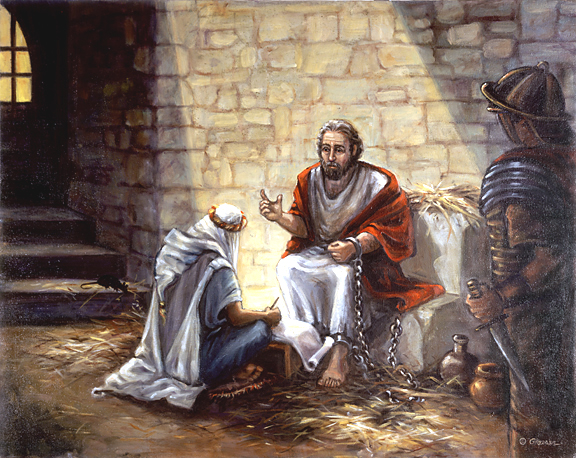
Philippians 4:10-13 I Can Do All Things

10 I rejoiced in the Lord greatly that now at length you have revived your concern for me. You were indeed concerned for me, but you had no opportunity. 11 Not that I am speaking of being in need, for I have learned in whatever situation I am to be content. 12 I know how to be brought low, and I know how to abound. In any and every circumstance, I have learned the secret of facing plenty and hunger, abundance and need. 13 I can do all things through him who strengthens me.

I Can Do All Things

Calm down.  Calm down.  This does not mean that I can fly to Africa with no need of a plane.  This does not mean I can break down walls with the touch of a finger.  It definitely does not mean that I have superpowers that I can use whenever I choose.  Of course, God can transport me, as he did Philip, in an instant to wherever he chooses.  Of course, God can walk, as Jesus did, through walls.  God is not limited in his working through us by time and space.  That is all very exciting, but it is not taking this particular verse in context.

This paragraph follows an anxiety suppressing embracing of peace.  Paul now responds to the Philippians’ concern for him by asserting his own peace and contentment.  Their gift is appreciated, but his financial circumstances do not dictate his emotional well-being.  He is at peace, he is in harmony with God’s world, he is content.  It is in his focus on Jesus that he finds his constancy.  Jesus is faithful and constant, so Paul can endure all other inconsistencies because of the constancy of his relationship with Jesus.  It would carry the sense of the verse more to say I can endure all things.  As Eugene H. Peterson paraphrases:  Whatever I have, wherever I am, I can make it through anything in the One who makes me who I am.

The question is whether you have a gentle and reasonable spirit in every circumstance.  The opening of Philippians 4 stated the same point.  Paul is just applying his previous commands to release anxiety to himself.  Finances are among the top reasons people get anxious, fight, and break apart.  Paul uses his own equanimity to teach the lesson he has taught.  As Dan Huffman would say, “He’s Livin’ It.”  Are you?

Prayer

I preferred when I thought you gave me superpowers without challenging my ability to follow you.  I like to be passively babied.  Now when you challenge whether I am content in every circumstance, I have to say that my life is marked by some serious lack of contentment.  Let me be more comfortable with any financial circumstance, any housing arrangement, any car, any criticism, and any changes to my health.  Help me to truly be able to endure anything because I always have you.

Questions

  1. What has Paul just finished talking to the Philippians about?
  2. How is his personal life a reflection of what he preaches?
  3. How is verse 13 often ripped out of context?
  4. How do finances cause people anxiety?
  5. How could God help someone you know maintain their emotional equilibrium whether they come into new money or enter into financial hardship?
Leave a comment

Philippians 4:4-9 From Anxiety to Peace

Rejoice in the Lord always. I will say it again: Rejoice! Let your gentleness be evident to all. The Lord is near. Do not be anxious about anything, but in every situation, by prayer and petition, with thanksgiving, present your requests to God. And the peace of God, which transcends all understanding, will guard your hearts and your minds in Christ Jesus.

Finally, brothers and sisters, whatever is true, whatever is noble, whatever is right, whatever is pure, whatever is lovely, whatever is admirable—if anything is excellent or praiseworthy—think about such things. Whatever you have learned or received or heard from me, or seen in me—put it into practice. And the God of peace will be with you.

From Anxiety to Peace

The rejoicing, reasonable, peaceful Philippians should be a witness to each other and to those around.  Why do they need reminding?  At the heart of every person is a little anxiety.  Anxiety is a fear rooted in the future.  Who will I be?  What will happen to me?  What will I become?  Sometimes, rather than pressing questions, anxiety can be rooted in perceived certainties that have not yet happened:  “Because I have committed this crime, I will go to prison,”  or “Because I didn’t say the right thing, I will be rejected.”  These things may become true, but they are not true in the present.  Jesus, in Matthew 6, tells us not to worry about the future because the future will bring enough worries.  For example, you will die.  It might be painful.  You can waste the whole of your present life, even bring on the end more quickly, by worrying about what will be the time and the manner of your death.  Or you can live in the present and think deeply about death whilst at the same time leaving death in the hands of God.

When I am anxious what should I do?  Pray.  What kind of prayer?  Repetitive or Constant.  What kind of attitude?  Thanksgiving.  To pray in times of hardship is to open yourself up to the possibility that someone is on your side.  As Dr. Lehmann calls it, to have ‘attunement.’  One of the first things that happens when we are anxious is that we drop relational connections with others.  People cease to be allies in the pursuit of God but they become objects who are either obstacles or a means for us to reach our objectives.  We must attune ourselves with God.  Ask him for the faith to seek him as our ally, even when our emotions tell us that we are unsafe or unloved.  When we see God as our ally we bring him our concerns and leave them at the cross – repeatedly.  The anxiety often does not vanish in an instant.  It takes time to bring different aspect of them and ask yourself whether you are prepared to release it to God.  Often, if you check your feelings, you will find that the anxiety shifts to a feeling of loss or remorse.  Sometimes the feelings move to anger or pride.  In each case the feelings should be identified and brought to God.  Men in particular find this hard.  They feel the feelings in their body but are not aware of them.  You can see their body tense as it is racked with emotion, but they have few skills to locate the feeling and name it.  It is difficult to release something of which you are ignorant.  We men can help each other by asking whether we feel our bodies as tense, whether our back hurts, or looking for other physical signs of stress and anxiety.  Whilst repeatedly releasing the anxious thoughts and worries to God and identifying the fears related to them, we must thank God.

Dr. Wilhoit writes about research that has been done which shows that gratitude develops a sense of well-being in those who struggle with anxiety and depression.  It is good to remember the provision of God and the faithfulness of God.  When we see his purposes in other areas which don’t trigger us, we can give the areas that do push our buttons to God more easily.

If this becomes a habit, not a quick fix, peace will break out.  This is the calm assurance that things are as they should be.  The rest of a soul that moves through a difficult life with confidence that God is sufficient.  The focus moves off of the limitations of the self and onto the sufficiency of God.  The goals I set move away from my daily task list and become a constant seeking of the next step that God would have me take in order to grow personally and help others do the same.

In this peaceful state rejoicing and calmness of thought are possible.  A calm, rational person is the person marked by the ‘gentleness’ in this passage.  They have a joy that excites them.  They are in love with God and the perfect love they have casts out all fear.  The Lord is near.  This means that he is coming soon and refers to Jesus.  Although we have his presence in a very real sense through the work of the Holy Spirit, Jesus has not returned.  However, it is imminent.  It can happen at any point.  That motivates us, but it also reminds us that he longs for us and wishes to be with us.

As your mind clears, what do you let feed it?  What we think about changes us.  we are transformed by the renewing of our minds.  The list that Paul gives are not only to be found on the shelves of a Christian book shop.  The list Paul gives is an attitude toward seeing the world as a whole.  The world is created by God and his Spirit still moves among Christians and pagans alike.  God is behind the noble acts of the characters in J. R. R. Tolkien’s Lord of the Rings.  God prompts the preschool child to offer his lunch to the child who forgot theirs.  God makes beautiful the smile of a spouse as she looks up into your eyes.  God works in the squalor of Calcutta and the depravity of Howard Street, Chicago.  If our eyes are open to the Christian witness of devout people in the worst areas of the world, we will find peace.  We will know that God is alive and through his own he changes the world into the world it was created to be.

Prayer

My diagnosis of anxiety and depression opened a door to a deeper experience of you.  However, it was just the start.  I have a life now of accepting my own broken peace and bringing these fears to you.  I am grateful for the times, like now, when you peace floods mys soul like a river and I have the calm assurance that ‘The Lord is near.’

Questions

  1. How might Euodia and Sytyche experience anxiety?
  2. How could a divided church like Philippi become rational and peaceful?
  3. What was the responsibility of the individuals in Philippi upon hearing these words?
  4. When do you become anxious?
  5. How do you process your emotions and find the God of Peace?
Leave a comment

Philippians 4:2,3 Women Arguing

I entreat Euodia and I entreat Syntyche to agree in the Lord. Yes, I ask you also, true companion,[b] help these women, who have laboured side by side with me in the gospel together with Clement and the rest of my fellow workers, whose names are in the book of life.

Women Arguing

Men argue, and so do women.  Both genders can hold grudges.  Both genders can feel wronged.  Both genders can fight for justice.  In the case of the Philippian church, two women, Euodia and Syntyche were in conflict.  They had such a high position in the church that many have ignored the fact that they have women’s names and are referred to using female pronouns in the Greek.  Some argue that women could not have ministered with Paul at such a prominent level.  He says he has laboured side-by-side with them, which causes some to think of them as elders or deacons.  However, although they have an important position we can not say what that position was.  Attempts to make Euodia into Euodias (a man) are rooted in chauvinism.  Two important women are at odds in Philippi and it is tearing the church apart.

The issue is so important that the whole letter is probably formed around this issue.  In chapter 2:2 the Philippians were asked to agree with each other and now the same language is used here.  This was not a private letter, but would have been read to the whole congregation.  People like us in the 21st century west would possibly think of this as a violation of personal privacy.  However, when an issue divides a large body, the whole body needs to be addressed.

To resolve this difficult rift Paul appeals to a mystery recipient.  Although the letter is for the whole church, it would seem that one person in particular would have received the letter on behalf of the rest.  This person was a mediator and could sit Euodia and Syntyche down so they had to talk with each other.

Today we are cowards in the church when we know there is conflict and it is not addressed.  We need people to sit down those who are in disagreement and help them work through their difficulties.  I do not agree with top-heavy leadership that insists upon its own way by way of agreement and then throws out any detractors.  I have met too many wounded recipients of church discipline.  However, those who hide in a hole without sitting gossips and slanderers down, should not be surprised if their church is factious and unhealthy.

Do you have a disagreement with someone?  Have you forgiven them?  What is the motivation for continuing the conflict?  Is it right ‘in the Lord’?  These are questions each of us must answer.  Secondly, do you see disagreement that is tearing apart a home or a family?  Is it right for you to stand by and do nothing?  How can you have believers agree in the Lord?

Prayer

Search my heart, God and let me know if there is some conflict that needs to be resolved … Hmmm.  That was quick.  I’d better write an e-mail.

Question

  1. What does Paul think must happen at Philippi?
  2. How does he think it should come about?
  3. What do you think happened as a result of this letter?
  4. Is there a way this admonition could be addressed to you?
  5. Who might you help resolve a conflict?
Leave a comment

Philippians 4:1 Stand Firm

Therefore, my brothers, whom I love and long for, my joy and crown, stand firm thus in the Lord, my beloved.

Stand Firm

Paul has reasoned how Jesus is our example of humility.  He gave up his rights as God, he took on a lowly position, and he sacrificed himself for others.  Those who work with Paul exhibit these same qualities.  The Philippian believers are important to Paul.  He founded their church and they have taken care of him since.  When Paul thinks of how God used him to reach this people and when he sees how they have grown, it fills him with joy.  However, although he loves his spiritual progeny profusely, he can not let them fall away because of internal strife and conflict.  It is with this in mind that he tells them to stand firm.

Militarily, to stand firm is to protect a defensive objective.  When one is attacked, one takes their shield and forms a shield wall on a high point.  This defensive, shielded position is hard to break.  It can not be outflanked or charged by cavalry and because it is dug in it has an advantage over marching units.  What is attacking the Philippians?  It would be easy to say Satan and his minions.  In every destructive attack we face, there is an element of evil.  However, what is the particular onslaught that Paul is addressing?  It is slander, gossip, and divisiveness.  I see these as flowing out of a corrupted heart, a heart that is twisted by the affects of sin.  Slander is often rooted in fear.  If I fear that justice is not being done, I fear that I am not safe.  Either the rules that I believe protect me are not upheld, or I have felt wounded by one who has attacked me, so I feel justified in seeking revenge.  Slander is often justified by the one who slanders.  It is usually because it is responsive (in some even reflexive).  In fact, even when it does not seem directly in response to an obvious attack, it is usually a protective response to a wound from childhood or life’s experiences.  Gossip is also spread abroad by weak people.  They seem strong because they tear down those with whom they are in competition.  However, if we are full we already have all that we need.  We do not have any threats and so we have no need to belittle a rival – we don’t have a rival.  Gossip is often an attempt to show how beneath us others are.  It is laced with contempt.  We claim we would never dress, talk, parent, or behave the way another does.  Thirdly, divisive people battle because they are in a war.  The war is often created by them and winning is the only possible option.  Why does the divisive person need to divide and conquer? They do not accept themselves as loved and precious (which I believe is related to Paul’s admonitions), so they have to form a team which is on their side.  In their winning team comes their fragile security.

The answer to standing firm against these temptations is to accept that we are safe and secure in the fortress of God.  As Luther wrote in his famous hymn, “A mighty fortress is our God.”  We are sheltered by his wings, we hide in him like we hide in a cleft of rock from a storm.  We are safe and so there is not need to come out from that safety to fight in battles that could harm us.  We contend for the truth, of course, but we do not fight to elevate ourselves.  Jesus is ours.  He fills our hearts with love.  This filling is constant and overflows.  Since no-one can take away what God has given me, I often find myself fighting for things I don’t need.  It’s as silly as my children fighting over who gets the first carrot at lunch time.  If they stopped to think how their father provided carrots for them yesterday and the day before, they wouldn’t squabble as though this carrot was the last one.

Finally, we have to acknowledge that those who have taken care of themselves for years and not been broken and learned dependence on God might be more prone to fight.  Those who have experienced great pain and sorrow, and who saw no purpose to it, may have a harder time embracing God’s provision.  However, as I sat in a group with many openly broken people last night, it was strange to see the beauty of their perspective.  They believed that in spite of having reached the end of themselves and being sinned against mightily, or God releasing them into their own depravity, they now cling to God more nearly and pursue him more fervently.  Seeing them now standing firm in the face of such darkness is a mystery.  However, it is a joy to those who, like Paul, are reminded by the testimony of God’s plan and provision.

Prayer

Father, I am tempted to despair.  I do not feel adequate to teach and I want you to teach through me.  I do not feel that it is easy to make the right stand with my children, give me wisdom.  Turn our minds to your power and compassion when we are tempted to fight and become offensive.  The Lord is my Shepherd, I lack nothing.

Questions

  1. What previous points might Paul be building upon when he writes, Therefore’?
  2. Why does Paul use so many relational, emotional words around his command to stand firm?
  3. When you picture a person standing firm, what do you picture?
  4. How might you need to stand firm in God’s provision and care and cease going on the offensive?
  5. How can you encourage someone else to stand firm?
Posted in Daily Devotions | Leave a comment

Philippians 3:17-21 Gods of Gluttony

17 Brothers, join in imitating me, and keep your eyes on those who walk according to the example you have in us. 18 For many, of whom I have often told you and now tell you even with tears, walk as enemies of the cross of Christ. 19 Their end is destruction, their god is their belly, and they glory in their shame, with minds set on earthly things. 20 But our citizenship is in heaven, and from it we await a Saviour, the Lord Jesus Christ, 21 who will transform our lowly body to be like his glorious body, by the power that enables him even to subject all things to himself.

Gods of Gluttony

Americans eat huge portions at restaurants.  They often teach their children to snack incessantly during the day.  Obesity is rife according to statistics (http://win.niddk.nih.gov/statistics/index.htm).  It seems interesting that Paul should write of a group whose God was their stomachs.  The stomach is the seat of appetite.  We are consumers in a capitalist society who have trouble controlling our appetites.  Affluent Philippians were infiltrated by those who staiated the senses and didn’t know when to stop.  The virtue they lacked is temperance.  We often associate temperance with alcohol, but it is the outworking of  self-control in areas of food, sex, and all other pleasures as well.  Paul could say to the gamer that their addiction to gaming is an affront to God.  Paul could say to the romance novel addict that their addiction shows that their god is something other than the true God. 

There is pain the world and we have to cope with it somehow.  There are pleasures in the world that God has designed for us to enjoy, but each of these pleasures should lead to God.  Once these pleasures become an end in themselves, we have lost our heavenly orientation and become too earthly.  Living in ways that God has not designed, satiating our appetites in ways the body was not meant to, leads to illness, relational break-down and even death.

I saw Saving Mr. Banks yesterday.  It was a story about how we all wrestle with our fathers.  However, one father drowns his sorrows by drinking.  The insistance that he was not a bad man, he just succumbed to the pressures of life is not the truth.  We are all prone to succumb to the pressures of life because we are evil.  We are twisted from our initial purposes.  We can’t work, drink, or eat ourselves to a better place.  We must completely renounce our attachment to this earth and align our identity with the God of Heaven.  In so doing we will freely enjoy the pleasures of this world without destroying ourselves and those around us by excess.

Prayer

We all seem to have vices.  You have given us many good things, but we have greed and gluttony.  Save the nation from addiction, obesity, and appetites that are out of control.  Help us to resist those around us who push us to consume more.  When we are pushed, help us to think of you and why we are here. Then help us to deny ourselves that we may live more effectively.

Questions

  1. What does Paul command the Philippians to do?
  2. How does he describe the opposition?
  3. What do you think the problem was in Philippi?
  4. How are we overindulging ourselves?
  5. How has God’s design for you and your body been violated?  How might you live better?


Leave a comment

Philippians 3:12-15 Let it Go!

12 Not that I have already obtained this or am already perfect, but I press on to make it my own, because Christ Jesus has made me his own. 13 Brothers, I do not consider that I have made it my own. But one thing I do: forgetting what lies behind and straining forward to what lies ahead, 14 I press on towards the goal for the prize of the upward call of God in Christ Jesus. 15 Let those of us who are mature think this way, and if in anything you think otherwise, God will reveal that also to you. 16 Only let us hold true to what we have attained.

Let it Go!

To take hold of God’s future for them, the Philippians had to let go of things from the past.  It is not that everything is let go.  We will see the kinds of memories and thoughts we should take forward in chapter 4.  However, issues of conflict, issues of regret, and the paralyzing shame many people carry are to be let go.  In context, Paul is probably talking about a previous lifestyle.  Previously Paul found his status in performance, presently he finds his identity in the pursuit of Jesus.  He has to let go of the previous life with its patterns in order to take a hold of the life that God has for him.

Is there a life-pattern that you need to forget?  I have problems mixing the ideas of a single life I lived until I was thirty-eight or so.  Even when I was married I didn’t have children and the selfless commitment they demand.  In fact, I am not alone in this struggle.  Many scientific studies show that people who parent are unhappier (http://parenting.blogs.nytimes.com/2009/04/01/why-does-anyone-have-children/?_r=0).  The false conclusion is that children make you unhappy, my inclination is to believe that we can’t satisfy our selfishness and run our lives how we want.  However, I did hear that those who have children would do it all again.  They feel more significant.  They know that life is designed for child rearing, but they are unable to embrace the lifestyle with joy.  I think there is a parallel with many people’s example of being a Christian.  We were designed, like Paul, to pursue a life for God.  Many Christians have ‘accepted’ Christ as something to complete them.  When God demands more from them, they reluctantly see that they have to comply, but their desire is for themselves.  They are unhappy in their faith.  Paul’s joy is rooted in his desire to throw off everything that detracts from life with Jesus.  Jesus is all about that.  His life is harmonized.  He is as happy as a parent who sees children as a privilege and an honour to raise and educate.

So, the principle?  Think about why God called you.  Let go of anything that you used to pursue.  Single-minded pursuit of Christ leads to joy.  It combats the misery of serving self and Jesus at the same time.

Prayer

I want to have personal free-time, I want to rest in ways that I used to before children.  I do not quickly see their erratic sleep patterns and their constant demands as a way to be free from my self.  I have no rights to those things.  I am disappointed with the Christian life quite often because it does not help me achieve my goals.  However, in those cases it was my goals that needed realigning.  I needed to be disappointed.

Questions

  1. What is Paul trying to attain?
  2. How does he press on toward the goal?
  3. Why do the Philippians need to hear this?
  4. What are you trying to attain?
  5. Is there anything that works against your perceived goals?  Why does it frustrate you?
Leave a comment

Philippians 3:1-11 Performance Issues

 Finally, my brothers,[a] rejoice in the Lord. To write the same things to you is no trouble to me and is safe for you.

Look out for the dogs, look out for the evildoers, look out for those who mutilate the flesh. For we are the circumcision, who worship by the Spirit of God[b] and glory in Christ Jesus and put no confidence in the flesh— though I myself have reason for confidence in the flesh also. If anyone else thinks he has reason for confidence in the flesh, I have more: circumcised on the eighth day, of the people of Israel, of the tribe of Benjamin, a Hebrew of Hebrews; as to the law, a Pharisee; as to zeal, a persecutor of the church; as to righteousness under the law,[c] blameless. But whatever gain I had, I counted as loss for the sake of Christ. Indeed, I count everything as loss because of the surpassing worth of knowing Christ Jesus my Lord. For his sake I have suffered the loss of all things and count them as rubbish, in order that I may gain Christ and be found in him, not having a righteousness of my own that comes from the law, but that which comes through faith in Christ, the righteousness from God that depends on faith— 10 that I may know him and the power of his resurrection, and may share his sufferings, becoming like him in his death, 11 that by any means possible I may attain the resurrection from the dead.

Performance Issues

At my place of work we often focus on assessment.  Assessment tells us how well we are doing and sometimes highlights places that we can focus upon.  There is formative assessment which helps to shape who we are and there is summative assessment which ranks us compared to others.  The Bible gives us ways to assess ourselves.  We are being formed and so it is good to measure ourselves against God’s moral imperatives and make adjustments so that we become more holy in our living.  However, our summative assessment always gives us 100% if we have accepted Christ.  We have Jesus’ righteousness exchanged for us and so our grade can not change.  The problem with the church at Philippi is, like many today, it was influenced by the idea that our eternal worth is measured by how we perform not by what we have received.  Paul outlines how, if the Christian life is about performance, he had outperformed everyone.  However, the value of his own attempts at scoring well were nothing compared to the score he received by being associated with Christ.  Anything less that 100% is worthless in the face of a holy God.  Jesus’ 100% is worth everything, Paul’s performance is worth nothing.

So, do you measure your worth by what you do or by what you have received?  Are you anxious to do well or are you grateful that you are unconditionally accepted and forgiven?  It is with this attitude that we can rejoice like Paul rejoices.

So many Christians who have grown up in Fundamentalist churches are pulled between the joy of grace lavished upon us by God and guilt associated with performance reinforced from the pulpit.  My wife has just written a piece about this struggle at thisoddhouse.org

Prayer

we struggle with feelings of shame related to our performance.  Help us to see the wrong in us as opportunity to grow.  Help us to release our need to measure ourselves by performance.  Help us to rejoice in what Jesus has already attained for us.

Questions

  1. Why does Paul rejoice?
  2. What problem was going on surrounding circumcision?
  3. Why does Paul say the Philippians should not worry?
  4. What performance is linked with your identity (for example I feel emotionally tied to my performance as a teacher)?
  5. How could you assess yourself more accurately?
Leave a comment

Philippians 2:19-30 Living Examples

19 I hope in the Lord Jesus to send Timothy to you soon, so that I too may be cheered by news of you. 20 For I have no one like him, who will be genuinely concerned for your welfare. 21 For they all seek their own interests, not those of Jesus Christ. 22 But you know Timothy’s[c] proven worth, how as a son[d] with a father he has served with me in the gospel. 23 I hope therefore to send him just as soon as I see how it will go with me, 24 and I trust in the Lord that shortly I myself will come also.

25 I have thought it necessary to send to you Epaphroditus my brother and fellow worker and fellow soldier, and your messenger and minister to my need, 26 for he has been longing for you all and has been distressed because you heard that he was ill. 27 Indeed he was ill, near to death. But God had mercy on him, and not only on him but on me also, lest I should have sorrow upon sorrow. 28 I am the more eager to send him, therefore, that you may rejoice at seeing him again, and that I may be less anxious. 29 So receive him in the Lord with all joy, and honour such men, 30 for he nearly died for the work of Christ, risking his life to complete what was lacking in your service to me.

Living Examples

Timothy and Epaphroditus are living examples of the humility and service about which Paul has written.  They have sacrificed themselves for the service of others.  Timothy is much younger than Paul and he has a paternal affection for him.  Timothy has taken care of his master in ways that Paul can not do without.  Also, it is possible that Timothy is not prepared yet to be an elder or leader in a church setting.  Paul might need a little while longer with him..

Epaphroditus is the type of servant who volunteers for difficult tasks.  In fact he has pushed himself to the point of death.  Now, however he is homesick, as does happen in Christian service.  Paul loves Epaphroditus, but he realises that having him return to Philippi is for the best. 

Usually Paul writes these kinds of details at the end of his letters.  We get an insight into the personal comings and goings of the early apostles.  However, here, I believe, the details are moved up because of the example of service and sacrifice.

I have had people come and go in my life who I have had this kind of relationship with.  Ryan Jenkins takes great effort to come from Chicago each week and spend time with my family and myself.  Most of the students and former students that I meet with I focus on investing in them.  However, Ryan has sought more and more to contribute to the family.  In fact, today I am having one of my ‘worst teacher in the world’ days.  I will ask him to pray for me and see what happens.

Ken Gates is another with whom I have worked more closely recently.  I respect his mind and often feel positively challenged by him.  Nancy Kane challenges me in much the same way, but she leaves me feeling emotionally supported. 

It is important, first of all, to be the one others can depend upon ion times of difficulty.  One has to become generous and loyal.  God in his grace may then use you to be a living example of his grace in the life of another.  Secondly, it is good to be thankful for those whom God supplies to support us in our walk with God.  Talk to others about how God uses them in your life.  Be a support to others and let them support you.

Prayer

Father, I hate the emotional triggering that reminds me that I have thoughts that are ungodly, and damaged.  I thank you that there are people in my life who can help when I have ‘worst teacher in the world’ days.  Please support me through them on days like today.

Questions

  1. Who does Paul talk about in this passage?
  2. Why move these examples up into the body of the letter?
  3. Why does Paul treat each of them differently?
  4. To whom are you being supportive and useful? How?
  5. Who sacrifices themselves to talk with and support you?
Leave a comment

Philippians 2:14-18 Whining

14 Do all things without grumbling or questioning, 15 that you may be blameless and innocent, children of God without blemish in the midst of a crooked and twisted generation, among whom you shine as lights in the world, 16 holding fast to the word of life, so that in the day of Christ I may be proud that I did not run in vain or labour in vain. 17 Even if I am to be poured out as a drink offering upon the sacrificial offering of your faith, I am glad and rejoice with you all. 18 Likewise you also should be glad and rejoice with me.

Whining

My son has been working hard on perfecting his whining technique.  He is 5, so I don’t get too worried yet.  His hero, Cailllou, has far exceeded Daryl’s whining and he’s only 4.  Daryl has a teenage shoulder sloop and also an overstated pout.  He is able to forget any previous reward or gift he has received and find something exceptionally small or insignificant that he is being denied or someone else has and he doesn’t.

I wonder if he has learned much of this from me.  I find that I do not always see the things I have that I should be grateful for.  The grass on the other side of the fence looks greener, but of course it rarely is.  The common factor in each of these things is that I am seeking what I want for myself rather than evaluating what is best for everyone else.

If unity is to be preserved in the church, home, school, or work people have to put their grumbling to one side.  The best way is for people to become unified around a larger goal – something bigger than themselves.  For the Christian this is always possible.  We are always to focus on the cause of Christ.

Prayer

Father, help us to complain less about what is going on around us.  Help us to see the greater good and help us most of all to see how the cause of Christ is furthered.

Questions

  1. What might be the cause of grumbling in Philippi?
  2. How does grumbling affect a church?
  3. What would be Paul’s remedy?
  4. What do you grumble and complain about?
  5. How would a positive attitude stand out in your church, family, work, or school?
Leave a comment

Philippians 2:12,13 Fear and Trembling

12 Therefore, my beloved, as you have always obeyed, so now, not only as in my presence but much more in my absence, work out your own salvation with fear and trembling, 13 for it is God who works in you, both to will and to work for his good pleasure.

Fear and Trembling

Soren Kierkegaard connects Philippians 2 with the story of Abraham.  My own experience took me there this weekend.

After reminding the Philippians of Jesus’ humility and the way Jesus came to earth to suffer and die, Paul now reminds the Philippians of their previous success in serving God.  Based on the example of Jesus’ humility and the success they have had, Paul expects the Philippians to continue to obey.  It is the effect of their salvation which is worked out with fear and trembling.  Jesus did not save us just to camp out on earth until we get zapped into an eternal retirement home called Heaven.  Jesus saved us to fulfill the purpose for which we are created.  Each of us was created with the capacity to serve God’s plan for Creation.  However, most of us want to go through life serving ourselves.  In fact, we all have sinned and fall short of God’s plans for us.  Jesus’ death allows us to get back to the created order.  We can lead the way in returning the world to the way it was created to be.  In the Philippian church it meant living in harmony and unity by dealing with the conflict between Euodia and Sytyche.  In my life it varies.

Yesterday I was struggling because I had friction with the children.  Daryl in particular has developed some habits that I react badly to.  One habit, for example, is constantly flicking his tongue.  Getting him to sleep at night is also hard.  It means I have very little ‘me’ time before 10 in the evening.  Because I find it hard to let that time go, I stay up late and then get annoyed when the kids come around at 6 a.m. or so.  For my teaching last semester I covered two classes for a co-worker.  For reasons outside of my control, they didn’t go well.  Rather than following my mind on this one, though, I felt like failure in my teaching.  Kelli wanted to sleep in yesterday because she had been up with the kids and I lost track of Amelia.  I thought I knew where she was, but I didn’t.  Rather than chalk it up to a mistake, I processed it as my having no real concept of reality.  I couldn’t trust my mind.  Feelings of failure began to well up and overwhelm me, but still I decided to have faith and act on my mind and not my feelings.

I went to church and at church I was reminded by Scott Chapman’s sermon that I act on faith in following God.  I was also reminded that God has taken my life to work out a plan.  As I work hard for my own plan, I find that disharmony breaks out and I stress becomes overwhelming.  Although there is fear and trembling in following God like Abraham did, it leads to purpose and harmony.

Prayer

Father, I feel the tension in my mind between the unhealthy patterns of self-soothing and self-obsession that I have developed, and the harmony and purpose that you have.  I give to you my desires for rest and relaxation and I follow the path of faith that you have laid out with fear and trembling.

Questions

  1. How does the example of Jesus’ incarnation help us to understand these verses?
  2. How is Jesus in the Garden of Gethsemane an example of following God’s will with fear and trembling?
  3. Why is Paul writing this to the Philippians about these things?
  4. Why did God save you?  What purpose does he have for you in this life?
  5. How can you more faithfully walk with God?

When the Abraham message comes up it will be here:  http://www.chapel.org/messages/abraham/series-trailer43

Posted in Daily Devotions | 2 Comments