Luke 11:24-36 Word

24 “When the unclean spirit has gone out of a person, it passes through waterless places seeking rest, and finding none it says, ‘I will return to my house from which I came.’ 25 And when it comes, it finds the house swept and put in order. 26 Then it goes and brings seven other spirits more evil than itself, and they enter and dwell there. And the last state of that person is worse than the first.”

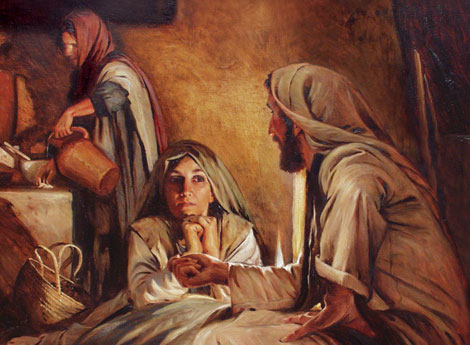
27 As he said these things, a woman in the crowd raised her voice and said to him, “Blessed is the womb that bore you, and the breasts at which you nursed!” 28 But he said, “Blessed rather are those who hear the word of God and keep it!”

29 When the crowds were increasing, he began to say, “This generation is an evil generation. It seeks for a sign, but no sign will be given to it except the sign of Jonah. 30 For as Jonah became a sign to the people of Nineveh, so will the Son of Man be to this generation. 31 The queen of the South will rise up at the judgement with the men of this generation and condemn them, for she came from the ends of the earth to hear the wisdom of Solomon, and behold, something greater than Solomon is here. 32 The men of Nineveh will rise up at the judgement with this generation and condemn it, for they repented at the preaching of Jonah, and behold, something greater than Jonah is here.

33 “No one after lighting a lamp puts it in a cellar or under a basket, but on a stand, so that those who enter may see the light. 34 Your eye is the lamp of your body. When your eye is healthy, your whole body is full of light, but when it is bad, your body is full of darkness. 35 Therefore be careful lest the light in you be darkness. 36 If then your whole body is full of light, having no part dark, it will be wholly bright, as when a lamp with its rays gives you light.”

Word

Jesus highlights here that the miracles he does point to the truth of the teaching he brings.  The Israelites, like many today, chased after miraculous signs and wonders because they wanted entertainment and comfort.  Jesus was bringing words that demanded obedience and transformation if they were going to be fully accepted.  Jesus embarrasses the Israelites by declaring that foreigners had traveled great distances when they knew the truth was to be found.  Foreigners had repented when the word of God’s truth was brought to them, even when those foreigners were the cruel and barbaric Assyrians.

Why is it important to respond correctly to what we see?  How we respond to what we see makes all the difference because eyes are like guardians of the body.  What our eyes see and accept becomes what we believe and act upon.  If we fill our heart and mind with darkness, we will bring darkness and strife to those around us.  If we fill our hearts with light, we will be light to the world.  This is why we need to put Jesus and his teaching before us, understand him rightly and spread his truth through word and action.

Prayer

I find that I am seeing things differently after years of walking with you.  Help me to continue to see the truth of what you teach and the truth of who you are.  Let me be a blessing to those that I teach and mentor so that they may flourish and prosper in accordance with your light.

Question

  1. How is the word central to each incident in the passage?
  2. How is choice making important in this passage?
  3. Why is Jesus so bold when his popularity is resulting in bigger crowds?
  4. How do churches court popularity and dilute Jesus’ teaching?
  5. How do Jesus’ observations in this passage ring true for 21st century church?
Leave a comment

Luke 11:14-23 Jesus and Beelzebul

14 Now he was casting out a demon that was mute. When the demon had gone out, the mute man spoke, and the people marvelled. 15 But some of them said, “He casts out demons by Beelzebul, the prince of demons”, 16 while others, to test him, kept seeking from him a sign from heaven.17 But he, knowing their thoughts, said to them, “Every kingdom divided against itself is laid waste, and a divided household falls. 18 And if Satan also is divided against himself, how will his kingdom stand? For you say that I cast out demons by Beelzebul. 19 And if I cast out demons by Beelzebul, by whom do your sons cast them out? Therefore they will be your judges. 20 But if it is by the finger of God that I cast out demons, then the kingdom of God has come upon you. 21 When a strong man, fully armed, guards his own palace, his goods are safe; 22 but when one stronger than he attacks him and overcomes him, he takes away his armour in which he trusted and divides his spoil. 23 Whoever is not with me is against me, and whoever does not gather with me scatters.

Jesus and Beelzebul

Jesus is challenged because he is breaking the mountain of rules that Jewish culture has developed from their interpretation of the law.  He wants to bring freedom and relationship, but the Jewish authorities start spreading rumours about where his primary allegiance lies.  Rather than accepting that Jesus is working under the authority of God the Father, they put him in the opposite camp.  They acknowledge that Satan has power and so they use the derogatory and contemptuous name of Beelzebul (Lord of the Flies) to refer to Jesus’ master.  Although Jesus actually is the master of Satan, Satan is deemed to be the master of Jesus.

Jesus logically and rationally lays out a counter argument.  We should note his argument as the result of an astute mind.  Jesus had studied with teachers and had a developed mind (Luke 2).  Of course, the time came when he excelled and the role of other teachers diminished, but Jesus had had an education, which he uses to good effect.  He first of all establishes common ground which everyone present would agree upon, Kingdoms that are divided beak down from inside.  Nations are not strengthened by civil war.  Secondly, the onlookers agree that Jesus is driving out demons.  In other words he is defeating them in battle and systematically cleansing the land.  Why would a ruler, even Satan, send a general into battle to slaughter his own troops?  The defeat of Satan in Jesus’ ministry should be evidence that Beelzebul is not behind this offensive.  Jesus points out that he has equipped Jewish people (his disciples), the Pharisees own ‘children’, to drive out demons across the country.  Is Satan really so stupid that he would commission a group of people to spread across Israel and exile his minions completely?  Arguably, if it were just the one man Jesus it could be a ruse, but Jesus has been mobilizing a nationwide cleansing.

Jesus values logic.  He values the construction of a good argument.  He reasons.  He debates.  Christians need to cultivate the life of the mind and love God with all their mind.  We are transformed by the renewing of the mind and we are called to have the mind of Christ.  As C.S. Lewis once said, God wants the heart of a child but the head of an adult.  Ignorance is not a virtue.  The Holy Spirit did not come to excuse us from all study.  There is not a valid secular set of knowledge and a valid sacred set of knowledge.  All knowledge is given by God and right understanding starts with the fear of the Lord.

Jesus finishes by saying that there is a dividing line.  Their is an inside and there is an outside.  Those who work against Jesus are on the outside.  Those who are not for Jesus are on the outside.  Those who accept that Jesus is who he says he is and give their lives to him are his allies.

Prayer

When all is said and done, may it be said that I was on Your side.  May I develop my mind for your glory so that in studying Creation I might see more clearly the reality of who You are.

Questions

  1. What does Jesus do that elicits a negative response?
  2. Summarize Jesus’ argument.
  3. How is Jesus divisive here?
  4. To what do you attribute the report of Jesus’ miracles?
  5. How do you develop your mind to be able to argue more like Jesus?
Posted in Daily Devotions | Leave a comment

Luke 11:1-13 A Day of Prayer

Now Jesus[a] was praying in a certain place, and when he finished, one of his disciples said to him, “Lord, teach us to pray, as John taught his disciples.” 2 And he said to them, “When you pray, say:

“Father, hallowed be your name.
Your kingdom come.
3 Give us each day our daily bread,[b]
4 and forgive us our sins,
    for we ourselves forgive everyone who is indebted to us.
And lead us not into temptation.”

5 And he said to them, “Which of you who has a friend will go to him at midnight and say to him, ‘Friend, lend me three loaves, 6 for a friend of mine has arrived on a journey, and I have nothing to set before him’; 7 and he will answer from within, ‘Do not bother me; the door is now shut, and my children are with me in bed. I cannot get up and give you anything’? 8 I tell you, though he will not get up and give him anything because he is his friend, yet because of his impudence[c] he will rise and give him whatever he needs. 9 And I tell you, ask, and it will be given to you;seek, and you will find; knock, and it will be opened to you. 10 For everyone who asks receives, and the one who seeks finds, and to the one who knocks it will be opened. 11 What father among you, if his son asks for[d] a fish, will instead of a fish give him a serpent; 12 or if he asks for an egg, will give him a scorpion? 13 If you then, who are evil, know how to give good gifts to your children, how much more will the heavenly Father give the Holy Spirit to those who ask him!”

A Day of Prayer

It is Moody Bible Institute’s Day of Prayer today.  How do we pray? How should we pray?  I was made aware of controversy around Centering Prayer this week.  It is also called Contemplative Prayer or Breath Prayer.  I first was introduced to the idea by reading a book Scott Chapman, my pastor, gave me called Prayer by Richard Foster.  I found the book to be very helpful as it walked the reader through various prayer traditions that have been adopted by the Christian church through the ages.  Breath Prayer was advocated in one of the chapters and it advocated aligning a short phrase with your breathing rhythm.  I see now that some people run for the hills at this point because they see Eastern Mysticism creeping in.  They believe Breath Prayer is a mantra where words are emptied of meaning.  My experience was the opposite.  Let’s remember that Israel is in Asia and they fail to see the influence of western rationalism on their own thinking.  The use of words like centering and contemplative also send some conservative evangelicals into a panic.  As I read further on line, I found that those who objected to these forms of prayer often objected to Lectio Divina and Spiritual Formation.  They see Lectio Divina, Centering Prayer and Spiritual formation as ‘mystical’ and wrong.  What I found really puzzling was the objection to hearing from God in any way that was not a direct quotation from scripture.  The book of Ezra has a priest interpreting the word of God so that the people can understand it.  In other words, scripture is absolutely true but it is mediated by different processes like prayer and preaching.  Some people seem dogmatic that prayer can not be a two-way process.  Can God not bring to mind a Bible verse?  Is this semantics?  In other words maybe bringing to mind something by God is valid, but we can not use the term prayer to encompass the experience.  My biggest objection, I think, to the form the discussion is taking  is that it is straining out a gnat and swallowing a camel.  To define prayer down to the last detail is important, but to keep multiplying divisions in the church, to condemn and distance oneself from people like John Piper or Beth Moore because of Lectio Divina Lite, seems to me to have embraced an unhealthy legalism.  Another irony is that whilst they quote verses from Paul to justify their rooting out of false doctrine in the church (which does need doing), they do so in a way that is actually more in line with the burdensome and debilitating policing that Paul is actually writing against.

So, as I come to pray I want to quiet myself before God.  I want to think about Jesus and to read and reread this passage so that it sinks in deeply and I can meditate on it.  I will pray this prayer that Jesus gives us as liturgy in a repetitive way, comprehending it more deeply with each iteration.  Far from condemning repetition as mantra, Jesus actually condones repetition in this passage. we are to be persistent in prayer.  I also believe that we are to be thoughtful and reflective.  Apparently, for those petrified by mysticism, Jesus was serious about God’s benevolence.  If we ask for the Lord’s presence, if we ask for the Holy Spirit in an experiential and uplifting way, if we ask for the Holy Spirit’s prompting, we get a devil instead?  Somehow, if we are open to God we are open to anything, and the Father who loves us will say, “I am Holy and you approached me the wrong way, so I will let a devil enter you to teach you a lesson?”  Or, “Whilst you were sensitive and listening for me to lead you, I decided to give you a serpent to teach you a lesson?”  Jesus appeals to the general principles of being an earthly father to show how absurd this view of the Father is.  Yet, there are those who believe that God allows people to become damaged very easily if they do not pray in very narrow and prescribed ways.   Under the Mosaic covenant this might have been true, but when we enter into God’s family through Christ and we earnestly seek him, we find him.  When we ask for the Holy Spirit to lead us into all truth, he does.  He doesn’t destroy us for the presumption.

Our Father is intimate and close, but he is not ‘Daddy’ or my home boy.  When I pray to him I come with the Fear of the Lord.  I am awestruck by his words in scripture, and I am silenced by his presence in nature.  It is good for a man to sit in silence before the Lord, because the Lord has laid it upon him.  I will refrain from any reference to Lectio Divina, Breath Prayer or Centering Prayer because it seems to cause some of my brothers and sisters to stumble. The way they define the terms are also quite different from how I have heard them used by Protestants.  However, a solid treatment of these practices may be found in Life in the Spirit:Spiritual Formation in Theological Perspective edited by Greenman.

Prayer

Our Father, who art in heaven, hallowed be thy name, thy Kingdom come, thy will be done, on earth as it is in heaven, give us this day our daily bread, and forgive us our trespasses as we forgive those who trespass against us.  Lead us not into temptation, but deliver us from evil.  For thine is the Kingdom, the power and the glory for ever and ever. Amen.

Questions

  1. What is the pattern of prayer that Jesus lays out?
  2. Why does Jesus give his disciples liturgy?
  3. How does Jesus promote repetition and dependency?
  4. What do you believe are the parameters of biblical prayer?
  5. Does God talk to us in times of prayer?  Justify your answer.
Posted in Daily Devotions | Leave a comment

Luke 10:38-42 Mary and Martha (The Church and Stillness)

38 Now as they went on their way, Jesus entered a village. And a woman named Martha welcomed him into her house. 39 And she had a sister called Mary, who sat at the Lord’s feet and listened to his teaching. 40 But Martha was distracted with much serving. And she went up to him and said, “Lord, do you not care that my sister has left me to serve alone? Tell her then to help me.” 41 But the Lord answered her, “Martha, Martha, you are anxious and troubled about many things, 42 but one thing is necessary.Mary has chosen the good portion, which will not be taken away from her.”

Mary and Martha (The Church and Stillness)

My wife had a difficult childhood because her mother was disabled.  Her mother would invite people around to the house, but she would get increasingly anxious that the house was not in order, that the food wasn’t ready, and that the world was about to end.  My wife, as a young child, then stepped up and took charge.  Her mother’s anxiety and guilt fueled her performance and she hosted in the place of her mother.  So, when we married Kelli would invite people around and then generate all the guilt and anxiety that her mother couldn’t supply.  She would start unloading it on me.  I would try and say, “They are not coming around to see the house, but to see us.”  But trying to reason with the situation only seemed to exasperate it.  I became an opponent working against the process.  y the time friends or family would arrive, the house would look wonderful but by then I had succumbed to my own tension and anxieties.

I believe that we host much better now.  Of course, we do what we can, but people have become much more important for both of us than performance.  Also it is humbling to have a couple of children who want to help by pulling down a bowl of sugar, or spreading marbles around the living room for everyone to play with.

Martha is not unusual.  She desires so much to throw open her house.  She has a gift of hospitality, but it seems tainted by self-focus.  She believes that her agenda is right and she has some contempt brewing for her lazy, dreamy sister.  The text doesn’t say exactly that, but this scenario is so common to the human condition, I don’t think it is a huge leap of logic to get there.  The type-A, controlling sister whose worth is in her performance then tries to control her deficient sister.  That’s when Jesus delivers the shocker, “Actually your sister Mary’s choice is better.”  Mary values relationship above performance.  She values contemplation before action.  Mary is less pragmatic and efficient.  Mary’s values are better.

Hospitality is a gift that prepares a safe place, a place that is welcoming, for a person.  It then engages with that person in an appropriate way.  It doesn’t focus on the tasks, the entertainment, or an agenda.  It is fluid and responsive and spirit ministers to spirit.  No-one developed a soul mate by being busy around them.  

How do you value your worth and your friendships?  Is it by performance or is it by soul-to-soul connection?  The primary place of hospitality is in an attitude of prayer.  In that posture one welcomes Jesus and is attentive to him at the same time as speaking from an open and vulnerable heart. Churches have often cultivated busy places of fear and suspicion.  However, how would your church be different if it was run by Mary rather than Martha?  Mary chooses what is better.

Prayer

There are those who would say that it is mystical to sit at your feet and listen to you.  There are those who say that it is wrong to sit in silence before you.  I am confused why people would be afraid of sitting quietly like Mary, and why they choose the way of Martha.  They say that Be Still and Know that I am God is misquoted, but what about “It is good to sit before the Lord in silence… (Lam. 3)”.  Why are my Protestant Evangelical friends so busy, so tired, and so empty?  Why, when they have the truth of scripture, and when they have the word of God, do they talk, talk, talk without cultivating a heart that listens?  I am afraid of the Marthas in this world who police the Marys.  Defend the Marys as you did in Martha’s home.

Questions

  1. What does Martha do well?
  2. What does Mary do well?
  3. Why does Jesus rebuke Martha?
  4. What is the essence of godly hospitality?
  5. Why are some Evangelicals opposed to stillness?
Leave a comment

Luke 10:26-37 The Good Samaritan

 And behold, a lawyer stood up to put him to the test, saying, “Teacher, what shall I do to inherit eternal life?” 26 He said to him, “What is written in the Law? How do you read it?” 27 And he answered, “You shall love the Lord your God with all your heart and with all your soul and with all your strength and with all your mind, and your neighbour as yourself.” 28 And he said to him, “You have answered correctly; do this, and you will live.”

29 But he, desiring to justify himself, said to Jesus, “And who is my neighbour?” 30 Jesus replied, “A man was going down from Jerusalem to Jericho, and he fell among robbers, who stripped him and beat him and departed, leaving him half dead. 31 Now by chance a priest was going down that road, and when he saw him he passed by on the other side. 32 So likewise a Levite, when he came to the place and saw him, passed by on the other side. 33 But a Samaritan, as he journeyed, came to where he was, and when he saw him, he had compassion. 34 He went to him andbound up his wounds, pouring on oil and wine. Then he set him on his own animal and brought him to an inn and took care of him. 35 And the next day he took out two denarii[c] and gave them to the innkeeper, saying, ‘Take care of him, and whatever more you spend, I will repay you when I come back.’ 36 Which of these three, do you think, proved to be a neighbour to the man who fell among the robbers?” 37 He said, “The one who showed him mercy.” And Jesus said to him, “You go, and do likewise.”

The Good Samaritan

It is amazing how repeated reading of the text draws out a deeper understanding of its meaning.  There needs to be a reverence of what the text meant to its original recipients.  This creates a domain of possible meaning for the text.  I have read this text multiple times over the weekend and all my interpretation is informed by an understanding of what the gospel can mean.  The gospel is the communication of good news and I think of Jesus’ parables as making the good news clearer.  The gospel assumes that one places one’s life under the authority of Jesus and follows him.  When one follows Jesus, one changes the world around them in radical ways.  The Jewish teacher of the law understood that he should love his neighbour, but he wanted to set limits on what he was responsible for.  However, Jesus removes the limits by telling the story of the Good Samaritan.  The essence of the story is that we are to be a neighbour to all people, particularly to our enemies.  Our desires for ritual purity and holiness should not keep us from extending God’s grace to all who are in need.

I find it disturbing that many Christians dedicate their lives to forming distinctions in doctrine between themselves and others with whom they have disagreement.  I was reading today about some arguments about Meditative (Centering) Prayer and also about Lectio Divina.  There is a breadth of understanding of what these terms might mean and some of the definitions fall within Christian orthadoxy and some do not.  What I find disturbing is the lack of grace and the lack of love in the discussions.  There is sometimes a fear that results in Christians making sure that you know they are on the other side of the street.  Of course, I think we should talk about such things.  I, personally, will not be using the terms Centering Prayer of Lectio Divina again any time soon.  But the sanctified attitude that separates from the wounded world is unhelpful and unbiblical.  We need to be a neighbour, as much as it depends on us, with those inside and outside the faith.  The world needs to be healed and we need to be generous with our resources.  Sometimes we are known more by what we are against than what we are for, and we walk by proudly on the other side of the street.

Prayer

Father, let us know how to be a neighbour.  With those who live near us, with those with whom we work, with those with whom we are alienated, let us be compassionate, kind, and reconciling.

Questions

  1. What questions does the lawyer ask?
  2. What do you think motivates him?
  3. What does Jesus want him to understand?
  4. How do you make sure you are perceived as righteous?
  5. How do you put aside your sanctified attitude?
Posted in Daily Devotions | Leave a comment

Philippians 4:1-9: Wholeness: Freedom from Anxiety

http://www.firstbaptistdg.org/media.php?pageID=6 I was recorded preaching at 1st Baptist in Downer’s Grove last weekend.

1 Comment

Luke 10:1-24 “The Call to Share in God’s Blessing”

After this the Lord appointed seventy-two[a] others and sent them two by two ahead of him to every town and place where he was about to go. 2 He told them, “The harvest is plentiful, but the workers are few. Ask the Lord of the harvest, therefore, to send out workers into his harvest field. 3 Go! I am sending you out like lambs among wolves. 4 Do not take a purse or bag or sandals; and do not greet anyone on the road.

5 “When you enter a house, first say, ‘Peace to this house.’ 6 If someone who promotes peace is there, your peace will rest on them; if not, it will return to you. 7 Stay there, eating and drinking whatever they give you, for the worker deserves his wages. Do not move around from house to house.

8 “When you enter a town and are welcomed, eat what is offered to you. 9 Heal the sick who are there and tell them, ‘The kingdom of God has come near to you.’ 10 But when you enter a town and are not welcomed, go into its streets and say, 11 ‘Even the dust of your town we wipe from our feet as a warning to you. Yet be sure of this: The kingdom of God has come near.’ 12 I tell you, it will be more bearable on that day for Sodom than for that town.

13 “Woe to you, Chorazin! Woe to you, Bethsaida! For if the miracles that were performed in you had been performed in Tyre and Sidon, they would have repented long ago, sitting in sackcloth and ashes. 14 But it will be more bearable for Tyre and Sidon at the judgment than for you. 15 And you, Capernaum, will you be lifted to the heavens? No, you will go down to Hades.[b]

16 “Whoever listens to you listens to me; whoever rejects you rejects me; but whoever rejects me rejects him who sent me.”

17 The seventy-two returned with joy and said, “Lord, even the demons submit to us in your name.”

18 He replied, “I saw Satan fall like lightning from heaven. 19 I have given you authority to trample on snakes and scorpions and to overcome all the power of the enemy; nothing will harm you. 20 However, do not rejoice that the spirits submit to you, but rejoice that your names are written in heaven.”

21 At that time Jesus, full of joy through the Holy Spirit, said, “I praise you, Father, Lord of heaven and earth, because you have hidden these things from the wise and learned, and revealed them to little children. Yes, Father, for this is what you were pleased to do.

22 “All things have been committed to me by my Father. No one knows who the Son is except the Father, and no one knows who the Father is except the Son and those to whom the Son chooses to reveal him.”

23 Then he turned to his disciples and said privately, “Blessed are the eyes that see what you see. 24 For I tell you that many prophets and kings wanted to see what you see but did not see it, and to hear what you hear but did not hear it.”

“The Call to Share in God’s Blessing.”

Darrell Bock writes:

As rich as the history of the faith is, what is preached is what makes the task so precious.  The call to share in God’s blessing is the greatest vocation one can possess.  Every believing community needs to highlight and teach its people to join in the task.  Some will go great distances; others will share with friends and neighbors.  But all are called to do something.  Jesus did not leave the ministry only to the Twelve.  Neither today are pastors the only ones called to share God’s blessings with others. 

Interestingly, Jesus says little about method, nor does he give his followers a developed message.  Their ministry is to minister to needs, to reveal God’s power, and to share where it has come from.  many are intimidated to share Jesus because they feel they do not kow what to say.  Jesus sends the seventy-two and tells them simply to give of themselves and point to the presence of God.  Sometimes we make evangelism more difficult than it needs to be.

There should be no doubt, however, that eternal life and death are the issue when it comes to Jesus.  Our era has made it too easy to pass of religious opinionas if we were choosing flavors at the ice-cream store.  God is not so cold as to allow such important matters to be left to human whim.  In offering his Son, he has put true life to death, so taht men and women can experience life.  In death the true life has removed any obstacle that may stand in the way of relationship with God.  Strange as it may seem, the world often accuses God of narrowness for opening the way so wide through his Son.  What seems as a narrow way in Jesus is in fact a door that opens up to a vast field of blessing.  Jesus will speak of his message as the narrow door in 13:24.  Disciples know that the key is not the width of the door but where it leads.

What God asks of each person is to recognize before God that he or she has not lived in a way that honors God and should therefore embrace the forgiveness and relationship that he longs to provide through Jesus.  God shows evidence of his good faith by providing all we need to share in such blessing.  All we need to do is turn in good faith and embrace the gift he had provided.  The gospel is so simple in this basic element of turning to God for forgiveness in Christ that it is too hard for many to comprehend, much less accept.  Yet it is this very simplicity that caused Jesus to compare those who see and embrace it to little children.  The ways of God are not to be figured out when it comes to the gospel.  For what Jesus offers are things that prophets and kings longed to experience.  Those who know Jesus reside in a palace whose walls will never become a museum.

The class that I am in at Trinity is focused on vocation.  Vocation is seen as both general and specific in the life of each person.  Every person is called to surrender to Jesus as their King.  As God’s ambassador, Jesus has all the authority of God.  He is eternal, majestic, and worthy in ways that other humans can never be.  However, he has announced to his followers that God’s blessing is available to all people.  First we see twelve who are blessed and sent by Jesus, now we see seventy-two who are blessed and sent by Jesus, now there are millions who are blessed and sent by Jesus.  Beyond this general calling is how it works out in each individual.  Some are called to be pastors and to devote their time to communicating in the church, however, others have an equal calling if they nurse the sick, build bridges, teach in public school, or trade on Wall Street.  They are called to bless whichever environment they are sent to.  This does not just involve tea break, but relationship with Jesus should affect the whole work day.  Relationship with God through Jesus should transform the very nature of the work itself.

Prayer

May we all heed the call to share in God’s blessing.  May we communicate both in what we say and what we do.  May we integrate God’s dominion over both the material and the immaterial universe in our actions.

Questions

  1. Who does Jesus send?
  2. How are they to go?
  3. How does Jesus respond to their report?
  4. To whom are you sent?
  5. How do you see your job as a vocation or calling?
Leave a comment

Luke 9:51-62 Resolve

51 When the days drew near for him to be taken up, he set his face to go to Jerusalem. 52 And he sent messengers ahead of him, who went and entered a village of the Samaritans, to make preparations for him. 53 But the people did not receive him, because his face was set towards Jerusalem. 54 And when his disciples James and John saw it, they said, “Lord, do you want us to tell fire to come down from heaven and consume them?” 55 But he turned and rebuked them. 56 And they went on to another village.

57 As they were going along the road, someone said to him, “I will follow you wherever you go.” 58 And Jesus said to him, “Foxes have holes, and birds of the air have nests, but the Son of Man has nowhere to lay his head.” 59 To another he said, “Follow me.” But he said, “Lord, let me first go and bury my father.” 60 And Jesus said to him, “Leave the dead to bury their own dead. But as for you, go and proclaim the kingdom of God.”61 Yet another said, “I will follow you, Lord, but let me first say farewell to those at my home.” 62 Jesus said to him, “No one who puts his hand to the plough and looks back is fit for the kingdom of God.”

Resolve

I have resolved not to play FIFA 14 for the month of February.  It is a Faith First February.  I put Daryl to bed yesterday and before he went to bed I told him he could watch me play World Rally Championship 3.  I was driving a Ford Fiesta in Portugal and my gradual improvement in time pulled me in.  Daryl fell asleep and I kept trying to improve my time.  My resolve finally paid off when I placed high enough to unlock a race in Spain.

When I carried Daryl up to bed and went to bed myself I was concerned about how I spent my time.  Fortunately it was still before midnight, but computer games and video games can draw me in and I see a target that I want to beat so I keep at it until I succeed.

I know many who play computer games with at least an equal resolve, but Jesus calls us to a resolve that is entirely wrapped in the Kingdom.  Jesus is merciful to those who don’t get it.  He does not destroy those who see his plans as attacking their ideologies or national identity.  In northern Nigeria this week Muslim terrorists have burned schools and killed children because of their resolve.  There are some Christians who would retaliate by calling down fire from heaven.  However, Jesus does not turn aside from the road to Jerusalem.  He does not turn aside from the road to sacrifice.

Jesus is on the way, which is significant, when other would-be disciples offer to join him.  Jesus wants to make it clear that the normal comforts of life are not guaranteed to those who commit their lives to The Way.  This flies in the face of the prosperity gospel and those who peddle wealth, ease, and comfort.  The way of Jesus is not marked by ease and comfort.  He has just told his disciples that they must take up their cross and follow him, now he is walking the way to take his.  There will be no cozy sleepovers.

The second would-be disciple wants to bury his father.  Those who are resolved to follow Jesus are resolved to leave all other commitments in the dust.  Jesus emphasized this point when he told his followers that if they choose their father before him, they are not worthy of him (Luke 14).  The last would-be disciple asks just to say good-bye to his family, but Jesus dismisses the lack of resolve.  To be focused on anything other than God’s calling in our lives is to miss the point of living entirely.  I do not believe this means we should abandon each other.  However, the question from Jesus is, “Are you going to walk the way with me and resolve to never turn aside?”  If the answer is, “Yes, but …” then you must move aside and let him leave you behind.

Prayer

Let me see more clearly how I must move ahead.  You have called us to a life which leads to you.  Let us lay everything else aside and walk resolutely toward Jerusalem, even if it means carrying a cross on the way.

Questions

  1. Why did the Samaritans reject Jesus?
  2. What did the disciples wish for the Samaritans but not the Jews?
  3. How does Jesus challenge the three would-be disciples?
  4. How resolute are you to walk with Jesus?
  5. What turns you aside from your path?
Leave a comment

Luke 9:37-50 Lessons from Jesus

37 On the next day, when they had come down from the mountain, a great crowd met him. 38 And behold, a man from the crowd cried out, “Teacher, I beg you to look at my son, for he is my only child. 39 And behold, a spirit seizes him, and he suddenly cries out. It convulses him so that he foams at the mouth, and shatters him, and will hardly leave him. 40 And I begged your disciples to cast it out, but they could not.” 41 Jesus answered, “O faithless and twisted generation, how long am I to be with you and bear with you? Bring your son here.” 42 While he was coming, the demon threw him to the ground and convulsed him. But Jesus rebuked the unclean spirit and healed the boy, and gave him back to his father. 43 And all were astonished at the majesty of God.

But while they were all marvelling at everything he was doing, Jesus[d] said to his disciples, 44 “Let these words sink into your ears: The Son of Man is about to be delivered into the hands of men.” 45 But they did not understand this saying, and it was concealed from them, so that they might not perceive it. And they were afraid to ask him about this saying.


46 An argument arose among them as to which of them was the greatest. 47 But Jesus, knowing the reasoning of their hearts, took a child and put him by his side 48 and said to them, “Whoever receives this child in my name receives me, and whoever receives me receives him who sent me. For he who is least among all of you is the one who is great.”


49 John answered, “Master, we saw someone casting out demons in your name, and we tried to stop him, because he does not follow with us.” 50 But Jesus said to him, “Do not stop him, for the one who is not against you is for you.”

Lessons from Jesus

How do we oppose evil?  Why did Jesus come?  Who is the greatest?  Who is on our side?  These are questions the disciples wrestled with as they started moving from Galilee to Jerusalem.  The nine disciples that Jesus had left behind were unable to perform an exorcism on a particularly hard case.  Epileptic symptoms were a sign that a person was particularly tormented.  Whether the case was mostly physical or spiritual, the twisting of spirit and body is evil.  Through prayer and medical attention we must oppose such evil.  To stand by and do nothing in the face of evil is not an option for a Christian. The disciples did try to act, but their faith was not mature enough to know the way forward.  Jesus had to show them and he is so far above them that all who see his actions marvel at him.  I personally would want to see my faith increase so that I know how and when to pray in power for those who are severely ill.  May God grow my faith.

Jesus keeps bringing his disciples away from the idea he is purely a faith healer or great teacher by focusing on his death.  Jesus is walking resolutely toward his own sacrifice.  He will rise to new life so that others will live that new life with him.  However, his disciples can not comprehend what Jesus means.  They probably think he is speaking in metaphors.  Remember, Jesus often made things obscure so that sincere believers could be drawn out from the masses.

However, even those who sincerely follow him can miss the point.  They can use their calling as a basis for power and influence.  Jesus’ disciples wrestled with each other for pole position in the group. 

Finally, Jesus is gracious in his assertion that his kingdom spreads to those who do not oppose him.  This is an inclusive posture.  However, on other occasions we see that those who are not for Jesus are against him.  There are sides in the cosmos.  The nature of reality is divided and there are those who really are on Jesus’ side and there are those who are opposed.  We shouldn’t worry too much about the opposition, we should focus on Jesus.  In so doing we make sure that we are on the right side of the divide.  Hopefully, our sincerely choosing the right side will encourage others to do the same.

Prayer

Jesus, let me be taught and instructed by you.  I know my mind is dull to all that is possible and my faith is weak.  Let me be consistent in the side that I choose and let me serve people in a way that is modeled by you.

Questions

  1. What issues do Jesus’ disciples have?
  2. How does Jesus address each issue?
  3. Is anyone who doesn’t actively speak out against Jesus a disciple?
  4. Which of these lessons particularly resonates with you?
  5. How should you respond?
Leave a comment

Luke 9:28-34 Dazzling White

28 Now about eight days after these sayings he took with him Peter and John and James and went up on the mountain to pray. 29 And as he was praying, the appearance of his face was altered, and his clothing became dazzling white. 30 And behold, two men were talking with him, Moses and Elijah, 31 who appeared in glory and spoke of his departure,[b] which he was about to accomplish at Jerusalem. 32 Now Peter and those who were with him were heavy with sleep, but when they became fully awake they saw his glory and the two men who stood with him. 33 And as the men were parting from him, Peter said to Jesus, “Master, it is good that we are here. Let us make three tents, one for you and one for Moses and one for Elijah”—not knowing what he said. 34 As he was saying these things, a cloud came and overshadowed them, and they were afraid as they entered the cloud. 35 And a voice came out of the cloud, saying, “This is my Son, my Chosen One;[c] listen to him!” 36 And when the voice had spoken, Jesus was found alone. And they kept silent and told no one in those days anything of what they had seen.

Dazzling White

Many commercials for detergent claim to make your clothes dazzling, or whiter than white.  In ancient Israel I can imagine that it was hard to keep anything clean.  Jesus’ purity was veiled during his time on earth.  He would have been touched by the dust in the heat of the day as much as everyone else.  However, when the veil is lifted and Jesus is revealed in his glory, his holiness and purity shines through with unspeakable brightness.  He stands with prophetic figures of the ages, indicating prophetic fulfillment.  When the disciples see this and Peter recognizes the characters he is beholding, he wants to build them all booths or tents.  However, he has made a mistake.  He has equated Jesus as the Messiah with the great deliverers of ages gone by.  He sees Jesus as merely a great man, but God the Father singles Jesus out from the other two great Jewish figures. 

Who is Jesus?  He is the pure, holy, radiant, Son of God.  Buddha, Mohammad, and other moral reformers may bring a religious code in their wake, but they are not the same category of person as Jesus.  Jesus does not teach about God through a holy book or by profound teaching, Jesus teaches about God by being the reflection of the Father, by being God incarnate.  There is no-one like Jesus.  Unlike Peter, we should never elevate anyone to a status equal in our lives to Jesus.  No spouse, child, friend, or relation is equal to Jesus.  Our whole lives have to be oriented around him.

Prayer

There is no-one like you. 

You are more beautiful
Than anyone ever
Everyday You’re the same
You never change, no never

And how could I ever deny
The love of my Savior
You are to me everything
All I need forever

How could You be so good to me?

There is no one like You
There has never ever been anyone like You

Everywhere You are there
Earth or air surrounding
I’m not alone, the heavens sing along
My God You’re so astounding
How could You be so good to me
Eternally I believe that’

You, You, You, You, You, You

How could You be so good to me?
We’re not alone, so sing along
We’re not alone, so sing along, sing along, sing along

There is no one like You
There has never been anyone like You
There is no one like You
There has never been anyone like You
There his no one like our God, yeah

Questions

  1. Where is Jesus?  How does this experience compare to the Exodus?
  2. Why do Elijah and Moses appear with Jesus?
  3. How does the Father correct the disciples?
  4. Who competes with Jesus for time and attention in your life?
  5. How can you listen to Jesus more intently?


Leave a comment