Acts 2:42-47 They Devoted Themselves …

42 They devoted themselves to the apostles’ teaching and to fellowship, to the breaking of bread and to prayer. 43 Everyone was filled with awe at the many wonders and signs performed by the apostles. 44 All the believers were together and had everything in common. 45 They sold property and possessions to give to anyone who had need. 46 Every day they continued to meet together in the temple courts. They broke bread in their homes and ate together with glad and sincere hearts, 47 praising God and enjoying the favor of all the people. And the Lord added to their number daily those who were being saved.

They Devoted Themselves

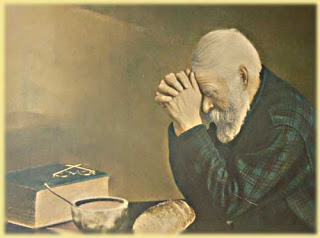
To be ‘devoted’ sounds like a heart thing.  In the 21st century the heart sounds like the seat of emotion, so how does one devote oneself?  A week’s worth of pep talks in front of the bathroom mirror?  Our heart is often attuned to pleasures and often divorced from our mind.  We let our emotions react to stimuli that the world throws at them and then we react.

Verse 42 demands that we be proactive.  It dedicates new disciples to discipline.  They understood that there was a new way of life to be built and that it was constructed around key concepts.  Looking at Acts 2 in its entirety, Peter takes onlookers from criticizing the disciples about drunkenness to orienting life around Jesus.  If Jesus is the new converts’  focus, teaching, breaking of bread, and prayer are the means to take us to him.  Teaching is the teaching that Jesus gave to the disciples as he trained them into apostles.  We have this teaching written down for us in the four gospels.  It is more than a reiteration of Jesus’ words, it was a communication of Jesus’ life.  The breaking of bread in this context means more than a regular church service, it means doing life together.  Prayer includes liturgy like The Lord’s Prayer, but it grows.  Prayer is dependent communication with God.

Converts need feeding.  I was once told – “Find. Fold. Feed.”  Find the unconverted.  Fold them into the church.  Feed them spiritual sustenance.  The early church was a place of all three.  We see them in this passage.  A Christ centered community sprang up.  Hunger for Jesus could only be satisfied by these disciplines, but when one had fed all day, one only wanted more.  The Christian life is one of alignment.  Life must be aligned with Jesus.  We naturally stray toward self-fulfilment and self-focus, but the apostles taught people how to live for a higher cause.  This was something of the heart, but the heart is the seat of commitment not of whimsical emotion.  We understand a vision and then we keep it before us.  Our vision is life with Jesus and lived for God.

Prayer

There is a harmonizing of all things that starts with harmony with you, Father.  As I align my life with you, my whole house aligns with you.  I fear that things will be worse because of prayer and Bible study.  I think that you will allow a dull life to seep in if I orient everything toward you.  However, I am committed to you and I find a deeper awareness of the world coming to me.  There is less striving and more being.  In the fellowship that exists around me let my life be an indication of your reality.  May life as you see it make people see the greater reality under girding the details of the physical.  All of life is one and the one-ness is in Christ.  Let us be one and let us be focused on one purpose.  Eliminate our disunity and create peace.  For your glory,  Amen.
Questions 

  1. To what did the disciples devote themselves?
  2. What had just happened?
  3. What were the results of the disciples’ devotion?
  4. How would you describe someone who is ‘devoted’?
  5. To what are you devoted?
Leave a comment

Acts 2:14-41 An Evangelistic Blueprint

14 But Peter, standing with the eleven, lifted up his voice and addressed them: “Men of Judea and all who dwell in Jerusalem, let this be known to you, and give ear to my words. 15 For these people are not drunk, as you suppose, since it is only the third hour of the day. 16 But this is what was uttered through the prophet Joel:

17 “‘And in the last days it shall be, God declares,
that I will pour out my Spirit on all flesh,
and your sons and your daughters shall prophesy,
    and your young men shall see visions,
    and your old men shall dream dreams;
18 even on my male servants and female servants
    in those days I will pour out my Spirit, and they shall prophesy.
19 And I will show wonders in the heavens above
    and signs on the earth below,
    blood, and fire, and vapour of smoke;
20 the sun shall be turned to darkness
    and the moon to blood,
    before the day of the Lord comes, the great and magnificent day.
21 And it shall come to pass that everyone who calls upon the name of the Lord shall be saved.’

22 “Men of Israel, hear these words: Jesus of Nazareth, a man attested to you by God with mighty works and wonders and signs that God did through him in your midst, as you yourselves know— 23 this Jesus, delivered up according to the definite plan and foreknowledge of God, you crucified and killed by the hands of lawless men. 24 God raised him up, loosing the pangs of death, because it was not possible for him to be held by it. 25 For David says concerning him,

“‘I saw the Lord always before me,
    for he is at my right hand that I may not be shaken;
26 therefore my heart was glad, and my tongue rejoiced;
    my flesh also will dwell in hope.
27 For you will not abandon my soul to Hades,
    or let your Holy One see corruption.
28 You have made known to me the paths of life;
    you will make me full of gladness with your presence.’

29 “Brothers, I may say to you with confidence about the patriarch David that he both died and was buried, and his tomb is with us to this day. 30 Being therefore a prophet, and knowing that God had sworn with an oath to him that he would set one of his descendants on his throne, 31 he foresaw and spoke about the resurrection of the Christ, that he was not abandoned to Hades, nor did his flesh see corruption. 32 This Jesus God raised up, and of that we all are witnesses. 33 Being therefore exalted at the right hand of God, and having received from the Father the promise of the Holy Spirit, he has poured out this that you yourselves are seeing and hearing. 34 For David did not ascend into the heavens, but he himself says,

“‘The Lord said to my Lord,
Sit at my right hand,
35     until I make your enemies your footstool.’

36 Let all the house of Israel therefore know for certain that God has made him both Lord and Christ, this Jesus whom you crucified.”

37 Now when they heard this they were cut to the heart, and said to Peter and the rest of the apostles, “Brothers, what shall we do?” 38 And Peter said to them, “Repent and be baptized every one of you in the name of Jesus Christ for the forgiveness of your sins, and you will receive the gift of the Holy Spirit. 39 For the promise is for you and for your children and for all who are far off, everyone whom the Lord our God calls to himself.” 40 And with many other words he bore witness and continued to exhort them, saying, “Save yourselves from this crooked generation.” 41 So those who received his word were baptized, and there were added that day about three thousand souls.

A Evangelistic Blueprint

The occasion for Peter’s world-changing sermon is that he is responding to accusations that he is drunk.  The disciples are speaking in languages they have never learned and there is a cacophony of noise.  Those surrounding the disciples respond both positively and negatively but Peter’s sermon is a response to those who respond negatively.

The Christian needs to be ready to respond with confidence to the life of society as a whole.  If negative remarks about the faith are an opportunity to speak in its defence, the world is full of opportunities.  If we are living out what we believe, we will have a chance to speak about it.

The speech is rooted in the authority of scripture and the life of Christ. Peter refers to biblical passages with which his listeners were quite familiar.  Whether the listeners accept Peter’s point, he is justifying himself by the authority of God’s word.  Peter also knows the life of Christ.  None of the gospels had been written, so Peter is speaking as an eye-witness.

Peter speaks of what he has experienced.  Individual experience alone makes for a weak argument, but the combination of experience with other sources, including shared experience, makes for a strong argument over all.

Peter accuses the crowds of wrong-doing.  He shows them that by their actions they can know that their hearts are wrong.  Today, we often shy away from talking about sin.  However, if we keep reinforcing what is right in life without addressing what is wrong there will be no conversion.  The Bible teaches that there is essentially something wrong at the core of human experience that comes from a basic orientation of life in the wrong direction.  We receive in our lives (both this and the next) the outworking of our focus.

‘Evangelists’ according to popular musician Matt Corby, seem like people with ‘devout beliefs that ruin their lives.’  I am wondering if Matt Corby sees this opinion as a devout belief.  He speaks some truth, though.  There are too many preachers driven by guilt or marked by fear and anger.  Peter and the disciples are marked by joy and excitement.  Peter is being set free from a restraining legalism that leaves people in a worse condition than when he finds them.  He is bold enough to speak truth and then gracious enough to share the cure.  He has a lot to learn, but he has learned a lot.

Prayer

Father, help us to live the truth.  Help us to embrace the opportunities that will come if we live out our private beliefs in public.

Questions

  1. What gives rise to Peter’s speech?
  2. What are his main points?
  3. Why do people respond as they do?
  4. What opportunities do people today have to talk about their faith?
  5. How can you increase your ability to talk about your faith at every opportunity?
Leave a comment

Acts 2:1-13 Wrestling with the Spirit

When the day of Pentecost arrived, they were all together in one place. And suddenly there came from heaven a sound like a mighty rushing wind, and it filled the entire house where they were sitting. And divided tongues as of fire appeared to them and rested[a] on each one of them. And they were all filled with the Holy Spirit and began to speak in other tongues as the Spirit gave them utterance.

Now there were dwelling in Jerusalem Jews, devout men from every nation under heaven. And at this sound the multitude came together, and they were bewildered, because each one was hearing them speak in his own language. And they were amazed and astonished, saying, “Are not all these who are speaking Galileans? And how is it that we hear, each of us in his own native language? Parthians and Medes and Elamites and residents of Mesopotamia, Judea and Cappadocia, Pontus and Asia, 10 Phrygia and Pamphylia, Egypt and the parts of Libya belonging to Cyrene, and visitors from Rome, 11 both Jews and proselytes, Cretans and Arabians—we hear them telling in our own tongues the mighty works of God.” 12 And all were amazed and perplexed, saying to one another, “What does this mean?” 13 But others mocking said, “They are filled with new wine.”

Wrestling with the Spirit

The Holy Spirit came with power at Pentecost.  The testimony of Scripture is clear.  The disciples had tongues of fire on their heads and a sound of rushing wind surrounded them.  Empowered by the Spirit they spoke in different languages and each person heard them in their own dialect.  That much is clear.  So what do we do about this. Is this the new norm?  Some people would have us believe that it is.  Is it the sign that God was bringing a new reality and the need for that sign is past.  Some people believe that based on 1 Corinthians 13 we should assert that all ‘sign’ gifts of the Holy Spirit have ceased.  Speaking in tongues today is not often in an intelligible language that the speaker doesn’t know but the listeners do.

I am sick.  I have thrown up today, yesterday and the day before. I haven’t prayed about it because I consider it my lot right now.  I feel weaker, but that is not why I don’t pray.  I think that I am just skeptical about the Holy Spirit working in power for me.  I want him to work in power through me for the faith of others, but I have accepted a blindness to the power of God to heal.  Frankly, I don’t know how it works.  I don’t know why he chooses whomever he does choose.  So I wrestle.  How do I address the Holy Spirit.  Which approach is correct.  If you will humour me, I will pray that the Spirit will heal my stomach today.  Let’s see what happens.

Prayer

If you heal my stomach and I stop throwing up, you are God.  If I don’t feel any better later today – you are God.  I ask you, Father, to send the Holy Spirit to heal my insides.  Show me the path forward, through prayer or medicine, and I will take it.  In either case, I submit to your will.

Questions

  1. How is the presence of the Holy Spirit described?
  2. What does the Holy Spirit do?
  3. Does this paint a pattern for every age?
  4. How do you relate to the Holy Spirit?
  5. How do you respond to today’s “speaking in tongues”?
Leave a comment

Acts 1:9-26 The Betrayer and His Replacement

After he said this, he was taken up before their very eyes, and a cloud hid him from their sight.

10 They were looking intently up into the sky as he was going, when suddenly two men dressed in white stood beside them. 11 “Men of Galilee,” they said, “why do you stand here looking into the sky? This same Jesus, who has been taken from you into heaven, will come back in the same way you have seen him go into heaven.”

12 Then the apostles returned to Jerusalem from the hill called the Mount of Olives, a Sabbath day’s walk from the city. 13 When they arrived, they went upstairs to the room where they were staying. Those present were Peter, John, James and Andrew; Philip and Thomas, Bartholomew and Matthew; James son of Alphaeus and Simon the Zealot, and Judas son of James. 14 They all joined together constantly in prayer, along with the women and Mary the mother of Jesus, and with his brothers.

15 In those days Peter stood up among the believers (a group numbering about a hundred and twenty) 16 and said, “Brothers and sisters, the Scripture had to be fulfilled in which the Holy Spirit spoke long ago through David concerning Judas, who served as guide for those who arrested Jesus. 17 He was one of our number and shared in our ministry.”

18 (With the payment he received for his wickedness, Judas bought a field; there he fell headlong, his body burst open and all his intestines spilled out. 19 Everyone in Jerusalem heard about this, so they called that field in their language Akeldama, that is, Field of Blood.)

20 “For,” said Peter, “it is written in the Book of Psalms:

“‘May his place be deserted;
    let there be no one to dwell in it,’

and,

“‘May another take his place of leadership.’

21 Therefore it is necessary to choose one of the men who have been with us the whole time the Lord Jesus was living among us, 22 beginning from John’s baptism to the time when Jesus was taken up from us. For one of these must become a witness with us of his resurrection.”

23 So they nominated two men: Joseph called Barsabbas (also known as Justus) and Matthias. 24 Then they prayed, “Lord, you know everyone’s heart. Show us which of these two you have chosen 25 to take over this apostolic ministry, which Judas left to go where he belongs.” 26 Then they cast lots, and the lot fell to Matthias; so he was added to the eleven apostles.

The Betrayer and His Replacement

Judas has become the model of every betrayer.  We hate him in the text and cheer at his downfall.  At least that is how I used to feel.  I think that Jesus loved him and I am beginning to love him too.  I look sadly at his fate because I do think it is just, but it is also tragic.  Judas lusted after money and he probably wanted to see Jesus rise to power.  In the opening of Acts we see the disciples are still thinking that the Kingdom is limited to themselves and Israel.  The Holy Spirit will transform their hearts, but at this point their hearts are not so far from Judas as we often think.  They wanted power and influence just like he did – just like we do.  We would often like more money to pay the bills and provide a little comfort.  It’s easy to condemn a thief when we speak from positions of privilege and comfort.  Judas and the other disciples had lived a life of nomads relying on the generosity of the people.

Do you have sympathy yet?  Do you see why I do?  Evil is not always as alien to us as we would want to think.  Evil seems like a necessary good but it turns the world upside down and breaks it.  In the case of Judas, God used the evil in his heart to turn the world upside down, but it was already the wrong way up.  God has used the evil in our own lives to teach us good.  The emptiness and grief that are released bring about good.

So, Judas represents something of hell on earth.  He knew the King of Heaven and he deposed him.  The grief that Judas felt at knowing Jesus and condemning him to death drove him to suicide.  Some think that cutting Judas down caused his bloated stomach to burst.  Others think that he threw himself on a spear or sword and hanged himself on the instrument of his death rather than from a tree. Either way, his ending is a window into the torment of those who can not escape the lure of their own definition of right and wrong before that of Jesus.

In our own age Christians are seen as defenders of prejudice and evil because they uphold a view of the world laid out in the Bible.  It would be the path of least resistance to celebrate a broader idea of sexuality than that laid down in the Bible.  We read of Christians who embrace a more open view as more loving and caring.  However, we already see how a breakdown of societal norms leads to more freedom to explore exciting horizons.  We can treat each other as mutual resources for maximum pleasure.  We cease to condemn each others actions.  However, we are free, like Judas, to choose paths that seem right in our eyes.  However, in killing our consciences we are killing the word of God.  We are free to redefine marriage, to multiply consensual partners and we may even lower the legal age.  Why not?  Where should the new lines be drawn?  We are not free from the consequences.  We will encounter grief, but will we repent?  Will we see how we are using each other rather than serving each other?

Prayer

God, I am concerned about how America is progressing past the Judeo-Christian values.  The west has been walking to new horizons for a while but now it crosses boundaries that could redefine conservative Christians as law-breakers.  We do not celebrate the new sexuality because we believe that you have a better way.  Is religious freedom going to be curbed by the state here?  It may be.  Give us strength Father, to face into an era where people may be judged because of a biblical stance on sexuality.

Questions

  1. How did Judas become a disciple of Jesus?
  2. What do you think led to his betrayal?
  3. How do people usually view Judas?
  4. How are we today like Judas?
  5. How can we avoid walking the same path as Judas?
Leave a comment

Acts 1:1-8 Spirit and Mission

After reading Acts 1:1-8 I got a fire lit under me.  I read how Jesus brought his disciples together and they assumed that he was informing them of a coming Kingdom that would be Israel, but he was sending them to the ends of the earth.  When the Holy Spirit comes upon us in power our lives harmonize with the will of God. It is not all at once, but we become more aware of what God wants and what God is doing in the world.  Then we align with his call and we move.  For the Christian, the earth is the Lord’s and everything in it.  This is how we see reality. Because the world was created by God for his own purposes, it has a blueprint for design.  The world should be a certain way where people flourish and support each other.  The world has lost its way.  It is obvious to see.  So, in the Spirit of God we Christians are meant to draw the world back from its pluralism and relativism to its singular truth and only God.

Acts 1:1-8

 In my former book, Theophilus, I wrote about all that Jesus began to do and to teach until the day he was taken up to heaven, after giving instructions through the Holy Spirit to the apostles he had chosen. After his suffering, he presented himself to them and gave many convincing proofs that he was alive. He appeared to them over a period of forty days and spoke about the kingdom of God. On one occasion, while he was eating with them, he gave them this command: “Do not leave Jerusalem, but wait for the gift my Father promised, which you have heard me speak about. For John baptized with[a] water, but in a few days you will be baptized with[b] the Holy Spirit.”

Then they gathered around him and asked him, “Lord, are you at this time going to restore the kingdom to Israel?”

He said to them: “It is not for you to know the times or dates the Father has set by his own authority. But you will receive power when the Holy Spirit comes on you; and you will be my witnesses in Jerusalem, and in all Judea and Samaria, and to the ends of the earth.”

Leave a comment

Acts: A New Hope

On the way into Moody I read to my mother and Ryan Jenkins a book introduction.  It’s time for a new beginning.  I was taking a break from posting here regularly because I wanted to spend time with God reflecting on truth and getting my life oriented.  I was writing the first draft of Twenty Things that I Wish I Had Told My Twentysomething Self, when I was struck by some of the things that God was saying to me.  In the book I wrote about developing good habits, but it is not mechanical.  The Spirit has departed from many of us as we go through the day-to-day.  What I wanted was to be in God’s presence – to be there to stay.  The routine of reading a Bible passage and posting a response can get tired.  I have done it faithfully for five years or more.  However, the question arises, as a result of reading and posting am I more fully aware of being in God’s presence?

The months of December and January have been good times of introspection, but I emerge with a new hope.  I see what it is to move with a mindfulness of God more freely.  It is sad to me that living a life mindful of a greater power is probably most widely seen in Star Wars.  A New Hope arises when Luke sees that he is summoned by the Force to live out his destiny and save the world from an Empire of Evil.  We are not called by a Force that is impersonal.  We are called by God on a dramatic adventure.  Our God is three persons and the powerful work of the third person of the Trinity is clearly laid out in Acts.  The Holy Spirit transforms a frightened group of followers of their recently crucified Lord into powerful preachers of truth who transform a world rife with immorality and religious pluralism.  In fact the world of the first century was very like today in its values and behaviors.

Today I read the Introduction to The Acts of the Apostles.  I want to live out my life with significance and purpose.  If anyone wishes to follow along I will be making daily posts again.  The Holy Spirit moves as he chooses.  I choose to align myself with him.

1 Comment

Winter Break and Book Writing

As the Christmas Break kicks in for Moody I am reading scripture and writing the manuscript for Kelli and my book.  If you haven’t heard, Kelli’s article for Relevant Magazine,  ’20 Things I Wish I’d Known in My Late Twenties (http://www.relevantmagazine.com/life/whole-life/20-things-i-wish-id-known-my-late-twenties), circulated with about a half a million views and 43, 000 official shares (some got lost when the share counter broke).  Her article was even translated into Croatian and posted on a Catholic magazine website, without us knowing.  So Moody publishers circled around after passing on the memoir Kelli had written and asked if we’d put together a proposal for a book on The Twenty Things.  We put together a book and also put together a retreat based around the twenty things.  As you can tell, Kelli’s twenty things became OUR twenty things.  I have now signed to say that I will co-author the book which is due to be written by March.  God willing it will be published later in 2015.

Sooo, I am using the time when I would usually read the Bible and write a reflective post to read the Bible and seek the Lord as to what to write for the book.  I then write a chapter of about 2,000 words and Kelli writes her own exposition of the original idea from 20 Things.  Kelli then uses her writer’s craft to take her words and mine and pare them down to a presentable chapter.

I plan to post my daily devotions again in the Spring, but for now I am thinking of Twenty Things I Wish I Had Told Myself In My Twenties (that’s the working title of our book).

2 Comments

John 20:1-10 Easter at Christmas: Easter Sunday Morning

Early on the first day of the week, while it was still dark, Mary Magdalene went to the tomb and saw that the stone had been removed from the entrance. So she came running to Simon Peter and the other disciple, the one Jesus loved, and said, “They have taken the Lord out of the tomb, and we don’t know where they have put him!”

So Peter and the other disciple started for the tomb. Both were running, but the other disciple outran Peter and reached the tomb first. He bent over and looked in at the strips of linen lying there but did not go in. Then Simon Peter came along behind him and went straight into the tomb. He saw the strips of linen lying there, as well as the cloth that had been wrapped around Jesus’ head. The cloth was still lying in its place, separate from the linen. Finally the other disciple, who had reached the tomb first, also went inside. He saw and believed. (They still did not understand from Scripture that Jesus had to rise from the dead.) 10 Then the disciples went back to where they were staying.

Easter Sunday Morning

After the darkness of Good Friday comes Easter Sunday.  When I used to get up in the morning in Plymouth, England, Easter morning would often be crisp and cold.  There might be a little frost on the ground.  Sometimes, especially when Easter was later in the year, it might be quite warm.  I have memories, though, of Easter morning as a positive time of joyful praise at Underwood Chapel.  We would sing songs of joy and pray with fervour, thanking God for all that he had achieved.

The empty tomb is the sign to the disciples that something remarkable has happened.  Mary sees the stone is removed and then Jesus’ two closest disciples run to the tomb.  The text is establishing eye witness accounts so that we may believe that Jesus did rise from the dead.  The wisdom in the construction of the events would have seen like foolishness at the time.  Mary Magdalene is a poor first witness in the culture of the time.  She is a woman and she has a past.  For ancient cultures an upstanding and important man would have seemed more credible.  However, mentioning a woman in such a prominent role has given the story more credibility as it has come through ages of reform and rights for women.

Secondly, what did the two disciples believe?  They believed the testimony of the woman.  They were incredulous and what is happening in this scene is dawning on them slowly. Again, this sounds like real life.  We know that Jesus comes to life in the story.  They had prophesies and teaching from Jesus that delighted in metaphor.  It is believable that they too were skeptical that Jesus really meant he would be buried and rise from the dead.

So, how do you respond to the empty tomb?

Prayer

The tomb was empty, Jesus, and in a sense you were gone.  However, you are now in a glorified state.  I don’t know how to relate to this very well.  You were a man walking the earth and now you are a man who is present everywhere.  Help me to get a better grasp of the transformation that happened at the tomb.

Questions

  1. Who finds the stone rolled away?
  2. Why do the disciples run to the tomb?
  3. What did the disciples believe?
  4. How do you respond to the empty tomb?
  5. Who have you talked to about this miracle?  How did it go?
2 Comments

John 19:38-42 Easter at Christmas: Buried Like a King

38 Later, Joseph of Arimathea asked Pilate for the body of Jesus. Now Joseph was a disciple of Jesus, but secretly because he feared the Jewish leaders. With Pilate’s permission, he came and took the body away. 39 He was accompanied by Nicodemus, the man who earlier had visited Jesus at night. Nicodemus brought a mixture of myrrh and aloes, about seventy-five pounds. 40 Taking Jesus’ body, the two of them wrapped it, with the spices, in strips of linen. This was in accordance with Jewish burial customs. 41 At the place where Jesus was crucified, there was a garden, and in the garden a new tomb, in which no one had ever been laid. 42 Because it was the Jewish day of Preparation and since the tomb was nearby, they laid Jesus there.

Buried Like a King

Joseph was a rich man and Nicodemus was a member of the ruling council of Israel.  In including them both in this part of the story, John wants to show that Jesus was honored in his death.  When kings die dignitaries and important people attend their death.  They are often buried in grand tombs.  In the gospel of John, Jesus has been enthroned on the cross and raised up high.  He is now being given a king’s burial.

A second point in this passage is the secret nature of some of Jesus’ followers.  Although the discipleship of Nicodemus and Joseph is secret it is sincere.  At great personal risk they take Jesus’ body and attend to it the best they can.  They spend their own resources in honouring the dead Jesus and they lay him in a beautiful garden.

Prayer

Jesus, you are our king and we submit our resources to you.  Our time, energy and money are yours to use as you will.

Questions

  1. Who takes care of Jesus’ body?
  2. How are they described?
  3. How is Jesus shown to be a king?
  4. How are your resources used to honour Jesus as king?
  5. Are those who keep their allegiance to Jesus secret in Muslim countries second-class disciples?


2 Comments

John 19:28-37 Easter at Christmas: Very Dead

Later, knowing that everything had now been finished, and so that Scripture would be fulfilled, Jesus said, “I am thirsty.” 29 A jar of wine vinegar was there, so they soaked a sponge in it, put the sponge on a stalk of the hyssop plant, and lifted it to Jesus’ lips. 30 When he had received the drink, Jesus said, “It is finished.” With that, he bowed his head and gave up his spirit.

31 Now it was the day of Preparation, and the next day was to be a special Sabbath. Because the Jewish leaders did not want the bodies left on the crosses during the Sabbath, they asked Pilate to have the legs broken and the bodies taken down. 32 The soldiers therefore came and broke the legs of the first man who had been crucified with Jesus, and then those of the other. 33 But when they came to Jesus and found that he was already dead, they did not break his legs. 34 Instead, one of the soldiers pierced Jesus’ side with a spear, bringing a sudden flow of blood and water. 35 The man who saw it has given testimony, and his testimony is true. He knows that he tells the truth, and he testifies so that you also may believe. 36 These things happened so that the scripture would be fulfilled: “Not one of his bones will be broken,” 37 and, as another scripture says, “They will look on the one they have pierced.”

Very Dead

John is writing so that those who do not believe in Jesus would come to faith.  It is very important to him to make clear that Jesus was dead.  It was no mistake that Jesus was on the cross and it was not true that Jesus could have swooned or that he was ‘mostly dead’ as Princess Bride might have put it.  Jesus was completely dead and that is important.  He paid the price as a sacrificial lamb.  The lamb of Passover needed to be sacrificed so that the sins of the nation could be overlooked.  Every person deserves death and will enter into it at some time.  Jesus’ death takes the finality of death and makes it into a transition.  The historical hold that death has had over us is no more.

In the moment listed above the price was paid and justice was done.  No-one has got away free with the fallen condition of being human.  The cost of being human, in all its fallen depravity, is death.  In one sense a death is a separation from the  body.  In a second sense, to die is to be separated from the grace of God.  Common grace rests on all the world now, but this means that the verdict on our sin has not been pronounced.  Ultimately a good God has to see that justice is done.  The wages of sin is death.  Death peppers the pages of the Old Testament and in our indulgent society we are aghast at the God who kills.  However, in Jesus God could pay the price so that we could live in an age of grace.  Yet year by year we presume upon his grace and we indulge our own belief that we are gods.  This will not end well for us.  Ignoring the path to God that Jesus purchased for us on the cross results in descent once more into chaos and destruction.

Prayer

When man lives for nothing bigger than man, each person does what is right in his own eyes.  We are embracing anarchy and worshiping ourselves.  Forgive us.  Let us look to the life that Jesus gave so that our own lives will not be demanded of us.

Questions

  1. How did Jesus die?
  2. How do we know that he was dead?
  3. Why would John think that knowing Jesus was dead is important?
  4. Do you think that Jesus really existed and died?
  5. What do you say when you talk with others about Jesus’ death?
2 Comments