The Historical Jesus

In recent years a number of groups have tried to discern the historical Jesus.  The problem with the new historical Jesus is that the authors of new books on the subject construct a radical Jesus who looks a lot like them.  Revolutionaries construct a revolutionary Jesus, feminists construct a feminist Jesus, and homosexuals construct a gay Jesus.  Anne Rice said that it is easier to compose a story of a liberal Jesus.  In effect all you write is a thinly veiled autobiography.  It is harder to allow yourself to be conformed to the Jesus of the four gospels.  Luke in particular claims that his work is historical.  He has collected the available evidence from popular narratives and earlier writings and so includes a lot of evidence (30% of the book) which is not included in the other gospels.  The question is whether you will reconstruct Jesus to look like you or whether you will allow Jesus to reconstruct you to look like him?

Luke 1: 1-4

1Many have undertaken to draw up an account of the things that have been fulfilled[a] among us, 2just as they were handed down to us by those who from the first were eyewitnesses and servants of the word. 3Therefore, since I myself have carefully investigated everything from the beginning, it seemed good also to me to write an orderly account for you, most excellent Theophilus, 4so that you may know the certainty of the things you have been taught.

Questions

  1. Among whom have things been fulfilled?
  2. What has Luke investigated?
  3. Why is Luke writing this book?
  4. Have you investigated the life of Jesus?  What is your opinion of him?
  5. How would you describe your certainty about the life of Jesus?

Going Deeper

Observation

  1. What have people done with an account of the things fulfilled among us?
  2. What did eyewitnesses and servants of the word do?
  3. What kind of account was written?
  4. To whom was it written?
  5. What things should the recipient know with certainty after reading this gospel?

Interpretation

  1. In what ways are drawing up and handing down accounts referring to different processes of remembering?
  2. From what sources is Luke drawing?
  3. What does Theophilus mean?  Is this a real person? 
  4. Why might Theophilus be doubting?
  5. Who do you think taught Theophilus?

Application

  1. Which gospels have you read?
  2. What should we do with The Gospel of Thomas and other gospels?
  3. Do you trust the gospels as historical?  Why do people choose to ignore their claims of historicity?
  4. How can your faith be changed by taking the gospel of Luke at face value?
  5. How can you carefully investigate the evidence for faith in Christ Jesus?
Posted in Daily Devotions | 4 Comments

Luke (Introduction)

The Gospel of Luke is part of a two part series with the book of Acts.  Both of the books are addressed to the same person, Theophilus, but Theophilus may be a name given to a “Lover of God”.  When looking over an introduction of Luke check for the author, the recipient and purpose, the date and place of writing, and characteristics.  Here is an example introduction from  the NIV Study Bible:

http://www.biblica.com/niv/studybible/luke.php

Questions

  1. Where was Luke from?
  2. Who received the Gospel of Luke and the Book of Acts?
  3. Why was Luke written?
  4. When was Luke written?  How can the same book be applicable today?
  5. Who are making disconnected an d ill-founded reports about Jesus today?

Going Deeper

Give time to reading the book of Luke.  Ask yourself questions about what you are reading.  If you have time share the questions on this blog.

Posted in Daily Devotions | Leave a comment

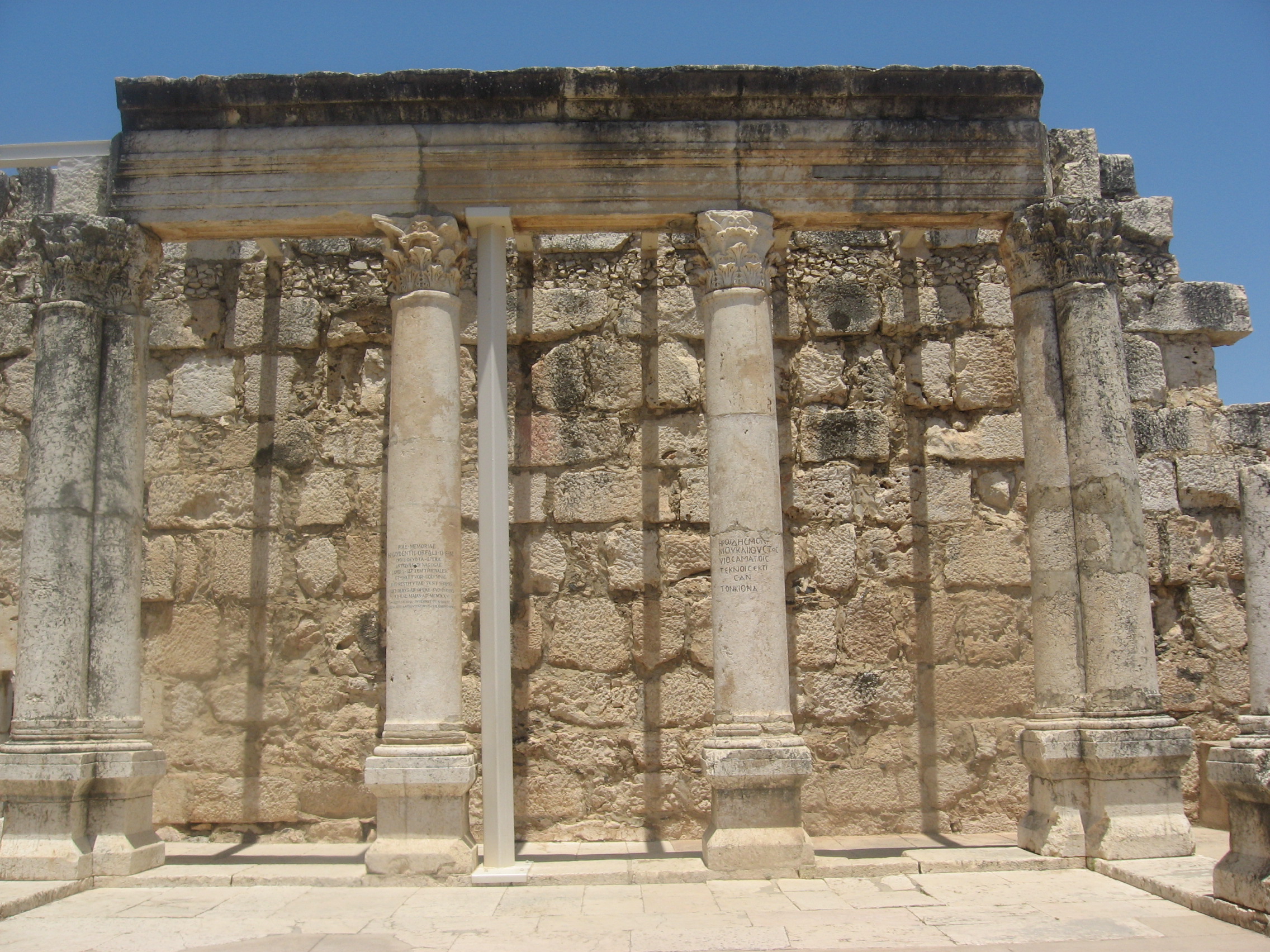
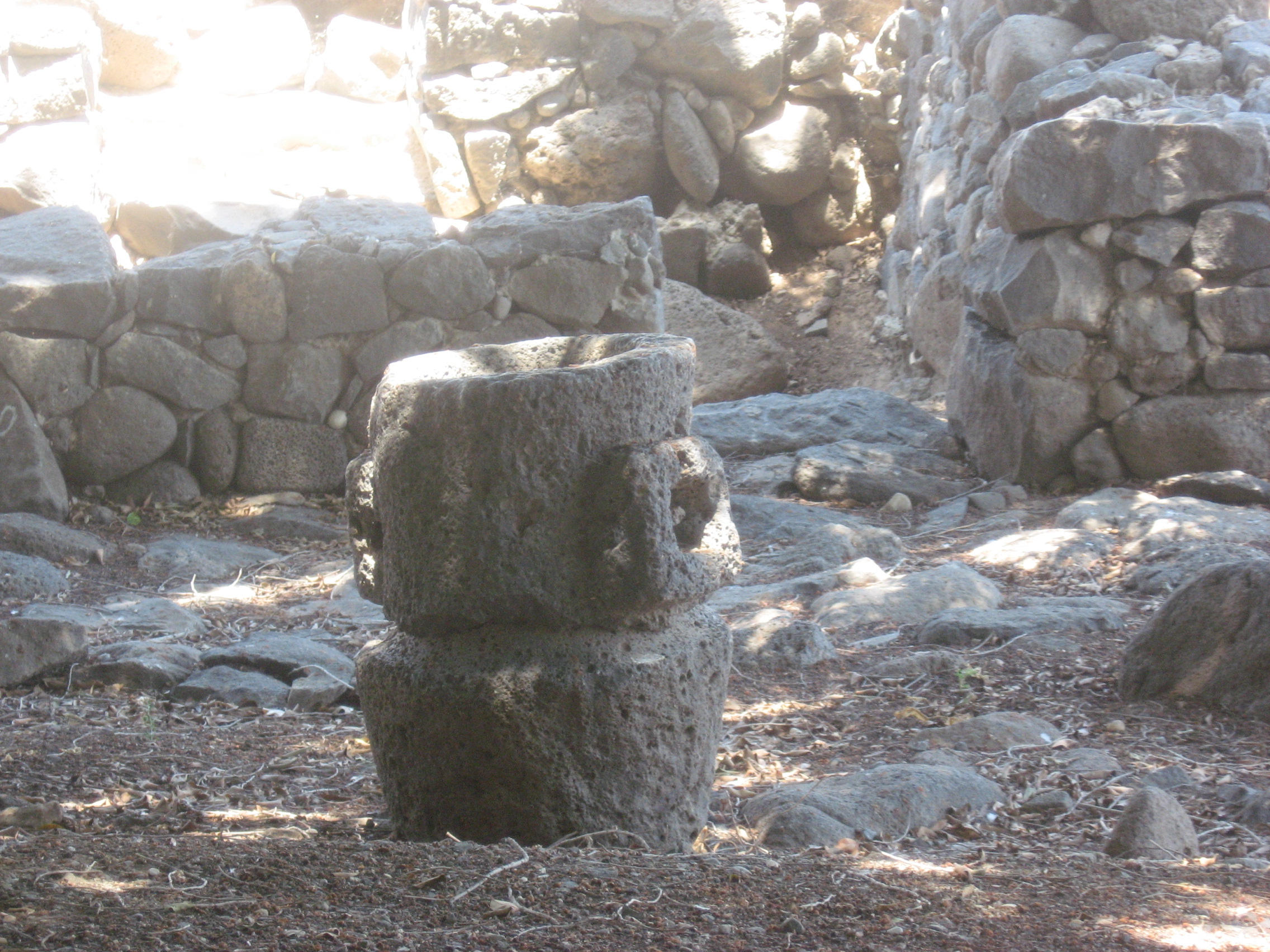
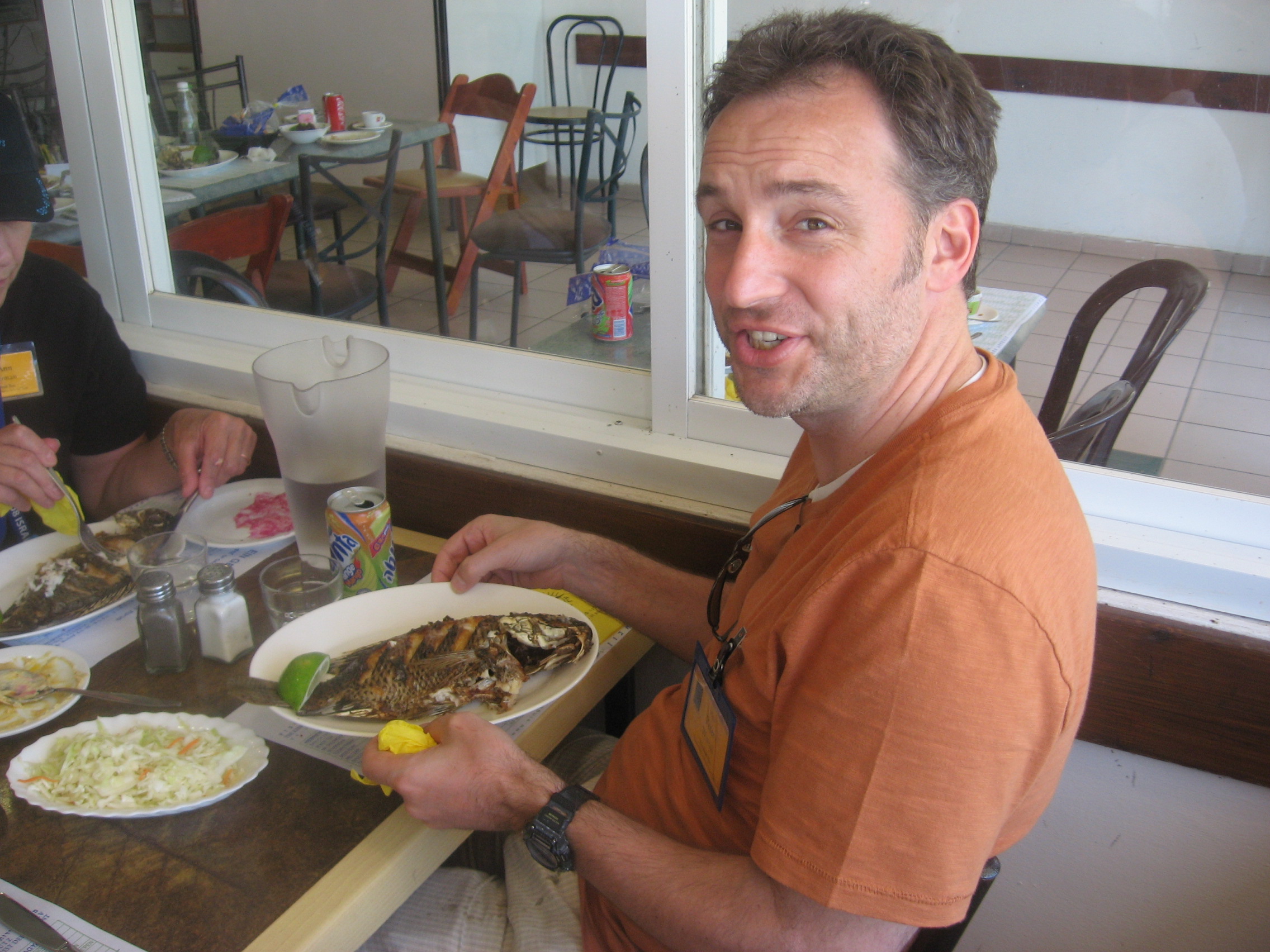
Capernaum

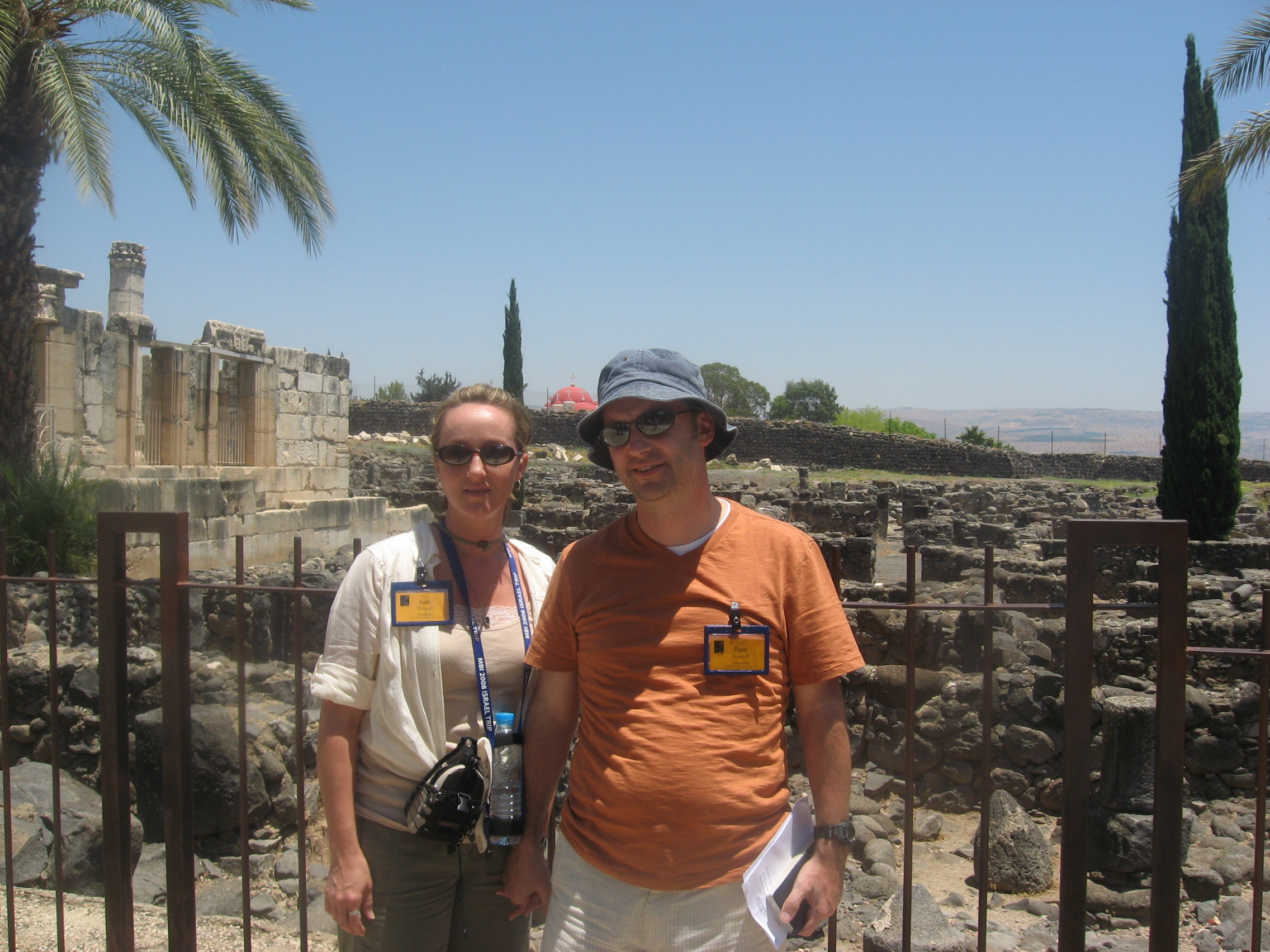
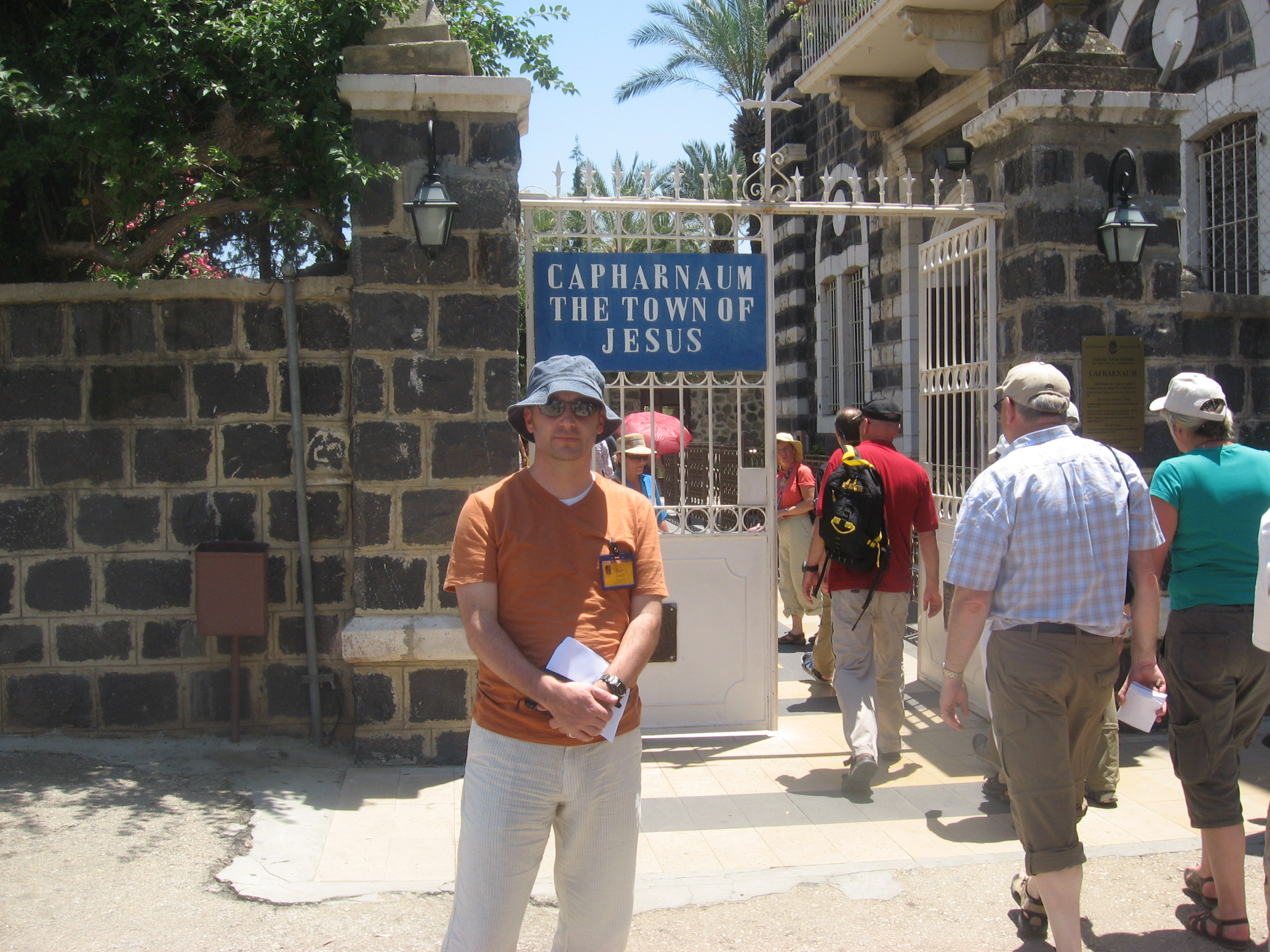
I went to Israel with Moody Bible Institute a few years ago.  I didn’t know what to expect when I agreed to go.  How could being in the land where the Bible took place enrich a book full of such spiritually enriching truths.  I thought that the geographical setting would be somewhat underwhelming.  How wrong I was!  Being in the places where the stories of the Bible took place gave me a refreshed love for the narrative.

My church, The Chapel ( www.chapel.org ) is focusing on the town of Capernaum.  I didn’t know which book of the Bible to study after 1 Corinthians because (a) I delegated leadership of the Skinner Small Group whilst we do a series called The Stranger which is rooted in Capernaum (b) A number of the gospels talk about Capernaum.

Which gospel do you think that we should study?

Whilst you are thinking that one over, let’s look at Capernaum. 

Capernaum

Synagogue

Grinding Stone

Town of Capernaum

Peter's House

St. Peter's Fish

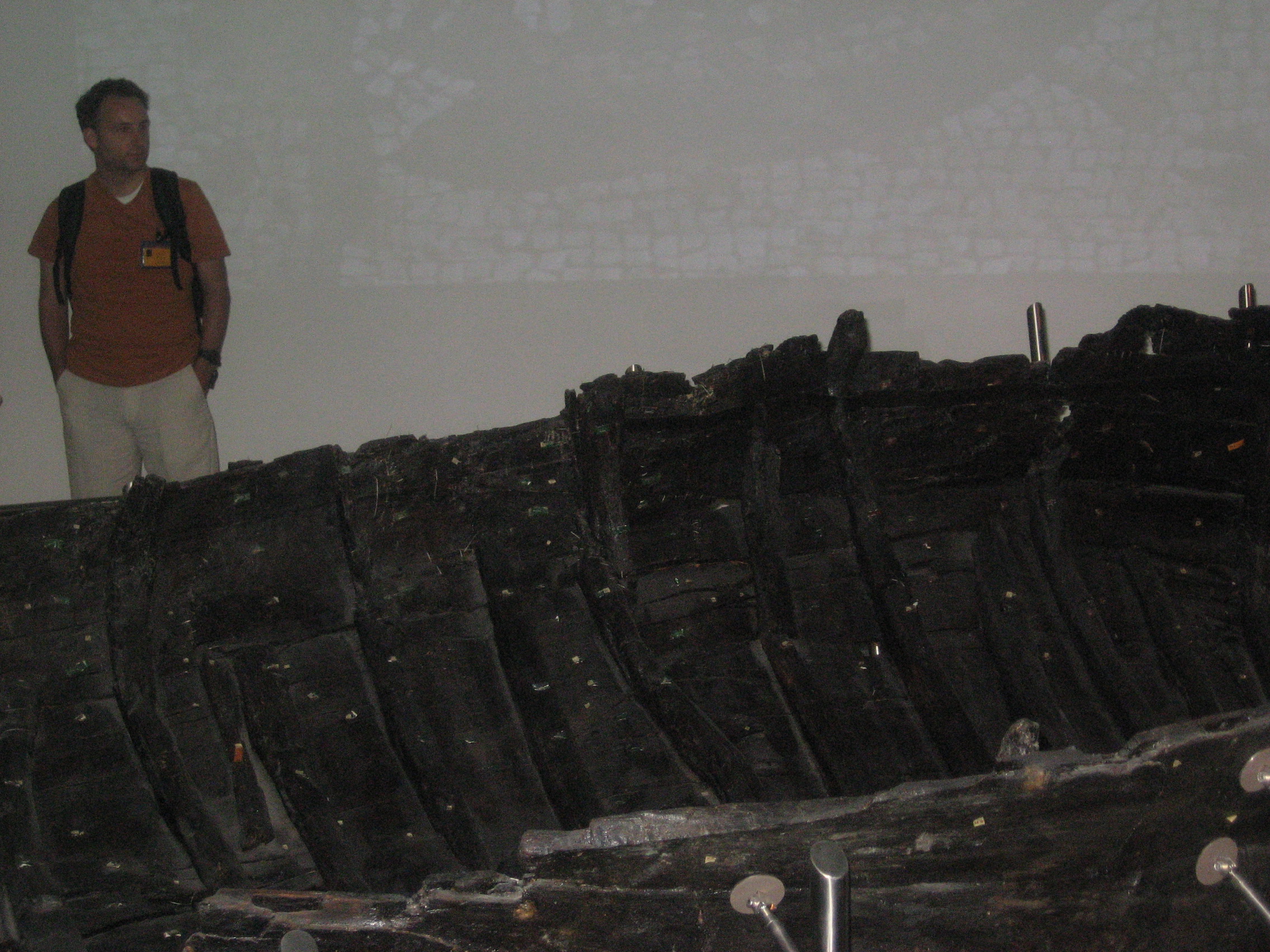
Lake Galilee Fishing Boat

 What do these pictures show you about the town where Jesus chose to live?

Posted in Daily Devotions | 2 Comments

1 Corinthians Review

On this blog we have traveled through the whole of the book of 1 Corinthians together.  We started by looking into the background of Corinth.  We understood that it was a cosmopolitan city in ancient Greece which was located on a thin strip of land (isthmus) connecting the Peloponnesian peninsula with the rest of Greece.  As a transportation hub and a melting pot of ideas, and ethnicities we thought that it had a lot in common with modern Chicago where The Skinner Small Group is located.  The problems that the Corinthians faced are problems that we still face today.  These problems included rallying around church political icons, the pull of sexual deviancy, and infighting about whose gifts were most valuable to the church.  All the church’s problems were addressed by a focus on love and unity.  The clearest biblical definition of love being in 1 Corinthians 13.

Going Deeper

Yesterday you would have read 1 Corinthians 1-8.  Today you should read chapters 9-16.

Posted in Daily Devotions | Leave a comment

Kissing in Church

The church in Corinth was encouraged to kiss.  There was nothing sexual about it, just an outward sign of friendship.  In France people still greet each other in this way, but the use of kissing in church is culturally weighted.  In Japan Christians might bow to each other;  In England we would shake hands; In some parts a hand may be raised in greeting.  The principles are those of warm feeling and community.  The church that I attend has a time in the service where we turn and greet those around us. It felt awkward to me at first to have this included in the service (better than kissing all those around me , though).  Do you think that a time of greeting should be within the structure of a church service?

1 Corinthians 16: 13-24

13Be on your guard; stand firm in the faith; be men of courage; be strong. 14Do everything in love.

 15You know that the household of Stephanas were the first converts in Achaia, and they have devoted themselves to the service of the saints. I urge you, brothers, 16to submit to such as these and to everyone who joins in the work, and labors at it. 17I was glad when Stephanas, Fortunatus and Achaicus arrived, because they have supplied what was lacking from you. 18For they refreshed my spirit and yours also. Such men deserve recognition.

 19The churches in the province of Asia send you greetings. Aquila and Priscilla[a] greet you warmly in the Lord, and so does the church that meets at their house. 20All the brothers here send you greetings. Greet one another with a holy kiss.

 21I, Paul, write this greeting in my own hand.

 22If anyone does not love the Lord—a curse be on him. Come, O Lord[b]!

 23The grace of the Lord Jesus be with you.

 24My love to all of you in Christ Jesus. Amen.

Questions

  1. Stephanas and Fortunatus may have been freed slaves.  How were they to be greeted?
  2. How should Corinthian Christians greet one another?
  3. How does verse 22 fit within Paul’s theology?
  4. Are you waiting expectantly for the Lord’s coming?
  5. How do you reach out to greet others in your church?  What will you do this Sunday?

Going Deeper

Having read the whole of the book of 1 Corinthians in this series, go back and read the first 8 chapters in one sitting.  Make a note of your impressions upon reading it.

Posted in Daily Devotions | Leave a comment

Paul’s Missionary Community

Paul is a member of a missionary community motivated by love.  The primary love that they share is not their love for one another, but their love for God and his work.  Paul explains his desire to be with the Corinthians, but his primary concern is with an opportunity that has opened up in Ephesus.  Fortunately Paul is part of a network of early missionaries who include Apollos and Timothy.  Are you connected with those whose primary concern is to see the gospel worked out across the world?

1 Corinthians 16: 5-18

 5After I go through Macedonia, I will come to you—for I will be going through Macedonia. 6Perhaps I will stay with you awhile, or even spend the winter, so that you can help me on my journey, wherever I go. 7I do not want to see you now and make only a passing visit; I hope to spend some time with you, if the Lord permits. 8But I will stay on at Ephesus until Pentecost, 9because a great door for effective work has opened to me, and there are many who oppose me.

 10If Timothy comes, see to it that he has nothing to fear while he is with you, for he is carrying on the work of the Lord, just as I am. 11No one, then, should refuse to accept him. Send him on his way in peace so that he may return to me. I am expecting him along with the brothers.

 12Now about our brother Apollos: I strongly urged him to go to you with the brothers. He was quite unwilling to go now, but he will go when he has the opportunity.

 13Be on your guard; stand firm in the faith; be men of courage; be strong. 14Do everything in love.

 15You know that the household of Stephanas were the first converts in Achaia, and they have devoted themselves to the service of the saints. I urge you, brothers, 16to submit to such as these and to everyone who joins in the work, and labors at it. 17I was glad when Stephanas, Fortunatus and Achaicus arrived, because they have supplied what was lacking from you. 18For they refreshed my spirit and yours also. Such men deserve recognition.

Questions

  1. Where is Paul about to pass through geographically?
  2. Which people does Paul list in his network of missionaries?
  3. In what manner should the Corinthians do everything?
  4. Is your love shown in your support for missionaries?
  5. How could you develop a network of friends who work together for the gospel?

Going Deeper

Pray about the small group that you are in adopting a missionary.  Talk to your small group leader if you think this is something that you should do.

Posted in Daily Devotions | Leave a comment

Is the Bible Marxist?

Paul took a collection from Corinth and was having it taken to Jerusalem.  Corinth was relatively wealthy and the Christians in Jerusalem were poor.  This could be labeled a redistribution of wealth.  Redistribution of wealth is often thought of as a Marxist policy.  Those who are opposed to it think of systems like welfare, where (it is argued) hard working wealthy people support lazy people who are poor because they don’t contribute.  The difference in 1 Corinthians 16 is that Paul takes a voluntary gift to people who are poor because they are genuinely oppressed.  Christians do redistribute wealth through church administration, but hopefully it does not reinforce sloth and assists those in genuine need.

1 Corinthians 16:1-4

1Now about the collection for God’s people: Do what I told the Galatian churches to do. 2On the first day of every week, each one of you should set aside a sum of money in keeping with his income, saving it up, so that when I come no collections will have to be made. 3Then, when I arrive, I will give letters of introduction to the men you approve and send them with your gift to Jerusalem. 4If it seems advisable for me to go also, they will accompany me.

Questions

  1. How is capital to be accumulated by the church at Corinth?
  2. Who will be couriers for the gifts?
  3. What was the condition of the church in Jerusalem at this time?
  4. Would you have gladly sent your money with Paul?
  5. How do you think and feel about sending your money to assist the poor in Africa, Asia, or America?

Going Deeper

Karl Marx may have drawn some of his values from his Judeo-Christian cultural surroundings.  Pure materialism would not lead anyone to many of his goals.  However, Marxism is incompatible with Christianity.  Read The Communist Manifesto ( http://www.marxists.org/archive/marx/works/1848/communist-manifesto/) and distinguish where Marxism and Christianity agree and where they differ.  Can you think of reasons that Marxism has not succeeded?

Posted in Daily Devotions | Leave a comment

A New Body

I’m aching because I played two games of soccer outside this last weekend.  Someone whacked me in the ankle too.  I wish I had a body that didn’t struggle to bounce back.  I think of my grandmother and how she aged.  She would waddle to the door with her arthritic hip and swear under her breath.  My wife’s parents both had cerebral palsy.  When they died it was the end of a life filled with struggles.  What kind of body do we have after death?

Jesus was raised from the dead and had a body that could do amazing things.  Just like Jesus we will have a body.  There will be no aches and pains, no arthritic hips, no cerebral palsy.  The true report of Jesus’ resurrection gives us all hope.

1 Corinthians 15:  35 -58

35But someone may ask, “How are the dead raised? With what kind of body will they come?” 36How foolish! What you sow does not come to life unless it dies. 37When you sow, you do not plant the body that will be, but just a seed, perhaps of wheat or of something else. 38But God gives it a body as he has determined, and to each kind of seed he gives its own body. 39All flesh is not the same: Men have one kind of flesh, animals have another, birds another and fish another. 40There are also heavenly bodies and there are earthly bodies; but the splendor of the heavenly bodies is one kind, and the splendor of the earthly bodies is another. 41The sun has one kind of splendor, the moon another and the stars another; and star differs from star in splendor.

 42So will it be with the resurrection of the dead. The body that is sown is perishable, it is raised imperishable; 43it is sown in dishonor, it is raised in glory; it is sown in weakness, it is raised in power; 44it is sown a natural body, it is raised a spiritual body.
      If there is a natural body, there is also a spiritual body. 45So it is written: “The first man Adam became a living being”[e]; the last Adam, a life-giving spirit. 46The spiritual did not come first, but the natural, and after that the spiritual. 47The first man was of the dust of the earth, the second man from heaven. 48As was the earthly man, so are those who are of the earth; and as is the man from heaven, so also are those who are of heaven. 49And just as we have borne the likeness of the earthly man, so shall we[f] bear the likeness of the man from heaven.

 50I declare to you, brothers, that flesh and blood cannot inherit the kingdom of God, nor does the perishable inherit the imperishable. 51Listen, I tell you a mystery: We will not all sleep, but we will all be changed— 52in a flash, in the twinkling of an eye, at the last trumpet. For the trumpet will sound, the dead will be raised imperishable, and we will be changed. 53For the perishable must clothe itself with the imperishable, and the mortal with immortality. 54When the perishable has been clothed with the imperishable, and the mortal with immortality, then the saying that is written will come true: “Death has been swallowed up in victory.”[g]
 55“Where, O death, is your victory?
      Where, O death, is your sting?”[h] 56The sting of death is sin, and the power of sin is the law. 57But thanks be to God! He gives us the victory through our Lord Jesus Christ.

 58Therefore, my dear brothers, stand firm. Let nothing move you. Always give yourselves fully to the work of the Lord, because you know that your labor in the Lord is not in vain.

Questions

  1. What is our earthly body compared with as Paul opens this section?
  2. What happens to the body that is sown perishable?
  3. What is the sting of death?
  4. If there was no sin, would there be no death?
  5. How do you cope with the idea of death?
Posted in Daily Devotions | Leave a comment

Baptism for the Dead

In 1 Corinthians 15 there is a mention of baptism for the dead.  It seems that those who lived in Corinth were currently being baptised for the dead.  This could mean (1) That living believers were being baptised for believers who had died before they could be baptised (2) Christians were being baptised in anticipation of the resurrection of the dead (3)  New converts were being baptised to replace those who had died (NIV Study Bible).  Although I think that it is strange, I am inclined to think that #1 is true.  The next question is why don’t people do this today?  The thrust of Paul’s argument is about a resurrected life.  His point is that people obviously believe in eternal life when they are baptised for those who are living in it.  He is not condoning the practice.

Why is this important?  Some churches do baptise for the dead.  I think they should stop.

1 Corinthians 15: 20-34

20But Christ has indeed been raised from the dead, the firstfruits of those who have fallen asleep. 21For since death came through a man, the resurrection of the dead comes also through a man. 22For as in Adam all die, so in Christ all will be made alive. 23But each in his own turn: Christ, the firstfruits; then, when he comes, those who belong to him. 24Then the end will come, when he hands over the kingdom to God the Father after he has destroyed all dominion, authority and power. 25For he must reign until he has put all his enemies under his feet. 26The last enemy to be destroyed is death. 27For he “has put everything under his feet.”[c] Now when it says that “everything” has been put under him, it is clear that this does not include God himself, who put everything under Christ. 28When he has done this, then the Son himself will be made subject to him who put everything under him, so that God may be all in all.

 29Now if there is no resurrection, what will those do who are baptized for the dead? If the dead are not raised at all, why are people baptized for them? 30And as for us, why do we endanger ourselves every hour? 31I die every day—I mean that, brothers—just as surely as I glory over you in Christ Jesus our Lord. 32If I fought wild beasts in Ephesus for merely human reasons, what have I gained? If the dead are not raised,
   “Let us eat and drink,
      for tomorrow we die.”[d] 33Do not be misled: “Bad company corrupts good character.” 34Come back to your senses as you ought, and stop sinning; for there are some who are ignorant of God—I say this to your shame.

Questions

  1. What has happened to Christ that makes him the firstfruit of those who have fallen asleep?
  2. Summarize the contrast between Adam and Christ?
  3. What pronouns does Paul use for baptizers of the dead contrasted with those who are endangered every hour?
  4. How does resurrection from the dead bring boldness?
  5. How does the company that you keep affect your view of the afterlife?

Going Deeper

Using Wikipedia as a starting point, investigate the Baptism of the Dead.  Who does it?  What does it achieve?  Why do you think evangelical Christians do not do it?

http://en.wikipedia.org/wiki/Baptism_for_the_dead

Posted in Daily Devotions | Leave a comment

Pity for Christians

The importance of the resurrection of Jesus to the Christian faith can not be overemphasized.  The hope that we have in Jesus goes beyond this life into the next life.  Jesus’ death followed by a resurrection, witnessed by many, means that there is a new life for Jesus’ followers.  If Jesus is not raised, then I am to be pitied.

1 Corinthians 15: 12-19

 12But if it is preached that Christ has been raised from the dead, how can some of you say that there is no resurrection of the dead? 13If there is no resurrection of the dead, then not even Christ has been raised. 14And if Christ has not been raised, our preaching is useless and so is your faith. 15More than that, we are then found to be false witnesses about God, for we have testified about God that he raised Christ from the dead. But he did not raise him if in fact the dead are not raised. 16For if the dead are not raised, then Christ has not been raised either. 17And if Christ has not been raised, your faith is futile; you are still in your sins. 18Then those also who have fallen asleep in Christ are lost. 19If only for this life we have hope in Christ, we are to be pitied more than all men.

Questions

  1. What are some Corinthians saying about the resurrection of the dead?
  2. What kind of witnesses would Paul and other preachers be if Christ is not raised?
  3. What is a person’s position if Christ has not been raised?
  4. How important is the resurrection to modern churches?
  5. How can I see how you value the resurrection of Jesus?

Going Deeper

116 Clique has released an album with hip-hop tracks covering the letters of the New Testament.  It’s called 13 Letters.  The track about 1 Corinthians can be heard by following the link below:

http://www.youtube.com/watch?v=Xjn9YNt0n2k 

Follow this link for the lyrics:

http://www.kovideo.net/break-it-down-1-corinthians-lyrics-116-clique-113808.html

What does the song identify as the key themes of the book of 1 Corinthians?  What points does it miss?

Posted in Daily Devotions | Leave a comment